response to Gram-negative bacterium / negative regulation of L-glutamate import across plasma membrane / negative regulation of bile acid secretion / positive regulation of interleukin-33 production / positive regulation of neutrophil activation / negative regulation of branching involved in lung morphogenesis / positive regulation of fractalkine production / positive regulation of blood microparticle formation / response to 3,3',5-triiodo-L-thyronine / positive regulation of protein transport ...response to Gram-negative bacterium / negative regulation of L-glutamate import across plasma membrane / negative regulation of bile acid secretion / positive regulation of interleukin-33 production / positive regulation of neutrophil activation / negative regulation of branching involved in lung morphogenesis / positive regulation of fractalkine production / positive regulation of blood microparticle formation / response to 3,3',5-triiodo-L-thyronine / positive regulation of protein transport / positive regulation of vitamin D biosynthetic process / chronic inflammatory response to antigenic stimulus / regulation of endothelial cell apoptotic process / response to macrophage colony-stimulating factor / negative regulation of myelination / positive regulation of leukocyte adhesion to arterial endothelial cell / response to gold nanoparticle / response to quercetin / Differentiation of naive CD4+ T cells to T helper 1 cells (Th1 cells) / negative regulation of vascular wound healing / negative regulation of amyloid-beta clearance / negative regulation of cytokine production involved in immune response / positive regulation of podosome assembly / positive regulation of hair follicle development / inflammatory response to wounding / response to resveratrol / positive regulation of interleukin-18 production / positive regulation of hepatocyte proliferation / positive regulation of action potential / toll-like receptor 3 signaling pathway / TNF signaling / negative regulation of D-glucose import across plasma membrane / embryonic digestive tract development / vascular endothelial growth factor production / positive regulation of fever generation / positive regulation of calcineurin-NFAT signaling cascade / response to fructose / positive regulation of protein localization to cell surface / negative regulation of mitotic cell cycle / leukocyte tethering or rolling / endothelial cell apoptotic process / necroptotic signaling pathway / positive regulation of synoviocyte proliferation / bilirubin transport / regulation of establishment of endothelial barrier / positive regulation of mononuclear cell migration / negative regulation of oxidative phosphorylation / macrophage activation involved in immune response / Ciprofloxacin ADME / response to hydrogen sulfide / exogenous protein binding / positive regulation of protein-containing complex disassembly / cellular response to calcium ion starvation / positive regulation of osteoclast differentiation / cellular response to toxic substance / positive regulation of macrophage derived foam cell differentiation / positive regulation of chemokine (C-X-C motif) ligand 2 production / regulation of fat cell differentiation / tumor necrosis factor receptor binding / enterobactin binding / Heme biosynthesis / positive regulation of heterotypic cell-cell adhesion / positive regulation of membrane protein ectodomain proteolysis / HDL remodeling / negative regulation of systemic arterial blood pressure / response to L-glutamate / positive regulation of extrinsic apoptotic signaling pathway / regulation of reactive oxygen species metabolic process / positive regulation of leukocyte adhesion to vascular endothelial cell / regulation of canonical NF-kappaB signal transduction / negative regulation of mitochondrial depolarization / TNFR1-induced proapoptotic signaling / negative regulation of fat cell differentiation / positive regulation of cytokine production involved in inflammatory response / positive regulation of programmed cell death / Prednisone ADME / Heme degradation / TNFR1-mediated ceramide production / negative regulation of heart rate / negative regulation of viral genome replication / positive regulation of DNA biosynthetic process / positive regulation of amyloid-beta formation / positive regulation of neuroinflammatory response / molecular carrier activity / negative regulation of endothelial cell proliferation / negative regulation of interleukin-6 production / positive regulation of immunoglobulin production / negative regulation of bicellular tight junction assembly / extrinsic apoptotic signaling pathway via death domain receptors / Aspirin ADME / antioxidant activity / response to isolation stress / Interleukin-10 signaling / regulation of synapse organization / regulation of insulin secretion / histone H3K9ac reader activity / negative regulation of apoptotic signaling pathway / negative regulation of blood vessel endothelial cell migration / negative regulation of lipid storage / positive regulation of glial cell proliferation Similarity search - Function
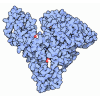
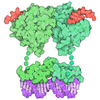
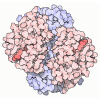
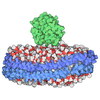
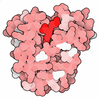
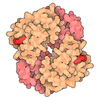
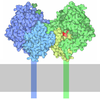
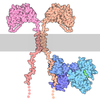
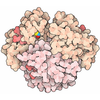
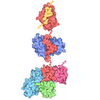
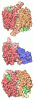
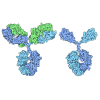
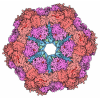
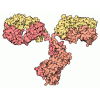
Journal: Biochem Biophys Res Commun / Year: 2026 Title: Cryo-EM elucidates the interaction mechanism of ozoralizumab, a humanized anti-TNFα NANOBODY® compound. Authors: Masashi Mima / Kyohei Sato / Takeshi Yokoyama / Chiemi Mishima-Tsumagari / Tatsuya Ohnuki / Yoshikazu Tanaka / Kunihiko Iwamoto / Abstract: Ozoralizumab (OZR) is a next-generation TNF inhibitor composed of two identical humanized anti-TNFα NANOBODY® molecules (TNF30s) recombinantly linked via one humanized anti-human serum albumin (HSA) ...Ozoralizumab (OZR) is a next-generation TNF inhibitor composed of two identical humanized anti-TNFα NANOBODY® molecules (TNF30s) recombinantly linked via one humanized anti-human serum albumin (HSA) NANOBODY® molecule (ALB8) and two peptide linkers. OZR is designed as a unique format to exert potent inhibitory effects against TNFα with long plasma half-life. However, the three-dimensional structure of OZR-TNFα-HSA complex has not yet been elucidated, and a complete understanding of its interaction mechanism with TNFα is yet to be gained. In this study, we successfully observed the formation of the OZR-TNFα-HSA ternary complex by single-particle cryo-electron microscopy. The single-particle analysis revealed that the two TNF30 molecules of OZR simultaneously bind bivalently to TNFα in a 1:1-bivalent binding mode, while the ALB8 molecule binds to HSA, forming a ternary complex. Thus, OZR exhibits a binding mode significantly different from that of other IgG-type TNFα inhibitors. Furthermore, surface plasmon resonance (SPR) analysis demonstrated that the 1:1-bivalent binding mode confers an exceptionally slow dissociation rate, thereby contributing to the potent TNFα-neutralizing activity of OZR. These findings not only lend support to the favorable clinical efficacy of OZR from a structural standpoint but also lay the foundation for the rational design and development of next-generation TNFα inhibitors with enhanced and sustained efficacy.
In the structure databanks used in Yorodumi, some data are registered as the other names, "COVID-19 virus" and "2019-nCoV". Here are the details of the virus and the list of structure data.
Jan 31, 2019. EMDB accession codes are about to change! (news from PDBe EMDB page)
EMDB accession codes are about to change! (news from PDBe EMDB page)
The allocation of 4 digits for EMDB accession codes will soon come to an end. Whilst these codes will remain in use, new EMDB accession codes will include an additional digit and will expand incrementally as the available range of codes is exhausted. The current 4-digit format prefixed with “EMD-” (i.e. EMD-XXXX) will advance to a 5-digit format (i.e. EMD-XXXXX), and so on. It is currently estimated that the 4-digit codes will be depleted around Spring 2019, at which point the 5-digit format will come into force.
The EM Navigator/Yorodumi systems omit the EMD- prefix.
Related info.:Q: What is EMD? / ID/Accession-code notation in Yorodumi/EM Navigator
Yorodumi is a browser for structure data from EMDB, PDB, SASBDB, etc.
This page is also the successor to EM Navigator detail page, and also detail information page/front-end page for Omokage search.
The word "yorodu" (or yorozu) is an old Japanese word meaning "ten thousand". "mi" (miru) is to see.
Related info.:EMDB / PDB / SASBDB / Comparison of 3 databanks / Yorodumi Search / Aug 31, 2016. New EM Navigator & Yorodumi / Yorodumi Papers / Jmol/JSmol / Function and homology information / Changes in new EM Navigator and Yorodumi
 Movie
Movie Controller

 Yorodumi
 Open data
 Basic information
 Map data
 Sample
 Keywords
 Function and homology information
 Homo sapiens (human)
 Authors
 Japan, 1 items
  Citation
 Structure visualization
 Downloads & links
 emd_67993.png
 http://ftp.pdbj.org/pub/emdb/structures/EMD-67993



 Z (Sec.)
 Y (Row.)
 X (Col.)


 Sample components
 Cricetulus griseus (Chinese hamster)
 Escherichia coli (E. coli)
 Processing
 Electron microscopy
 FIELD EMISSION GUN
