Journal: Adv Sci (Weinh) / Year: 2026 Title: Understanding the Catalytic Determinant role of Diaphorase-Like Subunit in Formate Dehydrogenases via Redox Couples. Authors: Kuncheng Zhang / Weisong Liu / Hao Su / Huijuan Cui / Yuanming Wang / Zhiguang Zhu / Chun You / Lingling Zhang / Abstract: Multi-subunit formate dehydrogenases (FDHs), which catalyze the interconversion of formate and carbon dioxide (CO), have drawn increasing attention for mitigating climate change and advancing ...Multi-subunit formate dehydrogenases (FDHs), which catalyze the interconversion of formate and carbon dioxide (CO), have drawn increasing attention for mitigating climate change and advancing environmental protection owing to their advantages of oxygen tolerance and easy heterogenous expression. However, differently sourced multi-subunit FDHs exhibit distinct catalytic biases, and the reasons remain unclear. On the basis of the exceptional observation of Rhodobacter aestuarii FDH favoring CO reduction, this study unveiled an oxidation inhibition effect in exclusively NADH/NAD-involved catalysis via kinetics analysis in terms of different redox couples. Substrate truncation positioned Fdhβ as the predominant subunit. Further studies based on structural and electrochemical insights interpreted that the slow desorption of NADH is the underlying determinant for the apparent catalytic bias. Knowledge-based rational design helped obtain a beneficial variant, RaFDH β E260Y, with a 10-fold increased catalytic activity in CO reduction, highlighting its potential for CO biotransformation and applications in low-carbon biomanufacturing. Eventually, bioinformatic analysis suggested that the diaphorase-like subunits and the catalysis regulation mechanism may widely exist in living organisms for modulating the redox balance of oxidoreductases, providing new insights into metabolism and catabolism.
Model: Quantifoil / Material: COPPER / Mesh: 400 / Support film - Material: CARBON / Pretreatment - Type: GLOW DISCHARGE
Vitrification
Cryogen name: ETHANE / Instrument: FEI VITROBOT MARK IV
Details
The protein was obtained after overexpressionin Escherichia coli MC106l and purified usingHis-tagged nickel affinity chromatography and size-exclusion chromatography.
-
Electron microscopy
Microscope
TFS KRIOS
Image recording
Film or detector model: FEI FALCON IV (4k x 4k) / Average electron dose: 50.0 e/Å2
Electron beam
Acceleration voltage: 300 kV / Electron source: FIELD EMISSION GUN
In the structure databanks used in Yorodumi, some data are registered as the other names, "COVID-19 virus" and "2019-nCoV". Here are the details of the virus and the list of structure data.
Jan 31, 2019. EMDB accession codes are about to change! (news from PDBe EMDB page)
EMDB accession codes are about to change! (news from PDBe EMDB page)
The allocation of 4 digits for EMDB accession codes will soon come to an end. Whilst these codes will remain in use, new EMDB accession codes will include an additional digit and will expand incrementally as the available range of codes is exhausted. The current 4-digit format prefixed with “EMD-” (i.e. EMD-XXXX) will advance to a 5-digit format (i.e. EMD-XXXXX), and so on. It is currently estimated that the 4-digit codes will be depleted around Spring 2019, at which point the 5-digit format will come into force.
The EM Navigator/Yorodumi systems omit the EMD- prefix.
Related info.:Q: What is EMD? / ID/Accession-code notation in Yorodumi/EM Navigator
Yorodumi is a browser for structure data from EMDB, PDB, SASBDB, etc.
This page is also the successor to EM Navigator detail page, and also detail information page/front-end page for Omokage search.
The word "yorodu" (or yorozu) is an old Japanese word meaning "ten thousand". "mi" (miru) is to see.
Related info.:EMDB / PDB / SASBDB / Comparison of 3 databanks / Yorodumi Search / Aug 31, 2016. New EM Navigator & Yorodumi / Yorodumi Papers / Jmol/JSmol / Function and homology information / Changes in new EM Navigator and Yorodumi
 Movie
Movie Controller

 Yorodumi
 Open data
 Basic information
 Map data
 Sample
 Keywords
 Function and homology information
 Rhodobacter aestuarii (bacteria)
 Authors
 China, 1 items
  Citation
 Structure visualization
 Downloads & links
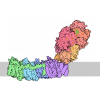
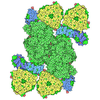
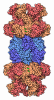
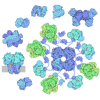
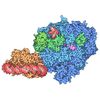
 emd_66342.png
 http://ftp.pdbj.org/pub/emdb/structures/EMD-66342
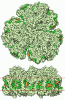
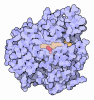
 Z (Sec.)
 Y (Row.)
 X (Col.)


 Sample components
 Escherichia coli MC1061 (bacteria)
 Processing
 Electron microscopy
 FIELD EMISSION GUN
