National Natural Science Foundation of China (NSFC)
China
Citation
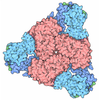
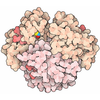
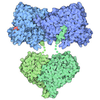
Journal: Cell Biosci / Year: 2025 Title: Filamentation of hCTPS1 with CTP. Authors: Chen-Jun Guo / Xiaojie Bao / Ji-Long Liu / Abstract: CTP synthase (CTPS) is a key enzyme in de novo CTP synthesis, playing a critical role in nucleotide metabolism and cellular proliferation. Human CTPS1 (hCTPS1), one of the two CTPS isoforms, is ...CTP synthase (CTPS) is a key enzyme in de novo CTP synthesis, playing a critical role in nucleotide metabolism and cellular proliferation. Human CTPS1 (hCTPS1), one of the two CTPS isoforms, is essential for immune responses and is highly expressed in proliferating cells, making it a promising therapeutic target for immune-related diseases and cancer. Despite its importance, the regulatory mechanisms governing hCTPS1 activity remain poorly understood. Here, we reveal that CTP, the product of CTPS, acts as a key regulator for hCTPS1 filamentation. Using cryo-electron microscopy (cryo-EM), we resolve the high-resolution structure of CTP-bound hCTPS1 filaments, uncovering the molecular details of CTP binding and its role in filament assembly. Importantly, we demonstrate that CTP generated from the enzymatic reaction does not trigger filament disassembly, suggesting a conserved regulatory pattern. Furthermore, by analyzing the binding modes of two distinct CTP-binding pockets, we provide evidence that this filamentation mechanism is evolutionarily conserved across species, particularly in eukaryotic CTPS. Our findings not only elucidate a novel regulatory mechanism of hCTPS1 activity but also deepen the understanding of how metabolic enzymes utilize filamentation as a conserved strategy for functional regulation. This study opens new avenues for targeting hCTPS1 in therapeutic interventions.
In the structure databanks used in Yorodumi, some data are registered as the other names, "COVID-19 virus" and "2019-nCoV". Here are the details of the virus and the list of structure data.
Jan 31, 2019. EMDB accession codes are about to change! (news from PDBe EMDB page)
EMDB accession codes are about to change! (news from PDBe EMDB page)
The allocation of 4 digits for EMDB accession codes will soon come to an end. Whilst these codes will remain in use, new EMDB accession codes will include an additional digit and will expand incrementally as the available range of codes is exhausted. The current 4-digit format prefixed with “EMD-” (i.e. EMD-XXXX) will advance to a 5-digit format (i.e. EMD-XXXXX), and so on. It is currently estimated that the 4-digit codes will be depleted around Spring 2019, at which point the 5-digit format will come into force.
The EM Navigator/Yorodumi systems omit the EMD- prefix.
Related info.:Q: What is EMD? / ID/Accession-code notation in Yorodumi/EM Navigator
Yorodumi is a browser for structure data from EMDB, PDB, SASBDB, etc.
This page is also the successor to EM Navigator detail page, and also detail information page/front-end page for Omokage search.
The word "yorodu" (or yorozu) is an old Japanese word meaning "ten thousand". "mi" (miru) is to see.
Related info.:EMDB / PDB / SASBDB / Comparison of 3 databanks / Yorodumi Search / Aug 31, 2016. New EM Navigator & Yorodumi / Yorodumi Papers / Jmol/JSmol / Function and homology information / Changes in new EM Navigator and Yorodumi
 Movie
Movie Controller


 Open data
 Basic information
 Map data
 Sample
 Keywords
 Function and homology information
 Homo sapiens (human)
 Authors
 China, 1 items
  Citation
 Structure visualization
 Downloads & links
 emd_65191.png
 http://ftp.pdbj.org/pub/emdb/structures/EMD-65191
 Z (Sec.)
 Y (Row.)
 X (Col.)


 Sample components
 Saccharomyces cerevisiae (brewer's yeast)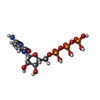
 Processing
 Electron microscopy
 FIELD EMISSION GUN

