National Natural Science Foundation of China (NSFC)
32361163669
China
National Natural Science Foundation of China (NSFC)
32170189
China
National Natural Science Foundation of China (NSFC)
32241021
China
Other government
2023B1212060050
Other government
2023B1212120009
Citation
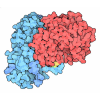
Journal: Nucleic Acids Res / Year: 2026 Title: Chromatin context-dependent deacetylation by the asymmetric Rpd3L. Authors: Heyu Zhao / Huadong Li / Chi Wang / Xuechen Yang / Binqian Zou / Shuqi Dong / Nan Zhang / Yuxing Zhou / Li Yi / Ying Zhang / Yixuan Xie / Dajiang Qin / William Chong Hang Chao / Duanqing Pei / Jun He / Abstract: The regulation of gene expression requires precise control of chromatin-associated complexes that respond to diverse structural and epigenetic cues. The Rpd3 Large (Rpd3L) complex is a Sin3 histone ...The regulation of gene expression requires precise control of chromatin-associated complexes that respond to diverse structural and epigenetic cues. The Rpd3 Large (Rpd3L) complex is a Sin3 histone deacetylase complex (HDAC) that dynamically adapt to chromatin states to reinforce transcriptional silencing, yet the mechanisms governing the catalytic activation in chromatin context-dependent manner remain unclear. Here we present the cryo-electron microscopy structure of Rpd3L bound to both mono- and di-nucleosome substrate at near-atomic resolution, uncovering a substrate-guided allosteric activation mechanism. Rpd3L adopts an asymmetric architecture, in which the proximal catalytic module anchors the first nucleosome, while the Sin3 PAH domains engage linker DNA to reposition a second nucleosome. This spatial configuration brings the distal catalytic module into proximity with chromatin and unlocks its latent deacetylase activity. Biochemical and mass spectrometry analyses confirm that dual nucleosome engagement selectively enhances Rpd3L activity and broadens substrate specificity. Together, these findings establish a hierarchical mechanism by which Rpd3L interprets histone modifications and nucleosome organization to modulate its enzymatic output at promoter regions. Our study provides a framework for understanding higher-order chromatin repression mechanisms by chromatin-regulation complexes and co-repressors.
In the structure databanks used in Yorodumi, some data are registered as the other names, "COVID-19 virus" and "2019-nCoV". Here are the details of the virus and the list of structure data.
Jan 31, 2019. EMDB accession codes are about to change! (news from PDBe EMDB page)
EMDB accession codes are about to change! (news from PDBe EMDB page)
The allocation of 4 digits for EMDB accession codes will soon come to an end. Whilst these codes will remain in use, new EMDB accession codes will include an additional digit and will expand incrementally as the available range of codes is exhausted. The current 4-digit format prefixed with “EMD-” (i.e. EMD-XXXX) will advance to a 5-digit format (i.e. EMD-XXXXX), and so on. It is currently estimated that the 4-digit codes will be depleted around Spring 2019, at which point the 5-digit format will come into force.
The EM Navigator/Yorodumi systems omit the EMD- prefix.
Related info.:Q: What is EMD? / ID/Accession-code notation in Yorodumi/EM Navigator
Yorodumi is a browser for structure data from EMDB, PDB, SASBDB, etc.
This page is also the successor to EM Navigator detail page, and also detail information page/front-end page for Omokage search.
The word "yorodu" (or yorozu) is an old Japanese word meaning "ten thousand". "mi" (miru) is to see.
Related info.:EMDB / PDB / SASBDB / Comparison of 3 databanks / Yorodumi Search / Aug 31, 2016. New EM Navigator & Yorodumi / Yorodumi Papers / Jmol/JSmol / Function and homology information / Changes in new EM Navigator and Yorodumi
 Movie
Movie Controller

 Yorodumi
 Open data
 Basic information
 Map data
 Sample
 Keywords
 Function and homology information
 Saccharomyces cerevisiae S288C (yeast) /
  Xenopus laevis (African clawed frog) / synthetic construct (others)
 Authors
 China, 5 items
  Citation
 Structure visualization
 Downloads & links
 emd_64741.png
 http://ftp.pdbj.org/pub/emdb/structures/EMD-64741



 Z (Sec.)
 Y (Row.)
 X (Col.)


 Sample components
 Trichoplusia ni (cabbage looper)
 Escherichia coli (E. coli)
 Processing
 Electron microscopy
 FIELD EMISSION GUN