[English] 日本語
Yorodumi
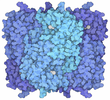
- EMDB-64372: Cryo-EM structure of the chimeric human IgM-Fc hexamer -

+
Open data


ID or keywords:

Loading...

-
Basic information

Entry
Database: EMDB / ID: EMD-64372
TitleCryo-EM structure of the chimeric human IgM-Fc hexamer
Map data
Sample
  • Complex: The hexamer of human chimeric IgM-Fc
    • Protein or peptide: Immunoglobulin heavy constant mu
KeywordsComplex / polymeric antibody / IMMUNE SYSTEM
Function / homology
Function and homology information


hexameric IgM immunoglobulin complex / IgM B cell receptor complex / pentameric IgM immunoglobulin complex / pre-B cell allelic exclusion / IgM immunoglobulin complex / CD22 mediated BCR regulation / antigen binding / Antigen activates B Cell Receptor (BCR) leading to generation of second messengers / Cell surface interactions at the vascular wall / B cell receptor signaling pathway ...hexameric IgM immunoglobulin complex / IgM B cell receptor complex / pentameric IgM immunoglobulin complex / pre-B cell allelic exclusion / IgM immunoglobulin complex / CD22 mediated BCR regulation / antigen binding / Antigen activates B Cell Receptor (BCR) leading to generation of second messengers / Cell surface interactions at the vascular wall / B cell receptor signaling pathway / antibacterial humoral response / blood microparticle / defense response to Gram-negative bacterium / Potential therapeutics for SARS / adaptive immune response / innate immune response / cell surface / extracellular space / extracellular exosome / plasma membrane
Similarity search - Function
: / Immunoglobulin/major histocompatibility complex, conserved site / Immunoglobulins and major histocompatibility complex proteins signature. / Immunoglobulin C-Type / Immunoglobulin C1-set / Immunoglobulin C1-set domain / Ig-like domain profile. / Immunoglobulin-like domain / Immunoglobulin-like domain superfamily / Immunoglobulin-like fold
Similarity search - Domain/homology
Immunoglobulin heavy constant mu
Similarity search - Component
Biological speciesHomo sapiens (human)
Methodsingle particle reconstruction / cryo EM / Resolution: 3.29 Å
AuthorsJi C / Zhang R / Xiao J
Funding support China, 1 items
OrganizationGrant numberCountry
National Science Foundation (NSF, China) China
CitationJournal: Sci Adv / Year: 2025
Title: IgX informs engineering strategies of IgM and IgG hexamers.
Authors: Ruixue Zhang / Chenggong Ji / Shuhan Li / Ningning Li / Ning Gao / Junyu Xiao /
Abstract: Polymeric immunoglobulins are essential components of the immune system in jawed vertebrates. While mammalian immunoglobulin M (IgM) typically forms a pentamer linked by the joining chain (J-chain), ...Polymeric immunoglobulins are essential components of the immune system in jawed vertebrates. While mammalian immunoglobulin M (IgM) typically forms a pentamer linked by the joining chain (J-chain), IgX can assemble into a J-chain-independent polymer. Here, we present the cryo-electron microscopy (cryo-EM) structure of IgX, revealing its hexameric configuration. By incorporating the IgX tailpiece into human IgM, we achieved efficient IgM hexamer formation. Truncating IgM's natural tailpiece to a range of 11 to 16 residues also substantially enhanced hexamerization efficiency. Furthermore, introducing a shortened IgM tailpiece to IgG resulted in effective IgG hexamer formation. We further show that the engineered IgM and IgG hexamers targeting CD20 demonstrated robust complement-dependent cytotoxicity (CDC) against several B lymphoma cells. In addition, the IgG-Fc hexamer functioned as a decoy, attenuating CDC in cell cultures. These findings deepen our understanding of polymeric immunoglobulin evolution and introduce innovative strategies for the development of IgM- and IgG-based biologics.
History
DepositionApr 25, 2025-
Header (metadata) releaseDec 17, 2025-
Map releaseDec 17, 2025-
UpdateDec 17, 2025-
Current statusDec 17, 2025Processing site: PDBc / Status: Released

-
Structure visualization

Supplemental images

Downloads & links

-
Map

FileDownload / File: emd_64372.map.gz / Format: CCP4 / Size: 125 MB / Type: IMAGE STORED AS FLOATING POINT NUMBER (4 BYTES)
Projections & slices

Image control

Size
Brightness
Contrast
Others
AxesZ (Sec.)Y (Row.)X (Col.)
1.07 Å/pix.
x 320 pix.
= 342.4 Å
1.07 Å/pix.
x 320 pix.
= 342.4 Å
1.07 Å/pix.
x 320 pix.
= 342.4 Å

Surface

Projections

Slices (1/3)

Slices (1/2)

Slices (2/3)

Images are generated by Spider.

Voxel sizeX=Y=Z: 1.07 Å
Density
Contour LevelBy AUTHOR: 0.0804
Minimum - Maximum-2.1288214 - 3.178423
Average (Standard dev.)-0.00042951835 (±0.03406648)
SymmetrySpace group: 1
Details

EMDB XML:

Map geometry
Axis orderXYZ
Origin000
Dimensions320320320
Spacing320320320
CellA=B=C: 342.40002 Å
α=β=γ: 90.0 °

-
Supplemental data

-
Half map: #1

Fileemd_64372_half_map_1.map
Projections & Slices
AxesZYX

Projections

Slices (1/2)
Density Histograms

-
Half map: #2

Fileemd_64372_half_map_2.map
Projections & Slices
AxesZYX

Projections

Slices (1/2)
Density Histograms

-
Sample components

-
Entire : The hexamer of human chimeric IgM-Fc

EntireName: The hexamer of human chimeric IgM-Fc
Components
  • Complex: The hexamer of human chimeric IgM-Fc
    • Protein or peptide: Immunoglobulin heavy constant mu

-
Supramolecule #1: The hexamer of human chimeric IgM-Fc

SupramoleculeName: The hexamer of human chimeric IgM-Fc / type: complex / ID: 1 / Parent: 0 / Macromolecule list: all
Source (natural)Organism: Homo sapiens (human)

-
Macromolecule #1: Immunoglobulin heavy constant mu

MacromoleculeName: Immunoglobulin heavy constant mu / type: protein_or_peptide / ID: 1 / Number of copies: 12 / Enantiomer: LEVO
Source (natural)Organism: Homo sapiens (human)
Molecular weightTheoretical: 41.102953 KDa
Recombinant expressionOrganism: Homo sapiens (human)
SequenceString: ASAWSHPQFE KGGGSGGGSG GSAWSHPQFE KIDTTIAELP PKVSVFVPPR DGFFGNPRKS KLICQATGFS PRQIQVSWLR EGKQVGSGV TTDQVQAEAK ESGPTTYKVT STLTIKESDW LGQSMFTCRV DHRGLTFQQN ASSMCVPDQD TAIRVFAIPP S FASIFLTK ...String:
ASAWSHPQFE KGGGSGGGSG GSAWSHPQFE KIDTTIAELP PKVSVFVPPR DGFFGNPRKS KLICQATGFS PRQIQVSWLR EGKQVGSGV TTDQVQAEAK ESGPTTYKVT STLTIKESDW LGQSMFTCRV DHRGLTFQQN ASSMCVPDQD TAIRVFAIPP S FASIFLTK STKLTCLVTD LTTYDSVTIS WTRQNGEAVK THTNISESHP NATFSAVGEA SICEDDWNSG ERFTCTVTHT DL PSPLKQT ISRPKGVALH RPDVYLLPPA REQLNLRESA TITCLVTGFS PADVFVQWMQ RGQPLSPEKY VTSAPMPEPQ APG RYFAHS ILTVSEEEWN TGETYTCVVA HEALPNRVTE RTVDKSTGKS SLVNVNLVMS

UniProtKB: Immunoglobulin heavy constant mu

-
Experimental details

-
Structure determination

Methodcryo EM
Processingsingle particle reconstruction
Aggregation stateparticle

-
Sample preparation

BufferpH: 7.4
VitrificationCryogen name: ETHANE

-
Electron microscopy

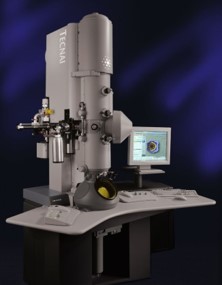
MicroscopeFEI POLARA 300
Image recordingFilm or detector model: GATAN K3 (6k x 4k) / Average electron dose: 60.0 e/Å2
Electron beamAcceleration voltage: 300 kV / Electron source: FIELD EMISSION GUN
Electron opticsIllumination mode: FLOOD BEAM / Imaging mode: BRIGHT FIELD / Nominal defocus max: 1.4000000000000001 µm / Nominal defocus min: 1.0 µm
Experimental equipment
Model: Tecnai Polara / Image courtesy: FEI Company

+
Image processing

CTF correctionType: NONE
Startup modelType of model: NONE
Final reconstructionResolution.type: BY AUTHOR / Resolution: 3.29 Å / Resolution method: FSC 0.143 CUT-OFF / Number images used: 1099811
Initial angle assignmentType: OTHER
Final angle assignmentType: OTHER

+
About Yorodumi

-
News

-
Feb 9, 2022. New format data for meta-information of EMDB entries

New format data for meta-information of EMDB entries

  • Version 3 of the EMDB header file is now the official format.
  • The previous official version 1.9 will be removed from the archive.

Related info.:EMDB header

External links:wwPDB to switch to version 3 of the EMDB data model

-
Aug 12, 2020. Covid-19 info

Covid-19 info

URL: https://pdbj.org/emnavi/covid19.php

New page: Covid-19 featured information page in EM Navigator.

Related info.:Covid-19 info / Mar 5, 2020. Novel coronavirus structure data

+
Mar 5, 2020. Novel coronavirus structure data

Novel coronavirus structure data

Related info.:Yorodumi Speices / Aug 12, 2020. Covid-19 info

External links:COVID-19 featured content - PDBj / Molecule of the Month (242):Coronavirus Proteases

+
Jan 31, 2019. EMDB accession codes are about to change! (news from PDBe EMDB page)

EMDB accession codes are about to change! (news from PDBe EMDB page)

  • The allocation of 4 digits for EMDB accession codes will soon come to an end. Whilst these codes will remain in use, new EMDB accession codes will include an additional digit and will expand incrementally as the available range of codes is exhausted. The current 4-digit format prefixed with “EMD-” (i.e. EMD-XXXX) will advance to a 5-digit format (i.e. EMD-XXXXX), and so on. It is currently estimated that the 4-digit codes will be depleted around Spring 2019, at which point the 5-digit format will come into force.
  • The EM Navigator/Yorodumi systems omit the EMD- prefix.

Related info.:Q: What is EMD? / ID/Accession-code notation in Yorodumi/EM Navigator

External links:EMDB Accession Codes are Changing Soon! / Contact to PDBj

+
Jul 12, 2017. Major update of PDB

Major update of PDB

  • wwPDB released updated PDB data conforming to the new PDBx/mmCIF dictionary.
  • This is a major update changing the version number from 4 to 5, and with Remediation, in which all the entries are updated.
  • In this update, many items about electron microscopy experimental information are reorganized (e.g. em_software).
  • Now, EM Navigator and Yorodumi are based on the updated data.

External links:wwPDB Remediation / Enriched Model Files Conforming to OneDep Data Standards Now Available in the PDB FTP Archive

-
Yorodumi

Thousand views of thousand structures

  • Yorodumi is a browser for structure data from EMDB, PDB, SASBDB, etc.
  • This page is also the successor to EM Navigator detail page, and also detail information page/front-end page for Omokage search.
  • The word "yorodu" (or yorozu) is an old Japanese word meaning "ten thousand". "mi" (miru) is to see.

Related info.:EMDB / PDB / SASBDB / Comparison of 3 databanks / Yorodumi Search / Aug 31, 2016. New EM Navigator & Yorodumi / Yorodumi Papers / Jmol/JSmol / Function and homology information / Changes in new EM Navigator and Yorodumi

Read more