National Natural Science Foundation of China (NSFC)
China
Citation
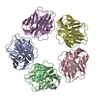
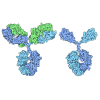
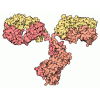
Journal: EMBO J / Year: 2025 Title: C-reactive protein is a broad-spectrum capsule-binding receptor for hepatic capture of blood-borne bacteria. Authors: Danyu Chen / Jiao Hu / Mengran Zhu / Yufeng Xie / Hantian Yao / Haoran An / Yumin Meng / Juanjuan Wang / Xueting Huang / Yanni Liu / Zhujun Shao / Ye Xiang / Jianxun Qi / George Fu Gao / Jing-Ren Zhang / Abstract: Plasma C-reactive protein (CRP) is widely used as a biomarker for bacterial infections due to its massive induction during infections. However, the biological function of CRP remains largely ...Plasma C-reactive protein (CRP) is widely used as a biomarker for bacterial infections due to its massive induction during infections. However, the biological function of CRP remains largely undefined. Here we show that CRP enables liver resident macrophages (Kupffer cells) to capture and eliminate a wide range of invasive bacteria from the bloodstream of mice, and thereby provides rapid and sterilizing immunity. Mechanistically, CRP binds to at least 20 capsule types of Gram-positive and -negative pathogens, and shuffles the encapsulated bacteria to Kupffer cells embedded in the lining of the liver sinusoidal vasculatures by the complement-dependent and -independent pathways. The complement-dependent mode involves the activation of complement C3 at the bacterial surface, and the capture of the C3-opsonized bacteria by the CRIg and CR3 complement receptors on Kupffer cells. Cryo-electron microscopy analysis revealed a flexible structural framework for CRP's recognition of structurally diverse capsular polysaccharides. Because human CRP also possesses the broad capsule-binding activities, our findings provide a biological reason for the massive rise of plasma CRP during bacterial infections.
In the structure databanks used in Yorodumi, some data are registered as the other names, "COVID-19 virus" and "2019-nCoV". Here are the details of the virus and the list of structure data.
Jan 31, 2019. EMDB accession codes are about to change! (news from PDBe EMDB page)
EMDB accession codes are about to change! (news from PDBe EMDB page)
The allocation of 4 digits for EMDB accession codes will soon come to an end. Whilst these codes will remain in use, new EMDB accession codes will include an additional digit and will expand incrementally as the available range of codes is exhausted. The current 4-digit format prefixed with “EMD-” (i.e. EMD-XXXX) will advance to a 5-digit format (i.e. EMD-XXXXX), and so on. It is currently estimated that the 4-digit codes will be depleted around Spring 2019, at which point the 5-digit format will come into force.
The EM Navigator/Yorodumi systems omit the EMD- prefix.
Related info.:Q: What is EMD? / ID/Accession-code notation in Yorodumi/EM Navigator
Yorodumi is a browser for structure data from EMDB, PDB, SASBDB, etc.
This page is also the successor to EM Navigator detail page, and also detail information page/front-end page for Omokage search.
The word "yorodu" (or yorozu) is an old Japanese word meaning "ten thousand". "mi" (miru) is to see.
Related info.:EMDB / PDB / SASBDB / Comparison of 3 databanks / Yorodumi Search / Aug 31, 2016. New EM Navigator & Yorodumi / Yorodumi Papers / Jmol/JSmol / Function and homology information / Changes in new EM Navigator and Yorodumi
 Movie
Movie Controller


 Open data
 Basic information
 Map data
 Sample
 Keywords
 Function and homology information
 Homo sapiens (human)
 Authors
 China, 1 items
  Citation
 Structure visualization
 Downloads & links
 emd_63844.png
 https://data.pdbj.org/pub/emdb/structures/EMD-63844
 Z (Sec.)
 Y (Row.)
 X (Col.)


 Sample components
 Processing
 Electron microscopy
 FIELD EMISSION GUN