 Movie
Movie Controller

[English] 日本語
 Yorodumi
- EMDB-62849: Gi-bound kappa opioid receptor in complex with dynorphin and posi... -
+ Open data

- Basic information
| Entry |  | ||||||||||||
|---|---|---|---|---|---|---|---|---|---|---|---|---|---|
| Title | Gi-bound kappa opioid receptor in complex with dynorphin and positive allosteric modulator MPAM-15 | ||||||||||||
 Map data Map data | |||||||||||||
 Sample Sample |
| ||||||||||||
 Keywords Keywords | Complex / GPCR / MEMBRANE PROTEIN | ||||||||||||
| Function / homology |  Function and homology information Function and homology informationopioid peptide activity / opioid receptor binding / response to acrylamide / dynorphin receptor activity / regulation of saliva secretion / Opioid Signalling / sensory perception of temperature stimulus / positive regulation of eating behavior / adenylate cyclase-inhibiting opioid receptor signaling pathway / negative regulation of luteinizing hormone secretion ...opioid peptide activity / opioid receptor binding / response to acrylamide / dynorphin receptor activity / regulation of saliva secretion / Opioid Signalling / sensory perception of temperature stimulus / positive regulation of eating behavior / adenylate cyclase-inhibiting opioid receptor signaling pathway / negative regulation of luteinizing hormone secretion / G protein-coupled opioid receptor activity / G protein-coupled opioid receptor signaling pathway / positive regulation of dopamine secretion / maternal behavior / positive regulation of potassium ion transmembrane transport / receptor serine/threonine kinase binding / positive regulation of p38MAPK cascade / G-protein activation / Activation of the phototransduction cascade / Glucagon-type ligand receptors / Thromboxane signalling through TP receptor / Sensory perception of sweet, bitter, and umami (glutamate) taste / G beta:gamma signalling through PI3Kgamma / G beta:gamma signalling through CDC42 / Cooperation of PDCL (PhLP1) and TRiC/CCT in G-protein beta folding / Activation of G protein gated Potassium channels / Inhibition of voltage gated Ca2+ channels via Gbeta/gamma subunits / Ca2+ pathway / G alpha (z) signalling events / High laminar flow shear stress activates signaling by PIEZO1 and PECAM1:CDH5:KDR in endothelial cells / Glucagon-like Peptide-1 (GLP1) regulates insulin secretion / Vasopressin regulates renal water homeostasis via Aquaporins / Adrenaline,noradrenaline inhibits insulin secretion / ADP signalling through P2Y purinoceptor 12 / G alpha (q) signalling events / neuropeptide binding / G alpha (i) signalling events / Thrombin signalling through proteinase activated receptors (PARs) / Activation of G protein gated Potassium channels / G-protein activation / G beta:gamma signalling through PI3Kgamma / Prostacyclin signalling through prostacyclin receptor / G beta:gamma signalling through PLC beta / ADP signalling through P2Y purinoceptor 1 / Thromboxane signalling through TP receptor / Presynaptic function of Kainate receptors / G beta:gamma signalling through CDC42 / Inhibition of voltage gated Ca2+ channels via Gbeta/gamma subunits / G alpha (12/13) signalling events / Glucagon-type ligand receptors / G beta:gamma signalling through BTK / ADP signalling through P2Y purinoceptor 12 / Adrenaline,noradrenaline inhibits insulin secretion / Cooperation of PDCL (PhLP1) and TRiC/CCT in G-protein beta folding / Ca2+ pathway / G alpha (z) signalling events / Thrombin signalling through proteinase activated receptors (PARs) / Extra-nuclear estrogen signaling / G alpha (q) signalling events / G alpha (s) signalling events / photoreceptor outer segment membrane / spectrin binding / sensory perception / eating behavior / Glucagon-like Peptide-1 (GLP1) regulates insulin secretion / G alpha (i) signalling events / High laminar flow shear stress activates signaling by PIEZO1 and PECAM1:CDH5:KDR in endothelial cells / Vasopressin regulates renal water homeostasis via Aquaporins / sensory perception of taste / alkylglycerophosphoethanolamine phosphodiesterase activity / retina development in camera-type eye / photoreceptor outer segment / estrous cycle / conditioned place preference / neuronal dense core vesicle / MECP2 regulates neuronal receptors and channels / cardiac muscle cell apoptotic process / regulation of eating behavior / behavioral response to cocaine / sensory perception of pain / adenylate cyclase inhibitor activity / photoreceptor inner segment / T cell migration / positive regulation of protein localization to cell cortex / positive regulation of relaxation of smooth muscle / Adenylate cyclase inhibitory pathway / D2 dopamine receptor binding / T-tubule / adenylate cyclase-inhibiting serotonin receptor signaling pathway / G protein-coupled serotonin receptor binding / axon terminus / cellular response to forskolin / hippocampal mossy fiber to CA3 synapse / locomotory behavior / regulation of mitotic spindle organization / Peptide ligand-binding receptors / mast cell degranulation / chemokine-mediated signaling pathway / sarcoplasmic reticulum / response to nicotine Similarity search - Function | ||||||||||||
| Biological species |  Homo sapiens (human) / Homo sapiens (human) /   Rattus norvegicus (Norway rat) / Rattus norvegicus (Norway rat) /  Bos taurus (domestic cattle) Bos taurus (domestic cattle) | ||||||||||||
| Method | single particle reconstruction / cryo EM / Resolution: 2.9 Å | ||||||||||||
 Authors Authors | Zhuang Y / Wang Y / Xu Y / Luo P / Xu HE | ||||||||||||
| Funding support |  China, 3 items China, 3 items
| ||||||||||||
 Citation Citation | Journal: Sci Adv / Year: 2026 Title: Structure-based design of an opioid receptor modulator for enhanced morphine analgesia. Authors: Yue Wang / Ping Luo / Haiyan Xu / Li Zhan / Kensuke Sakamoto / Mingyu Li / Jing Wang / Xi-Ping Huang / Jianhui Zhou / Tao Liu / Yanrui Suo / Wenjia Fan / Xinheng He / Youwei Xu / Yongjie Cai ...Authors: Yue Wang / Ping Luo / Haiyan Xu / Li Zhan / Kensuke Sakamoto / Mingyu Li / Jing Wang / Xi-Ping Huang / Jianhui Zhou / Tao Liu / Yanrui Suo / Wenjia Fan / Xinheng He / Youwei Xu / Yongjie Cai / Chao Wang / Yuxi Zhao / Antao Dai / Yali Lai / Qingning Yuan / Wen Hu / Kai Wu / Dehua Yang / Xi Cheng / Xiaojie Lu / Brian Krumm / Terry Kenakin / Jian Zhang / Bryan L Roth / Zhaobing Gao / H Eric Xu / Youwen Zhuang /  Abstract: The alarming rates of deaths due to opioid overdose present an urgent need for safer opioid analgesics. Positive allosteric modulators (PAMs) of opioid receptors (ORs) offer a promising approach to ...The alarming rates of deaths due to opioid overdose present an urgent need for safer opioid analgesics. Positive allosteric modulators (PAMs) of opioid receptors (ORs) offer a promising approach to enhance opioid efficacy while reducing risks of overdose. In this study, we unveil the selective mechanism of PAM modulation of the OR family through structure elucidation of the δ-opioid receptor and μ-opioid receptor (μOR) bound to orthosteric agonists and PAMs BMS986187 (BMS187) and BMS986122 (BMS122). In addition, we uncovered an unexpected but conserved allosteric site across the transmembrane helices TM2 to TM4 of ORs, occupied by BMS187 but not BMS122. Leveraging these structural insights, we designed 9-(5-(4-chlorophenyl)furan-2-yl)-3,3,6,6-tetramethyl-3,4,5,6,7,9-hexahydro-1-xanthene-1,8(2)-dione (MPAM-15), whose αβ cooperativity factor is 33-fold higher than BMS122 and threefold higher than BMS187, indicating markedly stronger positive allosterism. Animal studies demonstrate that MPAM-15 shows excellent brain penetration and enhances morphine-induced antinociception without exacerbating respiratory depression or constipation. Molecular dynamics simulations revealed that MPAM-15 promotes and stabilizes the conformational equilibrium of μOR toward the canonical active state, providing a mechanistic basis for its enhanced allosteric potency. These discoveries substantially advance our understanding of OR allosteric mechanism and pave the way for the structure-based development of allosteric opioid analgesics. | ||||||||||||
| History |
|
- Structure visualization
| Supplemental images |
|---|

- Downloads & links
-EMDB archive
| Map data | emd_62849.map.gz | 59.9 MB | EMDB map data format | |
|---|---|---|---|---|
| Header (meta data) | emd-62849-v30.xmlemd-62849.xml | 26.4 KB 26.4 KB | Display Display | EMDB header |
| Images |  emd_62849.png emd_62849.png | 43.9 KB | ||
| Filedesc metadata | emd-62849.cif.gz | 7.8 KB | ||
| Others | emd_62849_half_map_1.map.gzemd_62849_half_map_2.map.gz | 49.7 MB 49.7 MB | ||
| Archive directory |  http://ftp.pdbj.org/pub/emdb/structures/EMD-62849ftp://ftp.pdbj.org/pub/emdb/structures/EMD-62849 http://ftp.pdbj.org/pub/emdb/structures/EMD-62849ftp://ftp.pdbj.org/pub/emdb/structures/EMD-62849 | HTTPS FTP |
-Related structure data
| Related structure data |  9l60MC  8y71C  8y72C  8y73C M: atomic model generated by this map C: citing same article ( |
|---|---|
| Similar structure data |


-Links
| EMDB pages | EMDB (EBI/PDBe) / EMDataResource |
|---|---|
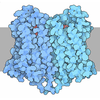
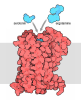
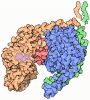
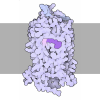
| Related items in Molecule of the Month |

-Map
| File | Download / File: emd_62849.map.gz / Format: CCP4 / Size: 64 MB / Type: IMAGE STORED AS FLOATING POINT NUMBER (4 BYTES) | ||||||||||||||||||||||||||||||||||||
|---|---|---|---|---|---|---|---|---|---|---|---|---|---|---|---|---|---|---|---|---|---|---|---|---|---|---|---|---|---|---|---|---|---|---|---|---|---|
| Projections & slices | Image control
Images are generated by Spider. | ||||||||||||||||||||||||||||||||||||
| Voxel size | X=Y=Z: 0.73 Å | ||||||||||||||||||||||||||||||||||||
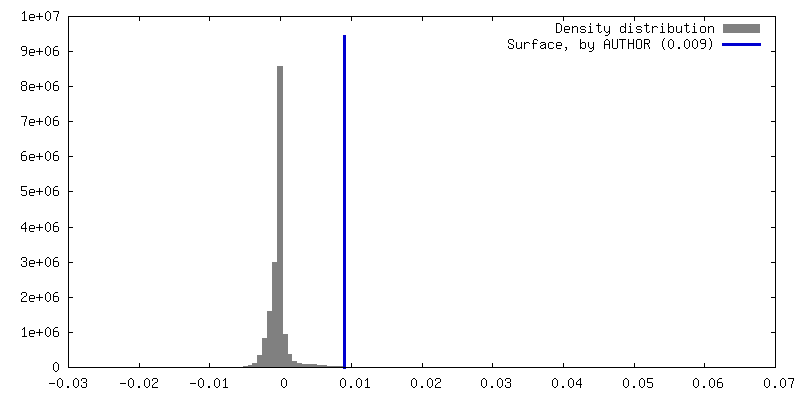
| Density |
| ||||||||||||||||||||||||||||||||||||
| Symmetry | Space group: 1 | ||||||||||||||||||||||||||||||||||||
| Details | EMDB XML:
|
 Z (Sec.)
 Y (Row.)
 X (Col.)



-Supplemental data
-Half map: #2
| File | emd_62849_half_map_1.map | ||||||||||||
|---|---|---|---|---|---|---|---|---|---|---|---|---|---|
| Projections & Slices |
| ||||||||||||
| Density Histograms |


-Half map: #1
| File | emd_62849_half_map_2.map | ||||||||||||
|---|---|---|---|---|---|---|---|---|---|---|---|---|---|
| Projections & Slices |
| ||||||||||||
| Density Histograms |


- Sample components
-Entire : Quaternary complex of kappa opioid receptor coupled to Gi heterotrimer
| Entire | Name: Quaternary complex of kappa opioid receptor coupled to Gi heterotrimer |
|---|---|
| Components |
|
-Supramolecule #1: Quaternary complex of kappa opioid receptor coupled to Gi heterotrimer
| Supramolecule | Name: Quaternary complex of kappa opioid receptor coupled to Gi heterotrimer type: complex / ID: 1 / Parent: 0 / Macromolecule list: #2-#5, #1 |
|---|---|
| Source (natural) | Organism: Homo sapiens (human) |
| Molecular weight | Theoretical: 130 KDa |
-Macromolecule #1: Guanine nucleotide-binding protein G(i) subunit alpha-1
| Macromolecule | Name: Guanine nucleotide-binding protein G(i) subunit alpha-1 type: protein_or_peptide / ID: 1 / Number of copies: 1 / Enantiomer: LEVO |
|---|---|
| Source (natural) | Organism: Homo sapiens (human) |
| Molecular weight | Theoretical: 40.445059 KDa |
| Recombinant expression | Organism:   Spodoptera frugiperda (fall armyworm) Spodoptera frugiperda (fall armyworm) |
| Sequence | String: MGCTLSAEDK AAVERSKMID RNLREDGEKA AREVKLLLLG AGESGKSTIV KQMKIIHEAG YSEEECKQYK AVVYSNTIQS IIAIIRAMG RLKIDFGDSA RADDARQLFV LAGAAEEGFM TAELAGVIKR LWKDSGVQAC FNRSREYQLN DSAAYYLNDL D RIAQPNYI ...String: MGCTLSAEDK AAVERSKMID RNLREDGEKA AREVKLLLLG AGESGKSTIV KQMKIIHEAG YSEEECKQYK AVVYSNTIQS IIAIIRAMG RLKIDFGDSA RADDARQLFV LAGAAEEGFM TAELAGVIKR LWKDSGVQAC FNRSREYQLN DSAAYYLNDL D RIAQPNYI PTQQDVLRTR VKTTGIVETH FTFKDLHFKM FDVGAQRSER KKWIHCFEGV TAIIFCVALS DYDLVLAEDE EM NRMHESM KLFDSICNNK WFTDTSIILF LNKKDLFEEK IKKSPLTICY PEYAGSNTYE EAAAYIQCQF EDLNKRKDTK EIY THFTCS TDTKNVQFVF DAVTDVIIKN NLKDCGLF UniProtKB: Guanine nucleotide-binding protein G(i) subunit alpha-1 |
-Macromolecule #2: Guanine nucleotide-binding protein G(I)/G(S)/G(T) subunit beta-1
| Macromolecule | Name: Guanine nucleotide-binding protein G(I)/G(S)/G(T) subunit beta-1 type: protein_or_peptide / ID: 2 / Number of copies: 1 / Enantiomer: LEVO |
|---|---|
| Source (natural) | Organism: Rattus norvegicus (Norway rat) |
| Molecular weight | Theoretical: 39.020664 KDa |
| Recombinant expression | Organism: Spodoptera frugiperda (fall armyworm) |
| Sequence | String: MHHHHHHHHG SLLQSELDQL RQEAEQLKNQ IRDARKACAD ATLSQITNNI DPVGRIQMRT RRTLRGHLAK IYAMHWGTDS RLLVSASQD GKLIIWDSYT TNKVHAIPLR SSWVMTCAYA PSGNYVACGG LDNICSIYNL KTREGNVRVS RELAGHTGYL S CCRFLDDN ...String: MHHHHHHHHG SLLQSELDQL RQEAEQLKNQ IRDARKACAD ATLSQITNNI DPVGRIQMRT RRTLRGHLAK IYAMHWGTDS RLLVSASQD GKLIIWDSYT TNKVHAIPLR SSWVMTCAYA PSGNYVACGG LDNICSIYNL KTREGNVRVS RELAGHTGYL S CCRFLDDN QIVTSSGDTT CALWDIETGQ QTTTFTGHTG DVMSLSLAPD TRLFVSGACD ASAKLWDVRE GMCRQTFTGH ES DINAICF FPNGNAFATG SDDATCRLFD LRADQELMTY SHDNIICGIT SVSFSKSGRL LLAGYDDFNC NVWDALKADR AGV LAGHDN RVSCLGVTDD GMAVATGSWD SFLKIWN UniProtKB: Guanine nucleotide-binding protein G(I)/G(S)/G(T) subunit beta-1 |
-Macromolecule #3: Guanine nucleotide-binding protein G(I)/G(S)/G(O) subunit gamma-2
| Macromolecule | Name: Guanine nucleotide-binding protein G(I)/G(S)/G(O) subunit gamma-2 type: protein_or_peptide / ID: 3 / Number of copies: 1 / Enantiomer: LEVO |
|---|---|
| Source (natural) | Organism: Bos taurus (domestic cattle) |
| Molecular weight | Theoretical: 7.861143 KDa |
| Recombinant expression | Organism: Spodoptera frugiperda (fall armyworm) |
| Sequence | String: MASNNTASIA QARKLVEQLK MEANIDRIKV SKAAADLMAY CEAHAKEDPL LTPVPASENP FREKKFFCAI L UniProtKB: Guanine nucleotide-binding protein G(I)/G(S)/G(O) subunit gamma-2 |
-Macromolecule #4: Kappa-type opioid receptor
| Macromolecule | Name: Kappa-type opioid receptor / type: protein_or_peptide / ID: 4 / Number of copies: 1 / Enantiomer: LEVO |
|---|---|
| Source (natural) | Organism: Homo sapiens (human) |
| Molecular weight | Theoretical: 44.780062 KDa |
| Recombinant expression | Organism: Spodoptera frugiperda (fall armyworm) |
| Sequence | String: DYKDDDDVDA SSPIQIFRGE PGPTCAPSAC LPPNSSAWFP GWAEPDSNGS AGSEDAQLEP AHISPAIPVI ITAVYSVVFV VGLVGNSLV MFVIIRYTKM KTATNIYIFN LALADALVTT TMPFQSTVYL MNSWPFGDVL CKIVISIDYY NMFTSIFTLT M MSVDRYIA ...String: DYKDDDDVDA SSPIQIFRGE PGPTCAPSAC LPPNSSAWFP GWAEPDSNGS AGSEDAQLEP AHISPAIPVI ITAVYSVVFV VGLVGNSLV MFVIIRYTKM KTATNIYIFN LALADALVTT TMPFQSTVYL MNSWPFGDVL CKIVISIDYY NMFTSIFTLT M MSVDRYIA VCHPVKALDF RTPLKAKIIN ICIWLLSSSV GISAIVLGGT KVREDVDVIE CSLQFPDDDY SWWDLFMKIC VF IFAFVIP VLIIIVCYTL MILRLKSVRL LSGSREKDRN LRRITRLVLV VVAVFVVCWT PIHIFILVEA LGSTSHSTAA LSS YYFCIA LGYTNSSLNP ILYAFLDENF KRCFRDFCFP LKMRMERQST SRVRNTVQDP AYLRDIDGMN KPVHHHHHHH H UniProtKB: Kappa-type opioid receptor |
-Macromolecule #5: Dynorphin A(1-13)
| Macromolecule | Name: Dynorphin A(1-13) / type: protein_or_peptide / ID: 5 / Number of copies: 1 / Enantiomer: LEVO |
|---|---|
| Source (natural) | Organism: Homo sapiens (human) |
| Molecular weight | Theoretical: 1.608995 KDa |
| Sequence | String: YGGFLRRIRP KLK UniProtKB: Proenkephalin-B |
-Macromolecule #6: CHOLESTEROL
| Macromolecule | Name: CHOLESTEROL / type: ligand / ID: 6 / Number of copies: 2 / Formula: CLR |
|---|---|
| Molecular weight | Theoretical: 386.654 Da |
| Chemical component information | 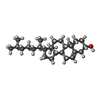 ChemComp-CLR: |
-Macromolecule #7: 9-[5-(3-chlorophenyl)furan-2-yl]-3,3,6,6-tetramethyl-4,5,7,9-tetr...
| Macromolecule | Name: 9-[5-(3-chlorophenyl)furan-2-yl]-3,3,6,6-tetramethyl-4,5,7,9-tetrahydro-2~{H}-xanthene-1,8-dione type: ligand / ID: 7 / Number of copies: 1 / Formula: A1D6C |
|---|---|
| Molecular weight | Theoretical: 450.954 Da |
-Experimental details
-Structure determination
| Method | cryo EM |
|---|---|
 Processing Processing | single particle reconstruction |
| Aggregation state | particle |
-Sample preparation
| Buffer | pH: 7.3 |
|---|---|
| Vitrification | Cryogen name: ETHANE / Chamber humidity: 100 % / Chamber temperature: 277.15 K / Instrument: FEI VITROBOT MARK IV |
- Electron microscopy
| Microscope | TFS KRIOS |
|---|---|
| Image recording | Film or detector model: GATAN K3 (6k x 4k) / Average electron dose: 50.0 e/Å2 |
| Electron beam | Acceleration voltage: 300 kV / Electron source:  FIELD EMISSION GUN FIELD EMISSION GUN |
| Electron optics | Illumination mode: FLOOD BEAM / Imaging mode: BRIGHT FIELD / Nominal defocus max: 2.0 µm / Nominal defocus min: 1.2 µm / Nominal magnification: 105000 |
| Sample stage | Specimen holder model: FEI TITAN KRIOS AUTOGRID HOLDER |
| Experimental equipment |  Model: Titan Krios / Image courtesy: FEI Company |

