National Natural Science Foundation of China (NSFC)
32325008
China
Citation
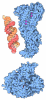
Journal: Nat Plants / Year: 2026 Title: Molecular basis of DRB4-assisted long RNA processing and 21-nucleotide siRNA biogenesis by DCL4 in plants. Authors: Changshi Wang / Cheng Chi / Yuelin Liu / Jun Zhao / Qian Wang / Nana Wang / Zhihui Zhang / Kai Jiang / Yan Xue / Yong Li / Peiyi Wang / Jixian Zhai / Hongwei Guo / Jiamu Du / Abstract: Small RNAs, including microRNA, small interfering RNA (siRNA) and PIWI-interacting RNA, are regulatory RNAs that play critical roles in gene regulation, development, viral defence and environmental ...Small RNAs, including microRNA, small interfering RNA (siRNA) and PIWI-interacting RNA, are regulatory RNAs that play critical roles in gene regulation, development, viral defence and environmental response. The biogenesis of microRNA and siRNA relies on the Dicer family ribonucleases to capture, measure and cleave their double-stranded RNA substrates. In Arabidopsis, DICER-LIKE 4 (DCL4) produces 21-nucleotide siRNA in association with Double-Stranded RNA-Binding Protein 4 (DRB4) for post-transcriptional gene silencing. Here we determined the structures of the DCL4-RNA complex in a dicing-competent conformation and the DCL4-DRB4-RNA complex in a pre-dicing conformation. DCL4 measures 21 nucleotides along RNA between its PAZ and RNase III domains to determine the product siRNA length. A DCL4-specific loop locates the second double-stranded RNA binding domain of DCL4 and DRB4 to a distal position of the substrate RNA, yielding a preference for long RNA substrates. Our studies demonstrate the molecular basis of substrate recognition, length measurement and long RNA preference by the DCL4-DRB4 complex for 21-nucleotide siRNA biogenesis in plants.
In the structure databanks used in Yorodumi, some data are registered as the other names, "COVID-19 virus" and "2019-nCoV". Here are the details of the virus and the list of structure data.
Jan 31, 2019. EMDB accession codes are about to change! (news from PDBe EMDB page)
EMDB accession codes are about to change! (news from PDBe EMDB page)
The allocation of 4 digits for EMDB accession codes will soon come to an end. Whilst these codes will remain in use, new EMDB accession codes will include an additional digit and will expand incrementally as the available range of codes is exhausted. The current 4-digit format prefixed with “EMD-” (i.e. EMD-XXXX) will advance to a 5-digit format (i.e. EMD-XXXXX), and so on. It is currently estimated that the 4-digit codes will be depleted around Spring 2019, at which point the 5-digit format will come into force.
The EM Navigator/Yorodumi systems omit the EMD- prefix.
Related info.:Q: What is EMD? / ID/Accession-code notation in Yorodumi/EM Navigator
Yorodumi is a browser for structure data from EMDB, PDB, SASBDB, etc.
This page is also the successor to EM Navigator detail page, and also detail information page/front-end page for Omokage search.
The word "yorodu" (or yorozu) is an old Japanese word meaning "ten thousand". "mi" (miru) is to see.
Related info.:EMDB / PDB / SASBDB / Comparison of 3 databanks / Yorodumi Search / Aug 31, 2016. New EM Navigator & Yorodumi / Yorodumi Papers / Jmol/JSmol / Function and homology information / Changes in new EM Navigator and Yorodumi
 Movie
Movie Controller


 Open data
 Basic information
 Map data
 Sample
 Keywords
 Function and homology information
 Arabidopsis thaliana (thale cress)
 Authors
 China, 1 items
  Citation
 Structure visualization
 Downloads & links
 emd_62234.png
 http://ftp.pdbj.org/pub/emdb/structures/EMD-62234


 Z (Sec.)
 Y (Row.)
 X (Col.)


 Sample components
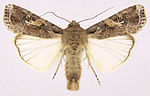 Spodoptera frugiperda (fall armyworm)
 Processing
 Electron microscopy
 FIELD EMISSION GUN

