histone H2AK15 ubiquitin ligase activity / positive regulation of transcription regulatory region DNA binding / histone ubiquitin ligase activity / Signaling by BMP / negative regulation of DNA recombination / (E3-independent) E2 ubiquitin-conjugating enzyme / Apoptosis induced DNA fragmentation / double-strand break repair via classical nonhomologous end joining / isotype switching / protein K11-linked ubiquitination ...histone H2AK15 ubiquitin ligase activity / positive regulation of transcription regulatory region DNA binding / histone ubiquitin ligase activity / Signaling by BMP / negative regulation of DNA recombination / (E3-independent) E2 ubiquitin-conjugating enzyme / Apoptosis induced DNA fragmentation / double-strand break repair via classical nonhomologous end joining / isotype switching / protein K11-linked ubiquitination / protein K6-linked ubiquitination / chromosome condensation / : / nucleosomal DNA binding / K63-linked polyubiquitin modification-dependent protein binding / Formation of Senescence-Associated Heterochromatin Foci (SAHF) / E2 ubiquitin-conjugating enzyme / response to ionizing radiation / Formation of the ternary complex, and subsequently, the 43S complex / DNA repair-dependent chromatin remodeling / minor groove of adenine-thymine-rich DNA binding / Ribosomal scanning and start codon recognition / ubiquitin conjugating enzyme activity / Translation initiation complex formation / negative regulation of transcription elongation by RNA polymerase II / SARS-CoV-1 modulates host translation machinery / negative regulation of BMP signaling pathway / Peptide chain elongation / Selenocysteine synthesis / Formation of a pool of free 40S subunits / Eukaryotic Translation Termination / SRP-dependent cotranslational protein targeting to membrane / Response of EIF2AK4 (GCN2) to amino acid deficiency / protein K63-linked ubiquitination / protein monoubiquitination / Viral mRNA Translation / Nonsense Mediated Decay (NMD) independent of the Exon Junction Complex (EJC) / ubiquitin ligase complex / GTP hydrolysis and joining of the 60S ribosomal subunit / L13a-mediated translational silencing of Ceruloplasmin expression / SUMOylation of DNA damage response and repair proteins / interstrand cross-link repair / nucleosome binding / protein autoubiquitination / Major pathway of rRNA processing in the nucleolus and cytosol / negative regulation of megakaryocyte differentiation / protein localization to CENP-A containing chromatin / Nonsense Mediated Decay (NMD) enhanced by the Exon Junction Complex (EJC) / Chromatin modifying enzymes / Replacement of protamines by nucleosomes in the male pronucleus / CENP-A containing nucleosome / transcription repressor complex / protein K48-linked ubiquitination / Packaging Of Telomere Ends / Maturation of protein E / Recognition and association of DNA glycosylase with site containing an affected purine / Cleavage of the damaged purine / Maturation of protein E / ER Quality Control Compartment (ERQC) / Myoclonic epilepsy of Lafora / epigenetic regulation of gene expression / FLT3 signaling by CBL mutants / Deposition of new CENPA-containing nucleosomes at the centromere / IRAK2 mediated activation of TAK1 complex / telomere organization / Alpha-protein kinase 1 signaling pathway / Glycogen synthesis / IRAK1 recruits IKK complex / IRAK1 recruits IKK complex upon TLR7/8 or 9 stimulation / Prevention of phagosomal-lysosomal fusion / Endosomal Sorting Complex Required For Transport (ESCRT) / Interleukin-7 signaling / Membrane binding and targetting of GAG proteins / Negative regulation of FLT3 / Regulation of TBK1, IKKε (IKBKE)-mediated activation of IRF3, IRF7 / PTK6 Regulates RTKs and Their Effectors AKT1 and DOK1 / Regulation of TBK1, IKKε-mediated activation of IRF3, IRF7 upon TLR3 ligation / IRAK2 mediated activation of TAK1 complex upon TLR7/8 or 9 stimulation / Recognition and association of DNA glycosylase with site containing an affected pyrimidine / Cleavage of the damaged pyrimidine / Constitutive Signaling by NOTCH1 HD Domain Mutants / NOTCH2 Activation and Transmission of Signal to the Nucleus / TICAM1,TRAF6-dependent induction of TAK1 complex / TICAM1-dependent activation of IRF3/IRF7 / APC/C:Cdc20 mediated degradation of Cyclin B / RNA Polymerase I Promoter Opening / Downregulation of ERBB4 signaling / APC-Cdc20 mediated degradation of Nek2A / Regulation of FZD by ubiquitination / cytosolic ribosome / p75NTR recruits signalling complexes / Inhibition of DNA recombination at telomere / InlA-mediated entry of Listeria monocytogenes into host cells / TRAF6 mediated IRF7 activation in TLR7/8 or 9 signaling / Assembly of the ORC complex at the origin of replication / NF-kB is activated and signals survival / TRAF6-mediated induction of TAK1 complex within TLR4 complex / Regulation of pyruvate metabolism / Meiotic synapsis / Pexophagy Similarity search - Function
National Natural Science Foundation of China (NSFC)
22137005, 92253302, 22227810
China
Citation
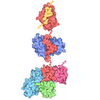
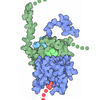
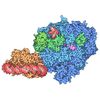
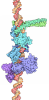
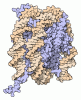
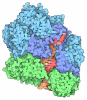
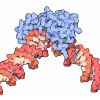
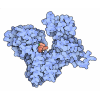
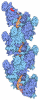
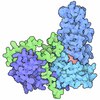
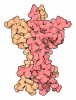
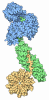
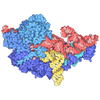
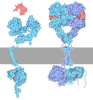
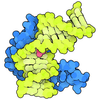
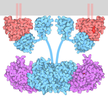
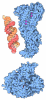
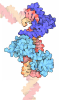
Journal: Angew Chem Int Ed Engl / Year: 2025 Title: Promotion of RNF168-Mediated Nucleosomal H2A Ubiquitylation by Structurally Defined K63-Polyubiquitylated Linker Histone H1. Authors: Qiang Shi / Zhiheng Deng / Liying Zhang / Zebin Tong / Jia-Bin Li / Guo-Chao Chu / Huasong Ai / Lei Liu / Abstract: The chemical synthesis of histones with homogeneous modifications is a powerful approach for quantitatively deciphering the functional crosstalk between different post-translational modifications ...The chemical synthesis of histones with homogeneous modifications is a powerful approach for quantitatively deciphering the functional crosstalk between different post-translational modifications (PTMs). In this study, we developed an expedient site-specific (poly)ubiquitylation strategy (CAEPL, Cysteine Aminoethylation coupled with Enzymatic Protein Ligation), which integrates the Cys-aminoethylation reaction with the process of ubiquitin-activating enzyme UBA1-assisted native chemical ligation. Using this strategy, we successfully prepared monoubiquitylated and K63-linked di- and tri-ubiquitylated linker histone H1.0 proteins, which were incorporated into individual chromatosomes. Quantitative biochemical analysis of different RNF168 constructs on H1 ubiquitylated chromatosomes with different ubiquitin chain lengths demonstrated that K63-linked polyubiquitylated H1.0 could directly stimulate RNF168 ubiquitylation activity by enhancing the affinity between RNF168 and the chromatosome. Subsequent cryo-EM structural analysis of the RNF168/UbcH5c-Ub/H1.0-K63-Ub chromatosome complex revealed the potential recruitment orientation between RNF168 UDM1 domain and K63-linked ubiquitin chain on H1.0. Finally, we explored the impact of H1.0 ubiquitylation on RNF168 activity in the context of asymmetric H1.0-K63-Ub di-nucleosome substrate, revealing a comparable stimulation effect of both the inter- and intra-nucleosomal crosstalk. Overall, our study highlights the significance of access to structurally defined polyubiquitylated H1.0 by the CAEPL strategy, enabling in-depth mechanistic investigations of in-trans PTM crosstalk between linker histone H1.0 and core histone H2A ubiquitylation.
In the structure databanks used in Yorodumi, some data are registered as the other names, "COVID-19 virus" and "2019-nCoV". Here are the details of the virus and the list of structure data.
Jan 31, 2019. EMDB accession codes are about to change! (news from PDBe EMDB page)
EMDB accession codes are about to change! (news from PDBe EMDB page)
The allocation of 4 digits for EMDB accession codes will soon come to an end. Whilst these codes will remain in use, new EMDB accession codes will include an additional digit and will expand incrementally as the available range of codes is exhausted. The current 4-digit format prefixed with “EMD-” (i.e. EMD-XXXX) will advance to a 5-digit format (i.e. EMD-XXXXX), and so on. It is currently estimated that the 4-digit codes will be depleted around Spring 2019, at which point the 5-digit format will come into force.
The EM Navigator/Yorodumi systems omit the EMD- prefix.
Related info.:Q: What is EMD? / ID/Accession-code notation in Yorodumi/EM Navigator
Yorodumi is a browser for structure data from EMDB, PDB, SASBDB, etc.
This page is also the successor to EM Navigator detail page, and also detail information page/front-end page for Omokage search.
The word "yorodu" (or yorozu) is an old Japanese word meaning "ten thousand". "mi" (miru) is to see.
Related info.:EMDB / PDB / SASBDB / Comparison of 3 databanks / Yorodumi Search / Aug 31, 2016. New EM Navigator & Yorodumi / Yorodumi Papers / Jmol/JSmol / Function and homology information / Changes in new EM Navigator and Yorodumi
 Movie
Movie Controller

 Yorodumi
 Open data
 Basic information
 Map data
 Sample
 Keywords
 Function and homology information
 Homo sapiens (human)
 Authors
 China, 1 items
  Citation
 Structure visualization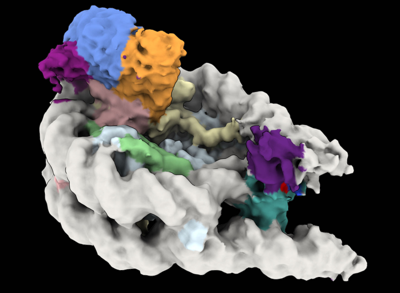
 Downloads & links
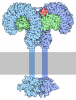
 emd_60781.png
 http://ftp.pdbj.org/pub/emdb/structures/EMD-60781


 Z (Sec.)
 Y (Row.)
 X (Col.)








 Sample components
 Escherichia coli (E. coli)
 Processing
 Electron microscopy
 FIELD EMISSION GUN