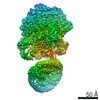
negative regulation of transcription elongation by RNA polymerase I / positive regulation of transcription elongation by RNA polymerase I / regulation of septum digestion after cytokinesis / regulation of transcription-coupled nucleotide-excision repair / co-transcriptional lncRNA 3' end processing, cleavage and polyadenylation pathway / siRNA-mediated pericentric heterochromatin formation / RNA polymerase I core binding / DSIF complex / regulation of rRNA processing / intracellular mRNA localization ...negative regulation of transcription elongation by RNA polymerase I / positive regulation of transcription elongation by RNA polymerase I / regulation of septum digestion after cytokinesis / regulation of transcription-coupled nucleotide-excision repair / co-transcriptional lncRNA 3' end processing, cleavage and polyadenylation pathway / siRNA-mediated pericentric heterochromatin formation / RNA polymerase I core binding / DSIF complex / regulation of rRNA processing / intracellular mRNA localization / RNA polymerase I general transcription initiation factor binding / rDNA heterochromatin / transcription elongation factor complex / intracellular phosphate ion homeostasis / transcription elongation-coupled chromatin remodeling / snRNP binding / U4 snRNA binding / transcription elongation factor activity / chromatin-protein adaptor activity / kinetochore assembly / nuclear-transcribed mRNA catabolic process, deadenylation-dependent decay / positive regulation of nuclear-transcribed mRNA poly(A) tail shortening / spliceosomal complex assembly / RNA polymerase II complex binding / termination of RNA polymerase II transcription / U5 snRNA binding / termination of RNA polymerase I transcription / maintenance of transcriptional fidelity during transcription elongation by RNA polymerase II / chromosome, centromeric region / transcription initiation at RNA polymerase I promoter / positive regulation of translational initiation / mitotic metaphase chromosome alignment / U2 snRNA binding / nuclear-transcribed mRNA catabolic process / U6 snRNA binding / negative regulation of tumor necrosis factor-mediated signaling pathway / U1 snRNA binding / pericentric heterochromatin / RNA polymerase II core promoter sequence-specific DNA binding / termination of RNA polymerase III transcription / transcription initiation at RNA polymerase III promoter / RNA polymerase I complex / RNA polymerase III complex / negative regulation of megakaryocyte differentiation / RNA polymerase II, core complex / transcription elongation by RNA polymerase I / tRNA transcription by RNA polymerase III / protein localization to CENP-A containing chromatin / transcription by RNA polymerase I / Replacement of protamines by nucleosomes in the male pronucleus / Packaging Of Telomere Ends / transcription-coupled nucleotide-excision repair / translation initiation factor binding / Recognition and association of DNA glycosylase with site containing an affected purine / Cleavage of the damaged purine / positive regulation of autophagy / telomere organization / Deposition of new CENPA-containing nucleosomes at the centromere / Recognition and association of DNA glycosylase with site containing an affected pyrimidine / Cleavage of the damaged pyrimidine / translesion synthesis / transcription initiation-coupled chromatin remodeling / RNA Polymerase I Promoter Opening / Inhibition of DNA recombination at telomere / Assembly of the ORC complex at the origin of replication / SUMOylation of chromatin organization proteins / Regulation of endogenous retroelements by the Human Silencing Hub (HUSH) complex / Meiotic synapsis / DNA methylation / Condensation of Prophase Chromosomes / Chromatin modifications during the maternal to zygotic transition (MZT) / SIRT1 negatively regulates rRNA expression / HCMV Late Events / ERCC6 (CSB) and EHMT2 (G9a) positively regulate rRNA expression / PRC2 methylates histones and DNA / Regulation of endogenous retroelements by KRAB-ZFP proteins / Defective pyroptosis / HDACs deacetylate histones / positive regulation of transcription elongation by RNA polymerase II / Transcriptional regulation by small RNAs / lipopolysaccharide binding / Regulation of endogenous retroelements by Piwi-interacting RNAs (piRNAs) / RNA Polymerase I Promoter Escape / Nonhomologous End-Joining (NHEJ) / transcription initiation at RNA polymerase II promoter / P-body / euchromatin / HDMs demethylate histones / Activated PKN1 stimulates transcription of AR (androgen receptor) regulated genes KLK2 and KLK3 / transcription elongation by RNA polymerase II / RUNX1 regulates genes involved in megakaryocyte differentiation and platelet function / Negative Regulation of CDH1 Gene Transcription / NoRC negatively regulates rRNA expression / PKMTs methylate histone lysines / G2/M DNA damage checkpoint / Formation of the beta-catenin:TCF transactivating complex / B-WICH complex positively regulates rRNA expression / DNA Damage/Telomere Stress Induced Senescence / Meiotic recombination / transcription by RNA polymerase II Similarity search - Function
Transcription elongation factor 1 homolog / DNA-directed RNA polymerase subunit beta / DNA-directed RNA polymerases I, II, and III subunit RPABC5 / DNA-directed RNA polymerases I, II, and III subunit RPABC2 / DNA-directed RNA polymerases I, II, and III subunit RPABC3 / RNA polymerase II subunit B32 / Transcription elongation factor SPT5 / DNA-directed RNA polymerases I, II, and III subunit RPABC1 / RNA polymerase II subunit B12.5 / DNA-directed RNA polymerase subunit ...Transcription elongation factor 1 homolog / DNA-directed RNA polymerase subunit beta / DNA-directed RNA polymerases I, II, and III subunit RPABC5 / DNA-directed RNA polymerases I, II, and III subunit RPABC2 / DNA-directed RNA polymerases I, II, and III subunit RPABC3 / RNA polymerase II subunit B32 / Transcription elongation factor SPT5 / DNA-directed RNA polymerases I, II, and III subunit RPABC1 / RNA polymerase II subunit B12.5 / DNA-directed RNA polymerase subunit / DNA-directed RNA polymerase II subunit RPB3 / DNA-directed RNA polymerase subunit / RNA polymerase subunit ABC10-alpha / DNA-directed RNA polymerase subunit / Transcription elongation factor SPT4 / Histone H2B type 1-J / Histone H2A-Bbd type 2/3 / Histone H4 / Histone H3.3 Similarity search - Component
Japan Agency for Medical Research and Development (AMED)
JP24ama121009
Japan
Citation
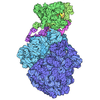
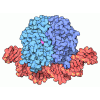
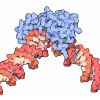
Journal: EMBO J / Year: 2025 Title: Structural basis of RNAPII transcription on the nucleosome containing histone variant H2A.B. Authors: Munetaka Akatsu / Rina Hirano / Tomoya Kujirai / Mitsuo Ogasawara / Haruhiko Ehara / Shun-Ichi Sekine / Yoshimasa Takizawa / Hitoshi Kurumizaka / Abstract: H2A.B is a distant histone H2A variant associated with actively transcribed regions of the genome, suggesting its positive role in promoting transcription. In the present study, we demonstrate that ...H2A.B is a distant histone H2A variant associated with actively transcribed regions of the genome, suggesting its positive role in promoting transcription. In the present study, we demonstrate that the RNA polymerase II elongation complex (EC) transcribes the nucleosome containing H2A.B more efficiently than that with canonical H2A in vitro. Our cryo-electron microscopy analysis of the H2A.B nucleosome during transcription revealed that the proximal H2A.B-H2B dimer is released from the nucleosome as the EC transcribes the proximal half of the nucleosomal DNA. This dissociation, which is not observed in the canonical H2A nucleosome, likely enhances the EC elongation efficiency in the H2A.B nucleosome. Mutational analyses suggested that the unique short C-terminal region of H2A.B alone enhances EC elongation efficiency when substituted for its counterpart in canonical H2A. Additionally, other regions of H2A.B contribute to this enhancement. These structural and biochemical findings provide new insights into the role of H2A.B in regulating gene expression.
Macromolecule #10: RNA polymerase subunit ABC10-beta, common to RNA polymerases I, I...
Macromolecule
Name: RNA polymerase subunit ABC10-beta, common to RNA polymerases I, II, and III type: protein_or_peptide / ID: 10 / Number of copies: 1 / Enantiomer: LEVO
In the structure databanks used in Yorodumi, some data are registered as the other names, "COVID-19 virus" and "2019-nCoV". Here are the details of the virus and the list of structure data.
Jan 31, 2019. EMDB accession codes are about to change! (news from PDBe EMDB page)
EMDB accession codes are about to change! (news from PDBe EMDB page)
The allocation of 4 digits for EMDB accession codes will soon come to an end. Whilst these codes will remain in use, new EMDB accession codes will include an additional digit and will expand incrementally as the available range of codes is exhausted. The current 4-digit format prefixed with “EMD-” (i.e. EMD-XXXX) will advance to a 5-digit format (i.e. EMD-XXXXX), and so on. It is currently estimated that the 4-digit codes will be depleted around Spring 2019, at which point the 5-digit format will come into force.
The EM Navigator/Yorodumi systems omit the EMD- prefix.
Related info.:Q: What is EMD? / ID/Accession-code notation in Yorodumi/EM Navigator
Yorodumi is a browser for structure data from EMDB, PDB, SASBDB, etc.
This page is also the successor to EM Navigator detail page, and also detail information page/front-end page for Omokage search.
The word "yorodu" (or yorozu) is an old Japanese word meaning "ten thousand". "mi" (miru) is to see.
Related info.:EMDB / PDB / SASBDB / Comparison of 3 databanks / Yorodumi Search / Aug 31, 2016. New EM Navigator & Yorodumi / Yorodumi Papers / Jmol/JSmol / Function and homology information / Changes in new EM Navigator and Yorodumi
 Movie
Movie Controller

 Yorodumi
 Open data
 Basic information
 Map data
 Sample
 Keywords
 Function and homology information
 Komagataella phaffii (fungus) /
  Homo sapiens (human) / synthetic construct (others)
 Authors
 Japan, 10 items
  Citation
 Structure visualization
 Downloads & links
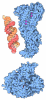
 emd_60593.png
 http://ftp.pdbj.org/pub/emdb/structures/EMD-60593



 Z (Sec.)
 Y (Row.)
 X (Col.)


 Sample components
 Escherichia coli (E. coli)
 Processing
 Electron microscopy
 FIELD EMISSION GUN