Membrane protein / phosphoethanolamine transferase / lipid A modification / polymyxin resistance / TRANSFERASE
機能・相同性
機能・相同性情報
lipid A phosphoethanolamine transferase / phosphotransferase activity, phosphate group as acceptor / lipopolysaccharide core region biosynthetic process / response to antibiotic / metal ion binding / plasma membrane 類似検索 - 分子機能
National Institutes of Health/National Institute of General Medical Sciences (NIH/NIGMS)
GM132120
米国
National Institutes of Health/National Institute Of Allergy and Infectious Diseases (NIH/NIAID)
AI181556
米国
National Institutes of Health/National Institute Of Allergy and Infectious Diseases (NIH/NIAID)
AI74416
米国
National Institutes of Health/National Institute Of Allergy and Infectious Diseases (NIH/NIAID)
AI176776
米国
National Institutes of Health/National Institute Of Allergy and Infectious Diseases (NIH/NIAID)
AI150098
米国
引用
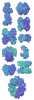
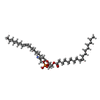
ジャーナル: Nat Commun / 年: 2025 タイトル: Mechanistic basis of antimicrobial resistance mediated by the phosphoethanolamine transferase MCR-1. 著者: Allen P Zinkle / Mariana Bunoro Batista / Carmen M Herrera / Satchal K Erramilli / Brian Kloss / Khuram U Ashraf / Kamil Nosol / Guozhi Zhang / Rosemary J Cater / Michael T Marty / Anthony A ...著者: Allen P Zinkle / Mariana Bunoro Batista / Carmen M Herrera / Satchal K Erramilli / Brian Kloss / Khuram U Ashraf / Kamil Nosol / Guozhi Zhang / Rosemary J Cater / Michael T Marty / Anthony A Kossiakoff / M Stephen Trent / Rie Nygaard / Phillip J Stansfeld / Filippo Mancia / 要旨: Polymyxins are used to treat infections caused by multidrug-resistant Gram-negative bacteria. They are cationic peptides that target the negatively charged lipid A component of lipopolysaccharides, ...Polymyxins are used to treat infections caused by multidrug-resistant Gram-negative bacteria. They are cationic peptides that target the negatively charged lipid A component of lipopolysaccharides, disrupting the outer membrane and lysing the cell. Polymyxin resistance is conferred by inner-membrane enzymes, such as phosphoethanolamine transferases, which add positively charged phosphoethanolamine to lipid A. Here, we present the structure of MCR-1, a plasmid-encoded phosphoethanolamine transferase, in its liganded form. The phosphatidylethanolamine donor substrate is bound near the active site in the periplasmic domain, and lipid A is bound over 20 Å away, within the transmembrane region. Integrating structural, biochemical, and drug-resistance data with computational analyses, we propose a two-state model in which the periplasmic domain rotates to bring the active site to lipid A, near the preferential phosphate modification site for MCR-1. This enzymatic mechanism may be generally applicable to other phosphoform transferases with large, globular soluble domains.
 ムービー
ムービー コントローラー


 データを開く
 基本情報
基本情報
 マップデータ
 試料
試料 キーワード
キーワード 機能・相同性情報
 Escherichia coli (大腸菌) /
  Homo sapiens (ヒト)
 データ登録者
 米国, 5件
  引用
引用

 構造の表示
構造の表示
 ダウンロードとリンク
 emd_49896.png
 http://ftp.pdbj.org/pub/emdb/structures/EMD-49896
 Z (Sec.)
 Y (Row.)
 X (Col.)


 試料の構成要素
 解析
解析 電子顕微鏡法
 FIELD EMISSION GUN

