National Institutes of Health/National Institute of General Medical Sciences (NIH/NIGMS)
5R35GM128641
United States
Citation
Journal: Adv Sci (Weinh) / Year: 2026 Title: ITGB1 Regulates Triple-Negative Breast Cancer Development by Modulating the Tumor Microenvironment. Authors: Nuozi Song / Siqi Chen / Lei Wang / Jessica Dang / Xu Cao / Stephanie Singh / Lu Yang / Jinhui Wang / Steven T Rosen / Yingyu Wang / Chun-Wei D Chen / Cheng Zhang / Mingye Feng / Abstract: Tumorigenesis and metastasis are frequently attributed to the intricate interplay between cancer cells and the tumor microenvironment (TME). Comprehending the mechanisms and key regulators of cancer- ...Tumorigenesis and metastasis are frequently attributed to the intricate interplay between cancer cells and the tumor microenvironment (TME). Comprehending the mechanisms and key regulators of cancer-immune crosstalk in the TME is imperative for developing efficacious immunotherapy. Through a series of in vivo CRISPR screens, we identified tumor-intrinsic ITGB1 as a critical regulator of triple-negative breast cancer (TNBC) development and deciphered its underlying mechanisms. Tumoral ITGB1 facilitated the establishment of pro-tumorigenic TME by orchestrating tumor-associated myeloid populations. Suppressing ITGB1 favored the enrichment of anti-tumorigenic myeloid cells and enhanced infiltration of CD4 and CD8 T cells, culminating in superior antitumor effects. CRISPR scanning pinpointed a previously unrecognized functional domain essential for ITGB1's pro-tumorigenic activity. This domain is distinct from all known ligand-binding sites in ITGB1. An antibody capable of sterically blocking this domain significantly impaired TNBC progression. These findings position tumoral ITGB1 as a promising therapeutic target for reprogramming the TME from a pro- to an anti-tumorigenic state, thereby effectively inhibiting TNBC development. Our study uncovers a novel mechanism of TNBC development and provides a unique therapeutic strategy for targeting ITGB1 in TNBC treatment.
In the structure databanks used in Yorodumi, some data are registered as the other names, "COVID-19 virus" and "2019-nCoV". Here are the details of the virus and the list of structure data.
Jan 31, 2019. EMDB accession codes are about to change! (news from PDBe EMDB page)
EMDB accession codes are about to change! (news from PDBe EMDB page)
The allocation of 4 digits for EMDB accession codes will soon come to an end. Whilst these codes will remain in use, new EMDB accession codes will include an additional digit and will expand incrementally as the available range of codes is exhausted. The current 4-digit format prefixed with “EMD-” (i.e. EMD-XXXX) will advance to a 5-digit format (i.e. EMD-XXXXX), and so on. It is currently estimated that the 4-digit codes will be depleted around Spring 2019, at which point the 5-digit format will come into force.
The EM Navigator/Yorodumi systems omit the EMD- prefix.
Related info.:Q: What is EMD? / ID/Accession-code notation in Yorodumi/EM Navigator
Yorodumi is a browser for structure data from EMDB, PDB, SASBDB, etc.
This page is also the successor to EM Navigator detail page, and also detail information page/front-end page for Omokage search.
The word "yorodu" (or yorozu) is an old Japanese word meaning "ten thousand". "mi" (miru) is to see.
Related info.:EMDB / PDB / SASBDB / Comparison of 3 databanks / Yorodumi Search / Aug 31, 2016. New EM Navigator & Yorodumi / Yorodumi Papers / Jmol/JSmol / Function and homology information / Changes in new EM Navigator and Yorodumi
 Movie
Movie Controller

 Yorodumi
 Open data
 Basic information
 Map data
 Sample
 Keywords
 Function and homology information
 HEk293 (human) /
 Mus musculus (house mouse)
 Authors
 United States, 1 items
  Citation
 Structure visualization
 Downloads & links
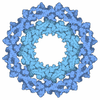
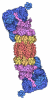
 emd_49184.png
 http://ftp.pdbj.org/pub/emdb/structures/EMD-49184
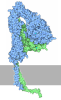


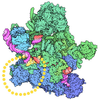
 Z (Sec.)
 Y (Row.)
 X (Col.)


 Sample components
 Processing
 Electron microscopy
 FIELD EMISSION GUN

