 Movie
Movie Controller


+ Open data

- Basic information
| Entry |  | |||||||||
|---|---|---|---|---|---|---|---|---|---|---|
| Title | hCXCR4-CXCL12 complex with 1:1 stoichiometry | |||||||||
 Map data Map data | hCXCR4_CXCL12_1/1_stoichiometry density map | |||||||||
 Sample Sample |
| |||||||||
 Keywords Keywords | HIV block / GPCR / SIGNALING PROTEIN | |||||||||
| Function / homology |  Function and homology information Function and homology informationtelencephalon cell migration / chemokine (C-X-C motif) ligand 12 signaling pathway / C-X-C motif chemokine 12 receptor activity / response to ultrasound / negative regulation of leukocyte tethering or rolling / regulation of actin polymerization or depolymerization / positive regulation of macrophage migration inhibitory factor signaling pathway / negative regulation of dendritic cell apoptotic process / CXCL12-activated CXCR4 signaling pathway / myosin light chain binding ...telencephalon cell migration / chemokine (C-X-C motif) ligand 12 signaling pathway / C-X-C motif chemokine 12 receptor activity / response to ultrasound / negative regulation of leukocyte tethering or rolling / regulation of actin polymerization or depolymerization / positive regulation of macrophage migration inhibitory factor signaling pathway / negative regulation of dendritic cell apoptotic process / CXCL12-activated CXCR4 signaling pathway / myosin light chain binding / Specification of primordial germ cells / chemokine receptor binding / myelin maintenance / Developmental Lineage of Multipotent Pancreatic Progenitor Cells / CXCR chemokine receptor binding / C-X-C chemokine receptor activity / positive regulation of axon extension involved in axon guidance / positive regulation of vasculature development / induction of positive chemotaxis / Signaling by ROBO receptors / negative regulation of intrinsic apoptotic signaling pathway in response to DNA damage / Formation of definitive endoderm / integrin activation / positive regulation of dopamine secretion / cellular response to chemokine / C-C chemokine binding / C-C chemokine receptor activity / positive regulation of monocyte chemotaxis / chemokine activity / Chemokine receptors bind chemokines / blood circulation / dendritic cell chemotaxis / positive regulation of oligodendrocyte differentiation / cellular response to cytokine stimulus / positive regulation of calcium ion import / cell leading edge / animal organ regeneration / detection of temperature stimulus involved in sensory perception of pain / Binding and entry of HIV virion / detection of mechanical stimulus involved in sensory perception of pain / regulation of cell adhesion / positive regulation of T cell migration / Nuclear signaling by ERBB4 / positive regulation of neuron differentiation / neurogenesis / adult locomotory behavior / coreceptor activity / positive regulation of endothelial cell proliferation / anchoring junction / positive regulation of cell adhesion / axon guidance / virus receptor activity / defense response / calcium-mediated signaling / chemokine-mediated signaling pathway / brain development / cell chemotaxis / ubiquitin binding / neuron migration / response to virus / chemotaxis / integrin binding / response to peptide hormone / intracellular calcium ion homeostasis / G protein-coupled receptor activity / adenylate cyclase-inhibiting G protein-coupled receptor signaling pathway / late endosome / positive regulation of cold-induced thermogenesis / actin binding / positive regulation of cytosolic calcium ion concentration / cell adhesion / cytoplasmic vesicle / extracellular matrix / Estrogen-dependent gene expression / response to hypoxia / G alpha (i) signalling events / early endosome / apoptotic process / inflammatory response / lysosome / positive regulation of cell migration / immune response / G protein-coupled receptor signaling pathway / external side of plasma membrane / signaling receptor binding / ubiquitin protein ligase binding / signal transduction / cell surface / protein-containing complex / extracellular exosome / extracellular region / membrane / plasma membrane / cytoplasm Similarity search - Function | |||||||||
| Biological species |  Homo sapiens (human) Homo sapiens (human) | |||||||||
| Method | single particle reconstruction / cryo EM / Resolution: 3.37 Å | |||||||||
 Authors Authors | Zhang Z / Patel DJ | |||||||||
| Funding support | 1 items
| |||||||||
 Citation Citation | Journal: Nat Commun / Year: 2025 Title: CXCR4 mediated recognition of HIV envelope spike and inhibition by CXCL12. Authors: Zhiying Zhang / Hongwei Zhang / Lyuqin Zheng / Shihua Chen / Shuo Du / Junyu Xiao / Dinshaw J Patel /   Abstract: CCR5 and CXCR4 both act as HIV co-receptors, though CXCR4 is less explored. CXCR4 binds the chemokine CXCL12 to regulate cellular processes and mediate HIV entry, a process that CXCL12 inhibits. ...CCR5 and CXCR4 both act as HIV co-receptors, though CXCR4 is less explored. CXCR4 binds the chemokine CXCL12 to regulate cellular processes and mediate HIV entry, a process that CXCL12 inhibits. Using cryo-EM, we investigate HIV-2 envelope (Env) spike recognition by CXCR4 and how CXCL12 inhibit this interaction. We discover that CXCR4 unexpected forms a tetramer, both alone and in complex. It binds CXCL12 with 4:8 and 8:8 stoichiometries, with the CXCL12 N-terminus inserting into the CXCR4 pocket. Structures of CXCR4-gp120 complex show one or two gp120 molecules per CXCR4 tetramer, with the V3 loop occupying the major sub-pocket of CXCR4 through deep embedment of its GFKF motif. The CXCL12 N-terminus chashes with gp120 V3 loops, explain its inhibitory effect. Docking analyses of other HIV antagonists further clarify their mechanisms. The CXCR4-gp120 model illustrate how V3 loop residues define co-receptor specificity, offering insights into co-receptor switching and therapeutic design. | |||||||||
| History |
|
- Structure visualization
| Supplemental images |
|---|

- Downloads & links
-EMDB archive
| Map data | emd_48182.map.gz | 87.6 MB | EMDB map data format | |
|---|---|---|---|---|
| Header (meta data) | emd-48182-v30.xmlemd-48182.xml | 18.8 KB 18.8 KB | Display Display | EMDB header |
| Images |  emd_48182.png emd_48182.png | 54.1 KB | ||
| Filedesc metadata | emd-48182.cif.gz | 5.8 KB | ||
| Others | emd_48182_half_map_1.map.gzemd_48182_half_map_2.map.gz | 164.8 MB 164.8 MB | ||
| Archive directory |  https://data.pdbj.org/pub/emdb/structures/EMD-48182ftp://data.pdbj.org/pub/emdb/structures/EMD-48182 https://data.pdbj.org/pub/emdb/structures/EMD-48182ftp://data.pdbj.org/pub/emdb/structures/EMD-48182 | HTTPS FTP |
-Related structure data
| Related structure data |  9me1MC  9mejC  9menC  9metC  9meuC M: atomic model generated by this map C: citing same article ( |
|---|---|
| Similar structure data |


-Links
| EMDB pages | EMDB (EBI/PDBe) / EMDataResource |
|---|---|
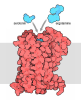
| Related items in Molecule of the Month |

-Map
| File | Download / File: emd_48182.map.gz / Format: CCP4 / Size: 178 MB / Type: IMAGE STORED AS FLOATING POINT NUMBER (4 BYTES) | ||||||||||||||||||||||||||||||||||||
|---|---|---|---|---|---|---|---|---|---|---|---|---|---|---|---|---|---|---|---|---|---|---|---|---|---|---|---|---|---|---|---|---|---|---|---|---|---|
| Annotation | hCXCR4_CXCL12_1/1_stoichiometry density map | ||||||||||||||||||||||||||||||||||||
| Projections & slices | Image control
Images are generated by Spider. | ||||||||||||||||||||||||||||||||||||
| Voxel size | X=Y=Z: 0.826 Å | ||||||||||||||||||||||||||||||||||||
| Density |
| ||||||||||||||||||||||||||||||||||||
| Symmetry | Space group: 1 | ||||||||||||||||||||||||||||||||||||
| Details | EMDB XML:
|
 Z (Sec.)
 Y (Row.)
 X (Col.)


-Supplemental data
-Half map: hCXCR4 CXCL12 1/1 stoichiometry halfA map
| File | emd_48182_half_map_1.map | ||||||||||||
|---|---|---|---|---|---|---|---|---|---|---|---|---|---|
| Annotation | hCXCR4_CXCL12_1/1_stoichiometry halfA map | ||||||||||||
| Projections & Slices |
| ||||||||||||
| Density Histograms |


-Half map: hCXCR4 CXCL12 1/1 stoichiometry halfB map
| File | emd_48182_half_map_2.map | ||||||||||||
|---|---|---|---|---|---|---|---|---|---|---|---|---|---|
| Annotation | hCXCR4_CXCL12_1/1_stoichiometry halfB map | ||||||||||||
| Projections & Slices |
| ||||||||||||
| Density Histograms |


- Sample components
-Entire : CXCR4 and CXCL12 complex with 1:1 toichiometry
| Entire | Name: CXCR4 and CXCL12 complex with 1:1 toichiometry |
|---|---|
| Components |
|
-Supramolecule #1: CXCR4 and CXCL12 complex with 1:1 toichiometry
| Supramolecule | Name: CXCR4 and CXCL12 complex with 1:1 toichiometry / type: complex / ID: 1 / Parent: 0 / Macromolecule list: all |
|---|---|
| Source (natural) | Organism: Homo sapiens (human) |
-Macromolecule #1: C-X-C chemokine receptor type 4
| Macromolecule | Name: C-X-C chemokine receptor type 4 / type: protein_or_peptide / ID: 1 / Number of copies: 8 / Enantiomer: LEVO |
|---|---|
| Source (natural) | Organism: Homo sapiens (human) |
| Molecular weight | Theoretical: 40.784359 KDa |
| Recombinant expression | Organism: Homo sapiens (human) |
| Sequence | String: MEGISIYTSD NYTEEMGSGD YDSMKEPCFR EENANFNKIF LPTIYSIIFL TGIVGNGLVI LVMGYQKKLR SMTDKYRLHL SVADLLFVI TLPFWAVDAV ANWYFGNFLC KAVHVIYTVN LYSSVLILAF ISLDRYLAIV HATNSQRPRK LLAEKVVYVG V WIPALLLT ...String: MEGISIYTSD NYTEEMGSGD YDSMKEPCFR EENANFNKIF LPTIYSIIFL TGIVGNGLVI LVMGYQKKLR SMTDKYRLHL SVADLLFVI TLPFWAVDAV ANWYFGNFLC KAVHVIYTVN LYSSVLILAF ISLDRYLAIV HATNSQRPRK LLAEKVVYVG V WIPALLLT IPDFIFANVS EADDRYICDR FYPNDLWVVV FQFQHIMVGL ILPGIVILSC YCIIISKLSH SKGHQKRKAL KT TVILILA FFACWLPYYI GISIDSFILL EIIKQGCEFE NTVHKWISIT EALAFFHCCL NPILYAFLGA KFKTSAQHAL TSV SRGSSL KILSKGKRGG HSSVSTESES SSFHSSDYKD DDDK UniProtKB: C-X-C chemokine receptor type 4 |
-Macromolecule #2: Stromal cell-derived factor 1
| Macromolecule | Name: Stromal cell-derived factor 1 / type: protein_or_peptide / ID: 2 / Number of copies: 8 / Enantiomer: LEVO |
|---|---|
| Source (natural) | Organism: Homo sapiens (human) |
| Molecular weight | Theoretical: 9.648379 KDa |
| Recombinant expression | Organism: Homo sapiens (human) |
| Sequence | String: KPVSLSYRCP CRFFESHVAR ANVKHLKILN TPNCALQIVA RLKNNNRQVC IDPKLKWIQE YLEKALNKRF KMHHHHHHHH UniProtKB: Stromal cell-derived factor 1 |
-Experimental details
-Structure determination
| Method | cryo EM |
|---|---|
 Processing Processing | single particle reconstruction |
| Aggregation state | particle |
-Sample preparation
| Buffer | pH: 7.5 |
|---|---|
| Vitrification | Cryogen name: ETHANE |
- Electron microscopy
| Microscope | FEI TALOS ARCTICA |
|---|---|
| Image recording | Film or detector model: GATAN K3 (6k x 4k) / Average electron dose: 52.8 e/Å2 |
| Electron beam | Acceleration voltage: 300 kV / Electron source:  FIELD EMISSION GUN FIELD EMISSION GUN |
| Electron optics | Illumination mode: FLOOD BEAM / Imaging mode: DIFFRACTION / Nominal defocus max: 2.2 µm / Nominal defocus min: 0.8 µm |
| Experimental equipment | 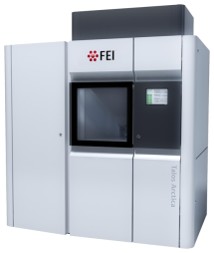 Model: Talos Arctica / Image courtesy: FEI Company |
