 Movie
Movie Controller


+ Open data

- Basic information
| Entry |  | |||||||||
|---|---|---|---|---|---|---|---|---|---|---|
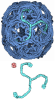
| Title | CXCR4-HIV-2/gp120-CD4 | |||||||||
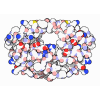
 Map data Map data | cryo-EM density map of CXCR4 bound to HIV-2/gp120-CD4 complex | |||||||||
 Sample Sample |
| |||||||||
 Keywords Keywords | cxcr4 / HIV-2 gp120 / CD4 / D1-D2 / SIGNALING PROTEIN | |||||||||
| Function / homology |  Function and homology information Function and homology informationC-X-C motif chemokine 12 receptor activity / positive regulation of macrophage migration inhibitory factor signaling pathway / CXCL12-activated CXCR4 signaling pathway / myosin light chain binding / Specification of primordial germ cells / helper T cell enhancement of adaptive immune response / interleukin-16 binding / interleukin-16 receptor activity / cellular response to ionomycin / myelin maintenance ...C-X-C motif chemokine 12 receptor activity / positive regulation of macrophage migration inhibitory factor signaling pathway / CXCL12-activated CXCR4 signaling pathway / myosin light chain binding / Specification of primordial germ cells / helper T cell enhancement of adaptive immune response / interleukin-16 binding / interleukin-16 receptor activity / cellular response to ionomycin / myelin maintenance / maintenance of protein location in cell / Developmental Lineage of Multipotent Pancreatic Progenitor Cells / C-X-C chemokine receptor activity / response to methamphetamine hydrochloride / T cell selection / positive regulation of vasculature development / MHC class II protein binding / Signaling by ROBO receptors / cellular response to granulocyte macrophage colony-stimulating factor stimulus / Formation of definitive endoderm / interleukin-15-mediated signaling pathway / regulation of T cell activation / positive regulation of monocyte differentiation / C-C chemokine binding / response to vitamin D / Alpha-defensins / Nef Mediated CD4 Down-regulation / C-C chemokine receptor activity / T cell receptor complex / leukocyte chemotaxis / Chemokine receptors bind chemokines / Other interleukin signaling / dendritic cell chemotaxis / enzyme-linked receptor protein signaling pathway / extracellular matrix structural constituent / positive regulation of oligodendrocyte differentiation / Translocation of ZAP-70 to Immunological synapse / Phosphorylation of CD3 and TCR zeta chains / cellular response to cytokine stimulus / cell leading edge / macrophage differentiation / Generation of second messenger molecules / positive regulation of calcium ion transport into cytosol / T cell differentiation / Co-inhibition by PD-1 / Binding and entry of HIV virion / regulation of cell adhesion / anchoring junction / immunoglobulin binding / neurogenesis / coreceptor activity / positive regulation of interleukin-2 production / positive regulation of T cell proliferation / cell surface receptor protein tyrosine kinase signaling pathway / protein tyrosine kinase binding / calcium-mediated signaling / T cell activation / brain development / cell chemotaxis / virus receptor activity / ubiquitin binding / clathrin-coated endocytic vesicle membrane / Vpu mediated degradation of CD4 / response to virus / G protein-coupled receptor activity / T cell receptor signaling pathway / adenylate cyclase-inhibiting G protein-coupled receptor signaling pathway / positive regulation of inflammatory response / response to estradiol / MHC class II protein complex binding / transmembrane signaling receptor activity / late endosome / Downstream TCR signaling / Cargo recognition for clathrin-mediated endocytosis / positive regulation of cold-induced thermogenesis / actin binding / signaling receptor activity / Clathrin-mediated endocytosis / positive regulation of cytosolic calcium ion concentration / cell adhesion / cytoplasmic vesicle / response to hypoxia / G alpha (i) signalling events / early endosome / response to ethanol / inflammatory response / cell surface receptor signaling pathway / lysosome / apoptotic process / positive regulation of cell migration / immune response / membrane raft / G protein-coupled receptor signaling pathway / endoplasmic reticulum lumen / external side of plasma membrane / signaling receptor binding / ubiquitin protein ligase binding / lipid binding / symbiont entry into host cell / protein kinase binding Similarity search - Function | |||||||||
| Biological species |  Cronobacter phage ES2 (virus) / Cronobacter phage ES2 (virus) /  Homo sapiens (human) / Virus-associated RNAs Homo sapiens (human) / Virus-associated RNAs | |||||||||
| Method | single particle reconstruction / cryo EM / Resolution: 5.65 Å | |||||||||
 Authors Authors | Zhang Z / Patel DJ | |||||||||
| Funding support |  United States, 1 items United States, 1 items
| |||||||||
 Citation Citation | Journal: Nat Commun / Year: 2025 Title: CXCR4 mediated recognition of HIV envelope spike and inhibition by CXCL12. Authors: Zhiying Zhang / Hongwei Zhang / Lyuqin Zheng / Shihua Chen / Shuo Du / Junyu Xiao / Dinshaw J Patel /  Abstract: CCR5 and CXCR4 both act as HIV co-receptors, though CXCR4 is less explored. CXCR4 binds the chemokine CXCL12 to regulate cellular processes and mediate HIV entry, a process that CXCL12 inhibits. ...CCR5 and CXCR4 both act as HIV co-receptors, though CXCR4 is less explored. CXCR4 binds the chemokine CXCL12 to regulate cellular processes and mediate HIV entry, a process that CXCL12 inhibits. Using cryo-EM, we investigate HIV-2 envelope (Env) spike recognition by CXCR4 and how CXCL12 inhibit this interaction. We discover that CXCR4 unexpected forms a tetramer, both alone and in complex. It binds CXCL12 with 4:8 and 8:8 stoichiometries, with the CXCL12 N-terminus inserting into the CXCR4 pocket. Structures of CXCR4-gp120 complex show one or two gp120 molecules per CXCR4 tetramer, with the V3 loop occupying the major sub-pocket of CXCR4 through deep embedment of its GFKF motif. The CXCL12 N-terminus chashes with gp120 V3 loops, explain its inhibitory effect. Docking analyses of other HIV antagonists further clarify their mechanisms. The CXCR4-gp120 model illustrate how V3 loop residues define co-receptor specificity, offering insights into co-receptor switching and therapeutic design. | |||||||||
| History |
|
- Structure visualization
| Supplemental images |
|---|

- Downloads & links
-EMDB archive
| Map data | emd_48219.map.gz | 266.6 MB | EMDB map data format | |
|---|---|---|---|---|
| Header (meta data) | emd-48219-v30.xmlemd-48219.xml | 20.4 KB 20.4 KB | Display Display | EMDB header |
| Images |  emd_48219.png emd_48219.png | 32.2 KB | ||
| Filedesc metadata | emd-48219.cif.gz | 6.6 KB | ||
| Others | emd_48219_half_map_1.map.gzemd_48219_half_map_2.map.gz | 262.5 MB 262.5 MB | ||
| Archive directory |  https://data.pdbj.org/pub/emdb/structures/EMD-48219ftp://data.pdbj.org/pub/emdb/structures/EMD-48219 https://data.pdbj.org/pub/emdb/structures/EMD-48219ftp://data.pdbj.org/pub/emdb/structures/EMD-48219 | HTTPS FTP |
-Related structure data
| Related structure data |  9metMC  9me1C  9mejC  9menC  9meuC M: atomic model generated by this map C: citing same article ( |
|---|---|
| Similar structure data |


-Links
| EMDB pages | EMDB (EBI/PDBe) / EMDataResource |
|---|---|
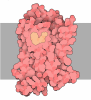
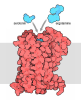
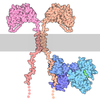
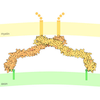
| Related items in Molecule of the Month |

-Map
| File | Download / File: emd_48219.map.gz / Format: CCP4 / Size: 282.6 MB / Type: IMAGE STORED AS FLOATING POINT NUMBER (4 BYTES) | ||||||||||||||||||||||||||||||||||||
|---|---|---|---|---|---|---|---|---|---|---|---|---|---|---|---|---|---|---|---|---|---|---|---|---|---|---|---|---|---|---|---|---|---|---|---|---|---|
| Annotation | cryo-EM density map of CXCR4 bound to HIV-2/gp120-CD4 complex | ||||||||||||||||||||||||||||||||||||
| Projections & slices | Image control
Images are generated by Spider. | ||||||||||||||||||||||||||||||||||||
| Voxel size | X=Y=Z: 0.725 Å | ||||||||||||||||||||||||||||||||||||
| Density |
| ||||||||||||||||||||||||||||||||||||
| Symmetry | Space group: 1 | ||||||||||||||||||||||||||||||||||||
| Details | EMDB XML:
|
 Z (Sec.)
 Y (Row.)
 X (Col.)


-Supplemental data
-Half map: cryo-EM half B density map of CXCR4 bound to HIV-2/gp120-CD4 complex.
| File | emd_48219_half_map_1.map | ||||||||||||
|---|---|---|---|---|---|---|---|---|---|---|---|---|---|
| Annotation | cryo-EM half B density map of CXCR4 bound to HIV-2/gp120-CD4 complex. | ||||||||||||
| Projections & Slices |
| ||||||||||||
| Density Histograms |


-Half map: cryo-EM half A density map of CXCR4 bound to HIV-2/gp120-CD4 complex
| File | emd_48219_half_map_2.map | ||||||||||||
|---|---|---|---|---|---|---|---|---|---|---|---|---|---|
| Annotation | cryo-EM half A density map of CXCR4 bound to HIV-2/gp120-CD4 complex | ||||||||||||
| Projections & Slices |
| ||||||||||||
| Density Histograms |


- Sample components
-Entire : cryoEM structure of CXCR4-HIV-2/gp120-CD4 complex
| Entire | Name: cryoEM structure of CXCR4-HIV-2/gp120-CD4 complex |
|---|---|
| Components |
|
-Supramolecule #1: cryoEM structure of CXCR4-HIV-2/gp120-CD4 complex
| Supramolecule | Name: cryoEM structure of CXCR4-HIV-2/gp120-CD4 complex / type: complex / ID: 1 / Parent: 0 / Macromolecule list: all |
|---|---|
| Source (natural) | Organism: Cronobacter phage ES2 (virus) |
-Macromolecule #1: C-X-C chemokine receptor type 4
| Macromolecule | Name: C-X-C chemokine receptor type 4 / type: protein_or_peptide / ID: 1 / Number of copies: 4 / Enantiomer: LEVO |
|---|---|
| Source (natural) | Organism: Homo sapiens (human) |
| Molecular weight | Theoretical: 40.784359 KDa |
| Recombinant expression | Organism: Homo sapiens (human) |
| Sequence | String: MEGISIYTSD NYTEEMGSGD YDSMKEPCFR EENANFNKIF LPTIYSIIFL TGIVGNGLVI LVMGYQKKLR SMTDKYRLHL SVADLLFVI TLPFWAVDAV ANWYFGNFLC KAVHVIYTVN LYSSVLILAF ISLDRYLAIV HATNSQRPRK LLAEKVVYVG V WIPALLLT ...String: MEGISIYTSD NYTEEMGSGD YDSMKEPCFR EENANFNKIF LPTIYSIIFL TGIVGNGLVI LVMGYQKKLR SMTDKYRLHL SVADLLFVI TLPFWAVDAV ANWYFGNFLC KAVHVIYTVN LYSSVLILAF ISLDRYLAIV HATNSQRPRK LLAEKVVYVG V WIPALLLT IPDFIFANVS EADDRYICDR FYPNDLWVVV FQFQHIMVGL ILPGIVILSC YCIIISKLSH SKGHQKRKAL KT TVILILA FFACWLPYYI GISIDSFILL EIIKQGCEFE NTVHKWISIT EALAFFHCCL NPILYAFLGA KFKTSAQHAL TSV SRGSSL KILSKGKRGG HSSVSTESES SSFHSSDYKD DDDK UniProtKB: C-X-C chemokine receptor type 4 |
-Macromolecule #2: T-cell surface glycoprotein CD4
| Macromolecule | Name: T-cell surface glycoprotein CD4 / type: protein_or_peptide / ID: 2 / Number of copies: 2 / Enantiomer: LEVO |
|---|---|
| Source (natural) | Organism: Homo sapiens (human) |
| Molecular weight | Theoretical: 19.541176 KDa |
| Recombinant expression | Organism: Homo sapiens (human) |
| Sequence | String: KKVVLGKKGD TVELTCTASQ KKSIQFHWKN SNQIKILGNQ GSFLTKGPSK LNDRADSRRS LWDQGNFPLI IKNLKIEDSD TYICEVEDQ KEEVQLLVFG LTANSDTHLL QGQSLTLTLE SPPGSSPSVQ CRSPRGKNIQ GGKTLSVSQL ELQDSGTWTC T VLQNQKKV EFKIDIVV UniProtKB: T-cell surface glycoprotein CD4 |
-Macromolecule #3: HIV-1/gp120
| Macromolecule | Name: HIV-1/gp120 / type: protein_or_peptide / ID: 3 / Number of copies: 2 / Enantiomer: LEVO |
|---|---|
| Source (natural) | Organism: Virus-associated RNAs |
| Molecular weight | Theoretical: 55.289422 KDa |
| Recombinant expression | Organism: Homo sapiens (human) |
| Sequence | String: KQFVTVFYGI PAWRNASIPL FCATKNRDTW GTIQCLPDND DYQEIALNVT EAFDAWNNTV TEQAVEDVWN LFETSIKPCV KLTPLCVAM NCTRNMTTST GTTDTQNITI INDTSPCVRA DNCTGLKEEE MVDCQFNMTG LERDKRKQYT EAWYSKDVIC D NNTSSRSK ...String: KQFVTVFYGI PAWRNASIPL FCATKNRDTW GTIQCLPDND DYQEIALNVT EAFDAWNNTV TEQAVEDVWN LFETSIKPCV KLTPLCVAM NCTRNMTTST GTTDTQNITI INDTSPCVRA DNCTGLKEEE MVDCQFNMTG LERDKRKQYT EAWYSKDVIC D NNTSSRSK CYMNHCNTSV ITESCDKHYW DAMRFRYCAP PGFALLRCND TNYSGFAPNC SKVVAATCTR MMETQSSTWF GF NGTRAEN RTYIYWHGKN NRTIISLNNF YNLTMHCKRP GNKTVLPIMS GFKFHSKPVI NKKPRQAWCW FKGEWKEAMQ EVK ETLAKH PRYKGNRSRT ENIKFKAPGR GSDPEAAYMW TNCRGEFLYC NMTWFLNWVD NRTGQKQRNY APCHIRQIIN TWHR VGKNV YLPPREGELT CNSTVTSIIA NIDTGDQTDI TFSAEVAELY RLELGDYKLV EITPIGFAPT SVKRYSSAHQ RHTR |
-Experimental details
-Structure determination
| Method | cryo EM |
|---|---|
 Processing Processing | single particle reconstruction |
| Aggregation state | particle |
-Sample preparation
| Buffer | pH: 7.5 |
|---|---|
| Vitrification | Cryogen name: ETHANE |
- Electron microscopy
| Microscope | FEI TALOS ARCTICA |
|---|---|
| Image recording | Film or detector model: FEI FALCON IV (4k x 4k) / Average electron dose: 60.3 e/Å2 |
| Electron beam | Acceleration voltage: 300 kV / Electron source:  FIELD EMISSION GUN FIELD EMISSION GUN |
| Electron optics | Illumination mode: FLOOD BEAM / Imaging mode: DIFFRACTION / Nominal defocus max: 2.2 µm / Nominal defocus min: 0.8 µm |
| Experimental equipment | 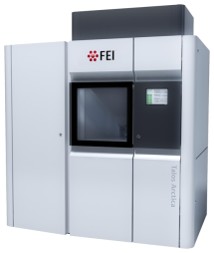 Model: Talos Arctica / Image courtesy: FEI Company |
