Protein or peptide: ubiquitin-conjugating enzyme E2 D2 isoform X3
Protein or peptide: NEDD8
Protein or peptide: E3 ubiquitin-protein ligase RBX1
Protein or peptide: Ubiquitin
Protein or peptide: DNA excision repair protein ERCC-8
Protein or peptide: UV-stimulated scaffold protein A
Protein or peptide: DNA damage-binding protein 1
Protein or peptide: Cullin-4A
Ligand: ZINC ION
Keywords
transcription / DNA repair / ubiquitin / cryo-EM
Function / homology
Function and homology information
RNA polymerase inhibitor activity / nucleotide-excision repair complex / regulation of transcription-coupled nucleotide-excision repair / negative regulation of granulocyte differentiation / single strand break repair / response to auditory stimulus / negative regulation of beige fat cell differentiation / cellular response to camptothecin / cullin-RING-type E3 NEDD8 transferase / NEDD8 transferase activity ...RNA polymerase inhibitor activity / nucleotide-excision repair complex / regulation of transcription-coupled nucleotide-excision repair / negative regulation of granulocyte differentiation / single strand break repair / response to auditory stimulus / negative regulation of beige fat cell differentiation / cellular response to camptothecin / cullin-RING-type E3 NEDD8 transferase / NEDD8 transferase activity / cullin-RING ubiquitin ligase complex / double-strand break repair via classical nonhomologous end joining / Cul7-RING ubiquitin ligase complex / cellular response to chemical stress / Loss of Function of FBXW7 in Cancer and NOTCH1 Signaling / regulation of DNA damage checkpoint / positive regulation of protein autoubiquitination / positive regulation by virus of viral protein levels in host cell / regulation of nucleotide-excision repair / RNA polymerase II transcription initiation surveillance / chromatin-protein adaptor activity / protein neddylation / spindle assembly involved in female meiosis / NEDD8 ligase activity / epigenetic programming in the zygotic pronuclei / protein K27-linked ubiquitination / negative regulation of response to oxidative stress / VCB complex / UV-damage excision repair / Cul5-RING ubiquitin ligase complex / ubiquitin-ubiquitin ligase activity / ubiquitin-dependent protein catabolic process via the C-end degron rule pathway / SCF ubiquitin ligase complex / biological process involved in interaction with symbiont / Cul2-RING ubiquitin ligase complex / regulation of mitotic cell cycle phase transition / Cul3-RING ubiquitin ligase complex / negative regulation of type I interferon production / WD40-repeat domain binding / SCF-dependent proteasomal ubiquitin-dependent protein catabolic process / Prolactin receptor signaling / Cul4A-RING E3 ubiquitin ligase complex / negative regulation of mitophagy / Cul4-RING E3 ubiquitin ligase complex / Cul4B-RING E3 ubiquitin ligase complex / ubiquitin ligase complex scaffold activity / negative regulation of reproductive process / negative regulation of developmental process / ubiquitin conjugating enzyme activity / TGF-beta receptor signaling activates SMADs / RNA polymerase II complex binding / hemopoiesis / regulation of proteolysis / somatic stem cell population maintenance / viral release from host cell / regulation of postsynapse assembly / cullin family protein binding / anatomical structure morphogenesis / response to X-ray / protein monoubiquitination / ectopic germ cell programmed cell death / positive regulation of G1/S transition of mitotic cell cycle / response to UV / positive regulation of viral genome replication / protein autoubiquitination / ubiquitin-like ligase-substrate adaptor activity / site of DNA damage / signal transduction in response to DNA damage / Nuclear events stimulated by ALK signaling in cancer / protein K48-linked ubiquitination / negative regulation of insulin receptor signaling pathway / regulation of cellular response to insulin stimulus / transcription-coupled nucleotide-excision repair / proteasomal protein catabolic process / positive regulation of TORC1 signaling / Maturation of protein E / Maturation of protein E / ER Quality Control Compartment (ERQC) / post-translational protein modification / Myoclonic epilepsy of Lafora / FLT3 signaling by CBL mutants / intrinsic apoptotic signaling pathway / IRAK2 mediated activation of TAK1 complex / Alpha-protein kinase 1 signaling pathway / Glycogen synthesis / IRAK1 recruits IKK complex / IRAK1 recruits IKK complex upon TLR7/8 or 9 stimulation / Prevention of phagosomal-lysosomal fusion / positive regulation of gluconeogenesis / Endosomal Sorting Complex Required For Transport (ESCRT) / Membrane binding and targetting of GAG proteins / Negative regulation of FLT3 / Regulation of TBK1, IKKε (IKBKE)-mediated activation of IRF3, IRF7 / PTK6 Regulates RTKs and Their Effectors AKT1 and DOK1 / Regulation of TBK1, IKKε-mediated activation of IRF3, IRF7 upon TLR3 ligation / IRAK2 mediated activation of TAK1 complex upon TLR7/8 or 9 stimulation / Constitutive Signaling by NOTCH1 HD Domain Mutants / NOTCH2 Activation and Transmission of Signal to the Nucleus / TICAM1,TRAF6-dependent induction of TAK1 complex / TICAM1-dependent activation of IRF3/IRF7 Similarity search - Function
Advanced Investigator Grant CHROMATRANS (grant agreement No. 882357)
European Union
Citation
Journal: Nat Struct Mol Biol / Year: 2024 Title: Structural basis for RNA polymerase II ubiquitylation and inactivation in transcription-coupled repair. Authors: Goran Kokic / George Yakoub / Diana van den Heuvel / Annelotte P Wondergem / Paula J van der Meer / Yana van der Weegen / Aleksandar Chernev / Isaac Fianu / Thornton J Fokkens / Sonja Lorenz ...Authors: Goran Kokic / George Yakoub / Diana van den Heuvel / Annelotte P Wondergem / Paula J van der Meer / Yana van der Weegen / Aleksandar Chernev / Isaac Fianu / Thornton J Fokkens / Sonja Lorenz / Henning Urlaub / Patrick Cramer / Martijn S Luijsterburg / Abstract: During transcription-coupled DNA repair (TCR), RNA polymerase II (Pol II) transitions from a transcriptionally active state to an arrested state that allows for removal of DNA lesions. This ...During transcription-coupled DNA repair (TCR), RNA polymerase II (Pol II) transitions from a transcriptionally active state to an arrested state that allows for removal of DNA lesions. This transition requires site-specific ubiquitylation of Pol II by the CRL4 ubiquitin ligase, a process that is facilitated by ELOF1 in an unknown way. Using cryogenic electron microscopy, biochemical assays and cell biology approaches, we found that ELOF1 serves as an adaptor to stably position UVSSA and CRL4 on arrested Pol II, leading to ligase neddylation and activation of Pol II ubiquitylation. In the presence of ELOF1, a transcription factor IIS (TFIIS)-like element in UVSSA gets ordered and extends through the Pol II pore, thus preventing reactivation of Pol II by TFIIS. Our results provide the structural basis for Pol II ubiquitylation and inactivation in TCR.
In the structure databanks used in Yorodumi, some data are registered as the other names, "COVID-19 virus" and "2019-nCoV". Here are the details of the virus and the list of structure data.
Jan 31, 2019. EMDB accession codes are about to change! (news from PDBe EMDB page)
EMDB accession codes are about to change! (news from PDBe EMDB page)
The allocation of 4 digits for EMDB accession codes will soon come to an end. Whilst these codes will remain in use, new EMDB accession codes will include an additional digit and will expand incrementally as the available range of codes is exhausted. The current 4-digit format prefixed with “EMD-” (i.e. EMD-XXXX) will advance to a 5-digit format (i.e. EMD-XXXXX), and so on. It is currently estimated that the 4-digit codes will be depleted around Spring 2019, at which point the 5-digit format will come into force.
The EM Navigator/Yorodumi systems omit the EMD- prefix.
Related info.:Q: What is EMD? / ID/Accession-code notation in Yorodumi/EM Navigator
Yorodumi is a browser for structure data from EMDB, PDB, SASBDB, etc.
This page is also the successor to EM Navigator detail page, and also detail information page/front-end page for Omokage search.
The word "yorodu" (or yorozu) is an old Japanese word meaning "ten thousand". "mi" (miru) is to see.
Related info.:EMDB / PDB / SASBDB / Comparison of 3 databanks / Yorodumi Search / Aug 31, 2016. New EM Navigator & Yorodumi / Yorodumi Papers / Jmol/JSmol / Function and homology information / Changes in new EM Navigator and Yorodumi
 Movie
Movie Controller


 Open data
 Basic information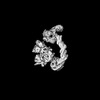
 Map data
 Sample
 Keywords
 Function and homology information
 Homo sapiens (human)
 Authors
 Germany, European Union, 2 items
  Citation
 Structure visualization
 Downloads & links
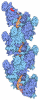
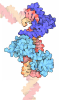
 emd_15827.png
 http://ftp.pdbj.org/pub/emdb/structures/EMD-15827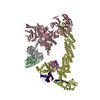




 Z (Sec.)
 Y (Row.)
 X (Col.)


 Sample components
 Escherichia coli (E. coli)
 Trichoplusia ni (cabbage looper)
 Processing
 Electron microscopy
 FIELD EMISSION GUN