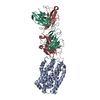
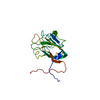
- EMDB-71737: Human 19S proteasome bound to TXNL1 PITH domain without C-terminus -
+
Open data
ID or keywords:
Loading...
-
Basic information
Entry
Database: EMDB / ID: EMD-71737
Title
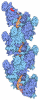
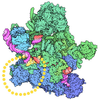
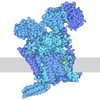
Human 19S proteasome bound to TXNL1 PITH domain without C-terminus
Map data
Sample
Complex: Human proteasome from HCT116 cells
Protein or peptide: x 19 types
Ligand: x 4 types
Keywords
Proteasome / 19S / RP / HYDROLASE
Function / homology
Function and homology information
disulfide oxidoreductase activity / positive regulation of inclusion body assembly / thyrotropin-releasing hormone receptor binding / nuclear proteasome complex / host-mediated perturbation of viral transcription / Impaired BRCA2 translocation to the nucleus / Impaired BRCA2 binding to SEM1 (DSS1) / proteasome accessory complex / integrator complex / proteasome regulatory particle ...disulfide oxidoreductase activity / positive regulation of inclusion body assembly / thyrotropin-releasing hormone receptor binding / nuclear proteasome complex / host-mediated perturbation of viral transcription / Impaired BRCA2 translocation to the nucleus / Impaired BRCA2 binding to SEM1 (DSS1) / proteasome accessory complex / integrator complex / proteasome regulatory particle / cytosolic proteasome complex / positive regulation of proteasomal protein catabolic process / transcription factor binding / proteasome-activating activity / RND1 GTPase cycle / RND2 GTPase cycle / RND3 GTPase cycle / proteasome regulatory particle, lid subcomplex / proteasome regulatory particle, base subcomplex / negative regulation of programmed cell death / RHOBTB1 GTPase cycle / protein K63-linked deubiquitination / RHOV GTPase cycle / metal-dependent deubiquitinase activity / Regulation of ornithine decarboxylase (ODC) / Proteasome assembly / cellular response to type I interferon / Cross-presentation of soluble exogenous antigens (endosomes) / retrograde vesicle-mediated transport, Golgi to endoplasmic reticulum / Somitogenesis / K63-linked deubiquitinase activity / Homologous DNA Pairing and Strand Exchange / Defective homologous recombination repair (HRR) due to BRCA1 loss of function / Defective HDR through Homologous Recombination Repair (HRR) due to PALB2 loss of BRCA1 binding function / Defective HDR through Homologous Recombination Repair (HRR) due to PALB2 loss of BRCA2/RAD51/RAD51C binding function / Resolution of D-loop Structures through Synthesis-Dependent Strand Annealing (SDSA) / Resolution of D-loop Structures through Holliday Junction Intermediates / proteasome binding / RHOU GTPase cycle / Impaired BRCA2 binding to RAD51 / protein-disulfide reductase activity / positive regulation of RNA polymerase II transcription preinitiation complex assembly / general transcription initiation factor binding / Presynaptic phase of homologous DNA pairing and strand exchange / proteasome storage granule / polyubiquitin modification-dependent protein binding / protein deubiquitination / RHOBTB2 GTPase cycle / endopeptidase activator activity / proteasome assembly / mRNA export from nucleus / SARS-CoV-1 targets host intracellular signalling and regulatory pathways / stem cell differentiation / regulation of macroautophagy / proteasome complex / enzyme regulator activity / ERAD pathway / inclusion body / TBP-class protein binding / regulation of proteasomal protein catabolic process / Regulation of activated PAK-2p34 by proteasome mediated degradation / ubiquitin binding / Autodegradation of Cdh1 by Cdh1:APC/C / proteasomal protein catabolic process / APC/C:Cdc20 mediated degradation of Securin / N-glycan trimming in the ER and Calnexin/Calreticulin cycle / Asymmetric localization of PCP proteins / Ubiquitin-dependent degradation of Cyclin D / SCF-beta-TrCP mediated degradation of Emi1 / NIK-->noncanonical NF-kB signaling / AUF1 (hnRNP D0) binds and destabilizes mRNA / TNFR2 non-canonical NF-kB pathway / Assembly of the pre-replicative complex / P-body / Vpu mediated degradation of CD4 / Cdc20:Phospho-APC/C mediated degradation of Cyclin A / Dectin-1 mediated noncanonical NF-kB signaling / Degradation of DVL / Degradation of AXIN / Degradation of CRY and PER proteins / Hh mutants are degraded by ERAD / Activation of NF-kappaB in B cells / G2/M Checkpoints / Degradation of GLI1 by the proteasome / Hedgehog ligand biogenesis / Autodegradation of the E3 ubiquitin ligase COP1 / Regulation of RUNX3 expression and activity / Defective CFTR causes cystic fibrosis / double-strand break repair via homologous recombination / GSK3B and BTRC:CUL1-mediated-degradation of NFE2L2 / Negative regulation of NOTCH4 signaling / AMPK-induced ERAD and lysosome mediated degradation of PD-L1(CD274) / Hedgehog 'on' state / APC/C:Cdh1 mediated degradation of Cdc20 and other APC/C:Cdh1 targeted proteins in late mitosis/early G1 / Vif-mediated degradation of APOBEC3G / FBXL7 down-regulates AURKA during mitotic entry and in early mitosis / Degradation of GLI2 by the proteasome / GLI3 is processed to GLI3R by the proteasome / double-strand break repair via nonhomologous end joining / MAPK6/MAPK4 signaling Similarity search - Function
National Institutes of Health/National Cancer Institute (NIH/NCI)
1 ZIABC011490
United States
Citation
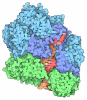
Journal: Mol Cell / Year: 2026 Title: Structures of dynamic interactors at native proteasomes by PhIX-MS and cryo-electron microscopy. Authors: Kitaik Lee / Hitendra Negi / Xiang Chen / Katerina Atallah-Yunes / Sophia Truslow / Rithik E Castelino / Mary R Guest / Anthony M Ciancone / Xiuxiu Lu / Sergey G Tarasov / Raj Chari / Kylie ...Authors: Kitaik Lee / Hitendra Negi / Xiang Chen / Katerina Atallah-Yunes / Sophia Truslow / Rithik E Castelino / Mary R Guest / Anthony M Ciancone / Xiuxiu Lu / Sergey G Tarasov / Raj Chari / Kylie J Walters / Francis J O'Reilly / Abstract: Molecular machines rely on dynamic, low-affinity interactions to perform their functional roles. We developed PhIX-MS (photo-induced in situ crosslinking-mass spectrometry), a structural proteomics ...Molecular machines rely on dynamic, low-affinity interactions to perform their functional roles. We developed PhIX-MS (photo-induced in situ crosslinking-mass spectrometry), a structural proteomics workflow to capture topological information for such transient interactions in cells by UV-activated crosslinking. Applying PhIX-MS with cryo-electron microscopy (cryo-EM) to proteasomes, we mapped the redox sensor TXNL1 at the proteasome regulatory particle (RP), including its dynamic thioredoxin-like domain near RPN2/PSMD1 and RPN13/ADRM1, where it is ideal for reducing substrates prior to proteolysis. RPs without the proteolytic core particle (CP) were structurally resolved while bound to TXNL1 and/or the chaperone PSMD5/S5b, which inserts its C terminus into the ATPase pore, causing extensive structural rearrangements. Additionally, PhIX-MS and AlphaFold identified the ubiquitin ligase UBE3C/Hul5 at RPN2, RPN3, and a dynamic RPN10 region, tethering UBE3C above the substrate entry channel. Our integrative approach enables the localization of native, low-affinity protein interactions and is broadly applicable to dynamic macromolecular assemblies.
Cryogen name: ETHANE / Chamber humidity: 85 % / Chamber temperature: 295.15 K / Instrument: LEICA EM GP
Details
Quantifoil copper R 1.2/1.3 holey carbon 300 mesh grids (#Q3100CR1.3; Electron Microscopy Sciences).
-
Electron microscopy
Microscope
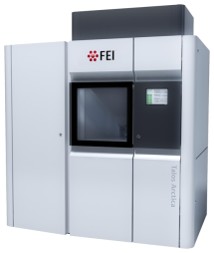
FEI TALOS ARCTICA
Specialist optics
Energy filter - Name: GIF Bioquantum
Image recording
Film or detector model: GATAN K3 (6k x 4k) / Digitization - Dimensions - Width: 5760 pixel / Digitization - Dimensions - Height: 4092 pixel / Number real images: 40 / Average exposure time: 2.5 sec. / Average electron dose: 55.6 e/Å2
Electron beam
Acceleration voltage: 200 kV / Electron source: FIELD EMISSION GUN
In the structure databanks used in Yorodumi, some data are registered as the other names, "COVID-19 virus" and "2019-nCoV". Here are the details of the virus and the list of structure data.
Jan 31, 2019. EMDB accession codes are about to change! (news from PDBe EMDB page)
EMDB accession codes are about to change! (news from PDBe EMDB page)
The allocation of 4 digits for EMDB accession codes will soon come to an end. Whilst these codes will remain in use, new EMDB accession codes will include an additional digit and will expand incrementally as the available range of codes is exhausted. The current 4-digit format prefixed with “EMD-” (i.e. EMD-XXXX) will advance to a 5-digit format (i.e. EMD-XXXXX), and so on. It is currently estimated that the 4-digit codes will be depleted around Spring 2019, at which point the 5-digit format will come into force.
The EM Navigator/Yorodumi systems omit the EMD- prefix.
Related info.:Q: What is EMD? / ID/Accession-code notation in Yorodumi/EM Navigator
Yorodumi is a browser for structure data from EMDB, PDB, SASBDB, etc.
This page is also the successor to EM Navigator detail page, and also detail information page/front-end page for Omokage search.
The word "yorodu" (or yorozu) is an old Japanese word meaning "ten thousand". "mi" (miru) is to see.
Related info.:EMDB / PDB / SASBDB / Comparison of 3 databanks / Yorodumi Search / Aug 31, 2016. New EM Navigator & Yorodumi / Yorodumi Papers / Jmol/JSmol / Function and homology information / Changes in new EM Navigator and Yorodumi
 Movie
Movie Controller

 Yorodumi
 Open data
 Basic information
 Map data
 Sample
 Keywords
 Function and homology information
 Homo sapiens (human)
 Authors
 United States, 1 items
  Citation
 Structure visualization
 Downloads & links
 emd_71737.png
 http://ftp.pdbj.org/pub/emdb/structures/EMD-71737


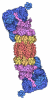


 Z (Sec.)
 Y (Row.)
 X (Col.)


 Sample components
 Processing
 Electron microscopy
 FIELD EMISSION GUN