[English] 日本語
Yorodumi
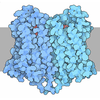
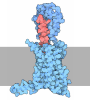
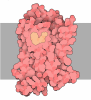
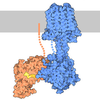
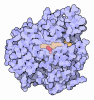
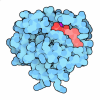
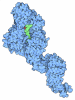
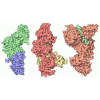
- EMDB-66922: Structure of the CX3CL1.44-US28-GqiN18-scFv16 in the C-state -

+
Open data


ID or keywords:

Loading...

-
Basic information

Entry
Database: EMDB / ID: EMD-66922
TitleStructure of the CX3CL1.44-US28-GqiN18-scFv16 in the C-state
Map data
Sample
  • Complex: CX3CL1.44-US28-GqiN18-scFv16
    • Complex: Gq heterotrimer
      • Protein or peptide: Guanine nucleotide-binding protein G(i) subunit alpha-1,Guanine nucleotide-binding protein G(q) subunit alpha
      • Protein or peptide: Guanine nucleotide-binding protein G(I)/G(S)/G(T) subunit beta-1
      • Protein or peptide: Guanine nucleotide-binding protein G(I)/G(S)/G(O) subunit gamma-2
    • Complex: CX3CL1.44-US28
      • Protein or peptide: Processed fractalkine
      • Protein or peptide: G-protein coupled receptor homolog US28
    • Complex: scFv16
      • Protein or peptide: Antibody fragment scFv16
KeywordsMEMBRANE PROTEIN / GPCR / active state / GDP / engineered chemokine / HCMV / viral protein / viral-host interaction
Function / homology
Function and homology information


CXCR1 chemokine receptor binding / positive regulation of calcium-independent cell-cell adhesion / leukocyte adhesive activation / CX3C chemokine receptor binding / negative regulation of glutamate receptor signaling pathway / negative regulation of interleukin-1 alpha production / negative regulation of neuron migration / positive regulation of microglial cell migration / regulation of lipopolysaccharide-mediated signaling pathway / negative regulation of microglial cell activation ...CXCR1 chemokine receptor binding / positive regulation of calcium-independent cell-cell adhesion / leukocyte adhesive activation / CX3C chemokine receptor binding / negative regulation of glutamate receptor signaling pathway / negative regulation of interleukin-1 alpha production / negative regulation of neuron migration / positive regulation of microglial cell migration / regulation of lipopolysaccharide-mediated signaling pathway / negative regulation of microglial cell activation / microglial cell proliferation / negative regulation of hippocampal neuron apoptotic process / positive regulation of gonadotropin secretion / autocrine signaling / phospholipase C-activating tachykinin receptor signaling pathway / Fatty Acids bound to GPR40 (FFAR1) regulate insulin secretion / Acetylcholine regulates insulin secretion / CCR chemokine receptor binding / leukocyte migration involved in inflammatory response / phospholipase C-activating G protein-coupled glutamate receptor signaling pathway / positive regulation of actin filament bundle assembly / regulation of platelet activation / synapse pruning / PLC beta mediated events / phospholipase C-activating serotonin receptor signaling pathway / entrainment of circadian clock / sensory perception of itch / positive regulation of membrane depolarization / integrin activation / phototransduction, visible light / C-C chemokine binding / eosinophil chemotaxis / C-C chemokine receptor activity / positive regulation of cell-matrix adhesion / neuron cellular homeostasis / positive regulation of neuroblast proliferation / chemokine activity / leukocyte chemotaxis / Chemokine receptors bind chemokines / regulation of canonical Wnt signaling pathway / negative regulation of interleukin-1 beta production / symbiont-mediated transformation of host cell / neuron remodeling / negative regulation of interleukin-6 production / positive chemotaxis / chemoattractant activity / cell projection / glutamate receptor signaling pathway / negative regulation of apoptotic signaling pathway / negative regulation of cell-substrate adhesion / negative regulation of tumor necrosis factor production / regulation of neurogenesis / postsynaptic cytosol / photoreceptor outer segment / response to ischemia / hormone-mediated signaling pathway / cellular response to acidic pH / symbiont-mediated perturbation of host defense response / regulation of eating behavior / adenylate cyclase inhibitor activity / T cell migration / positive regulation of protein localization to cell cortex / positive regulation of relaxation of smooth muscle / Adenylate cyclase inhibitory pathway / positive regulation of smooth muscle cell proliferation / D2 dopamine receptor binding / adenylate cyclase-inhibiting dopamine receptor signaling pathway / GTPase activator activity / negative regulation of cell migration / adenylate cyclase-inhibiting serotonin receptor signaling pathway / G protein-coupled serotonin receptor binding / Turbulent (oscillatory, disturbed) flow shear stress activates signaling by PIEZO1 and integrins in endothelial cells / regulation of G protein-coupled receptor signaling pathway / positive regulation of release of sequestered calcium ion into cytosol / cellular response to forskolin / regulation of mitotic spindle organization / mast cell degranulation / chemokine-mediated signaling pathway / calcium-mediated signaling / positive regulation of neuron projection development / cell chemotaxis / establishment of mitotic spindle orientation / defense response / cell-cell adhesion / neuropeptide signaling pathway / Regulation of insulin secretion / response to prostaglandin E / microglial cell activation / regulation of synaptic plasticity / positive regulation of cholesterol biosynthetic process / G protein-coupled receptor binding / integrin binding / blood coagulation / chemotaxis / response to peptide hormone / cytokine-mediated signaling pathway / G-protein beta/gamma-subunit complex binding / adenylate cyclase-inhibiting G protein-coupled receptor signaling pathway / adenylate cyclase-modulating G protein-coupled receptor signaling pathway / positive regulation of inflammatory response
Similarity search - Function
CX3C chemokine domain / G-protein alpha subunit, group Q / Chemokine receptor family / Chemokine beta/gamma/delta / Intercrine alpha family (small cytokine C-X-C) (chemokine CXC). / Chemokine interleukin-8-like domain / Chemokine interleukin-8-like superfamily / Small cytokines (intecrine/chemokine), interleukin-8 like / : / G-protein alpha subunit, group I ...CX3C chemokine domain / G-protein alpha subunit, group Q / Chemokine receptor family / Chemokine beta/gamma/delta / Intercrine alpha family (small cytokine C-X-C) (chemokine CXC). / Chemokine interleukin-8-like domain / Chemokine interleukin-8-like superfamily / Small cytokines (intecrine/chemokine), interleukin-8 like / : / G-protein alpha subunit, group I / G protein alpha subunit, helical insertion / G protein alpha subunit / Guanine nucleotide binding protein (G-protein), alpha subunit / G-protein alpha subunit / G-alpha domain profile. / G-protein, gamma subunit / G-protein gamma subunit domain profile. / G-protein gamma-like domain / G-protein gamma-like domain superfamily / GGL domain / G protein gamma subunit-like motifs / GGL domain / Guanine nucleotide-binding protein, beta subunit / G protein beta WD-40 repeat protein / G-protein, beta subunit / G-protein coupled receptors family 1 signature. / 7 transmembrane receptor (rhodopsin family) / G protein-coupled receptor, rhodopsin-like / GPCR, rhodopsin-like, 7TM / G-protein coupled receptors family 1 profile. / G-protein beta WD-40 repeat / WD40 repeat, conserved site / Trp-Asp (WD) repeats signature. / Trp-Asp (WD) repeats profile. / Trp-Asp (WD) repeats circular profile. / WD40 repeats / WD40 repeat / WD40-repeat-containing domain superfamily / WD40/YVTN repeat-like-containing domain superfamily / P-loop containing nucleoside triphosphate hydrolase
Similarity search - Domain/homology
Guanine nucleotide-binding protein G(q) subunit alpha / Guanine nucleotide-binding protein G(I)/G(S)/G(O) subunit gamma-2 / Guanine nucleotide-binding protein G(I)/G(S)/G(T) subunit beta-1 / Guanine nucleotide-binding protein G(i) subunit alpha-1 / G protein-coupled receptor homolog US28 / Fractalkine
Similarity search - Component
Biological speciesHomo sapiens (human) / Mus musculus (house mouse) / Cytomegalovirus
Methodsingle particle reconstruction / cryo EM / Resolution: 2.58 Å
AuthorsJude KM / Garcia KC / Tsutsumi N
Funding support Japan, 1 items
OrganizationGrant numberCountry
Japan Society for the Promotion of Science (JSPS)24K01965 Japan
CitationJournal: To Be Published
Title: Structural basis of a stepwise Gq activation by a chemokine receptor US28
Authors: Jude KM / Garcia KC / Tsutsumi N
History
DepositionNov 4, 2025-
Header (metadata) releaseSep 23, 2026-
Map releaseSep 23, 2026-
UpdateSep 23, 2026-
Current statusSep 23, 2026Processing site: PDBj / Status: Released

-
Structure visualization

Supplemental images

Downloads & links

-
Map

FileDownload / File: emd_66922.map.gz / Format: CCP4 / Size: 103 MB / Type: IMAGE STORED AS FLOATING POINT NUMBER (4 BYTES)
Projections & slices

Image control

Size
Brightness
Contrast
Others
AxesZ (Sec.)Y (Row.)X (Col.)
1.02 Å/pix.
x 300 pix.
= 305.4 Å
1.02 Å/pix.
x 300 pix.
= 305.4 Å
1.02 Å/pix.
x 300 pix.
= 305.4 Å

Surface

Projections

Slices (1/3)

Slices (1/2)

Slices (2/3)

Images are generated by Spider.

Voxel sizeX=Y=Z: 1.018 Å
Density
Contour LevelBy AUTHOR: 0.0844
Minimum - Maximum-0.97898316 - 1.4178733
Average (Standard dev.)-0.00008145632 (±0.023364358)
SymmetrySpace group: 1
Details

EMDB XML:

Map geometry
Axis orderXYZ
Origin000
Dimensions300300300
Spacing300300300
CellA=B=C: 305.4 Å
α=β=γ: 90.0 °

-
Supplemental data

-
Additional map: #1

Fileemd_66922_additional_1.map
Projections & Slices
AxesZYX

Projections

Slices (1/2)
Density Histograms

-
Half map: #1

Fileemd_66922_half_map_1.map
Projections & Slices
AxesZYX

Projections

Slices (1/2)
Density Histograms

-
Half map: #2

Fileemd_66922_half_map_2.map
Projections & Slices
AxesZYX

Projections

Slices (1/2)
Density Histograms

-
Sample components

+
Entire : CX3CL1.44-US28-GqiN18-scFv16

EntireName: CX3CL1.44-US28-GqiN18-scFv16
Components
  • Complex: CX3CL1.44-US28-GqiN18-scFv16
    • Complex: Gq heterotrimer
      • Protein or peptide: Guanine nucleotide-binding protein G(i) subunit alpha-1,Guanine nucleotide-binding protein G(q) subunit alpha
      • Protein or peptide: Guanine nucleotide-binding protein G(I)/G(S)/G(T) subunit beta-1
      • Protein or peptide: Guanine nucleotide-binding protein G(I)/G(S)/G(O) subunit gamma-2
    • Complex: CX3CL1.44-US28
      • Protein or peptide: Processed fractalkine
      • Protein or peptide: G-protein coupled receptor homolog US28
    • Complex: scFv16
      • Protein or peptide: Antibody fragment scFv16

+
Supramolecule #1: CX3CL1.44-US28-GqiN18-scFv16

SupramoleculeName: CX3CL1.44-US28-GqiN18-scFv16 / type: complex / ID: 1 / Parent: 0 / Macromolecule list: all
Source (natural)Organism: Homo sapiens (human)
Molecular weightTheoretical: 50 KDa

+
Supramolecule #2: Gq heterotrimer

SupramoleculeName: Gq heterotrimer / type: complex / ID: 2 / Parent: 1 / Macromolecule list: #1-#3
Source (natural)Organism: Homo sapiens (human)
Molecular weightTheoretical: 100 KDa

+
Supramolecule #3: CX3CL1.44-US28

SupramoleculeName: CX3CL1.44-US28 / type: complex / ID: 3 / Parent: 1 / Macromolecule list: #5-#6
Details: Complex between chemokine analog CX3CL1.44 and HCMV GPCR US28
Source (natural)Organism: Homo sapiens (human)

+
Supramolecule #4: scFv16

SupramoleculeName: scFv16 / type: complex / ID: 4 / Parent: 1 / Macromolecule list: #4
Details: GPCR/G protein complex-stabilizing antibody fragment scFv16
Source (natural)Organism: Mus musculus (house mouse)
Molecular weightTheoretical: 30 KDa

+
Macromolecule #1: Guanine nucleotide-binding protein G(i) subunit alpha-1,Guanine n...

MacromoleculeName: Guanine nucleotide-binding protein G(i) subunit alpha-1,Guanine nucleotide-binding protein G(q) subunit alpha
type: protein_or_peptide / ID: 1
Details: residues 1-25 MTLESIMACCLSEEAKEARRINDEI are replaced with GCTLSAEDKAAVERSKMI,residues 1-25 MTLESIMACCLSEEAKEARRINDEI are replaced with GCTLSAEDKAAVERSKMI
Number of copies: 1 / Enantiomer: LEVO
EC number: Hydrolases; Acting on acid anhydrides; Acting on GTP to facilitate cellular and subcellular movement
Source (natural)Organism: Homo sapiens (human)
Molecular weightTheoretical: 41.249934 KDa
Recombinant expressionOrganism: Trichoplusia ni (cabbage looper)
SequenceString: GCTLSAEDKA AVERSKMIER QLRRDKRDAR RELKLLLLGT GESGKSTFIK QMRIIHGSGY SDEDKRGFTK LVYQNIFTAM QAMIRAMDT LKIPYKYEHN KAHAQLVREV DVEKVSAFEN PYVDAIKSLW NDPGIQECYD RRREYQLSDS TKYYLNDLDR V ADPAYLPT ...String:
GCTLSAEDKA AVERSKMIER QLRRDKRDAR RELKLLLLGT GESGKSTFIK QMRIIHGSGY SDEDKRGFTK LVYQNIFTAM QAMIRAMDT LKIPYKYEHN KAHAQLVREV DVEKVSAFEN PYVDAIKSLW NDPGIQECYD RRREYQLSDS TKYYLNDLDR V ADPAYLPT QQDVLRVRVP TTGIIEYPFD LQSVIFRMVD VGGQRSERRK WIHCFENVTS IMFLVALSEY DQVLVESDNE NR MEESKAL FRTIITYPWF QNSSVILFLN KKDLLEEKIM YSHLVDYFPE YDGPQRDAQA AREFILKMFV DLNPDSDKII YSH FTCATD TENIRFVFAA VKDTILQLNL KEYNLV

UniProtKB: Guanine nucleotide-binding protein G(i) subunit alpha-1, Guanine nucleotide-binding protein G(q) subunit alpha

+
Macromolecule #2: Guanine nucleotide-binding protein G(I)/G(S)/G(T) subunit beta-1

MacromoleculeName: Guanine nucleotide-binding protein G(I)/G(S)/G(T) subunit beta-1
type: protein_or_peptide / ID: 2 / Number of copies: 1 / Enantiomer: LEVO
Source (natural)Organism: Homo sapiens (human)
Molecular weightTheoretical: 37.728152 KDa
Recombinant expressionOrganism: Trichoplusia ni (cabbage looper)
SequenceString: GPGSSGSELD QLRQEAEQLK NQIRDARKAC ADATLSQITN NIDPVGRIQM RTRRTLRGHL AKIYAMHWGT DSRLLVSASQ DGKLIIWDS YTTNKVHAIP LRSSWVMTCA YAPSGNYVAC GGLDNICSIY NLKTREGNVR VSRELAGHTG YLSCCRFLDD N QIVTSSGD ...String:
GPGSSGSELD QLRQEAEQLK NQIRDARKAC ADATLSQITN NIDPVGRIQM RTRRTLRGHL AKIYAMHWGT DSRLLVSASQ DGKLIIWDS YTTNKVHAIP LRSSWVMTCA YAPSGNYVAC GGLDNICSIY NLKTREGNVR VSRELAGHTG YLSCCRFLDD N QIVTSSGD TTCALWDIET GQQTTTFTGH TGDVMSLSLA PDTRLFVSGA CDASAKLWDV REGMCRQTFT GHESDINAIC FF PNGNAFA TGSDDATCRL FDLRADQELM TYSHDNIICG ITSVSFSKSG RLLLAGYDDF NCNVWDALKA DRAGVLAGHD NRV SCLGVT DDGMAVATGS WDSFLKIWN

UniProtKB: Guanine nucleotide-binding protein G(I)/G(S)/G(T) subunit beta-1

+
Macromolecule #3: Guanine nucleotide-binding protein G(I)/G(S)/G(O) subunit gamma-2

MacromoleculeName: Guanine nucleotide-binding protein G(I)/G(S)/G(O) subunit gamma-2
type: protein_or_peptide / ID: 3 / Number of copies: 1 / Enantiomer: LEVO
Source (natural)Organism: Homo sapiens (human)
Molecular weightTheoretical: 7.432554 KDa
Recombinant expressionOrganism: Trichoplusia ni (cabbage looper)
SequenceString:
ASNNTASIAQ ARKLVEQLKM EANIDRIKVS KAAADLMAYC EAHAKEDPLL TPVPASENPF REKKFFC

UniProtKB: Guanine nucleotide-binding protein G(I)/G(S)/G(O) subunit gamma-2

+
Macromolecule #4: Antibody fragment scFv16

MacromoleculeName: Antibody fragment scFv16 / type: protein_or_peptide / ID: 4 / Number of copies: 1 / Enantiomer: LEVO
Source (natural)Organism: Mus musculus (house mouse)
Molecular weightTheoretical: 27.340482 KDa
Recombinant expressionOrganism: Homo sapiens (human)
SequenceString: DVQLVESGGG LVQPGGSRKL SCSASGFAFS SFGMHWVRQA PEKGLEWVAY ISSGSGTIYY ADTVKGRFTI SRDDPKNTLF LQMTSLRSE DTAMYYCVRS IYYYGSSPFD FWGQGTTLTV SSGGGGSGGG GSGGGGSDIV MTQATSSVPV TPGESVSISC R SSKSLLHS ...String:
DVQLVESGGG LVQPGGSRKL SCSASGFAFS SFGMHWVRQA PEKGLEWVAY ISSGSGTIYY ADTVKGRFTI SRDDPKNTLF LQMTSLRSE DTAMYYCVRS IYYYGSSPFD FWGQGTTLTV SSGGGGSGGG GSGGGGSDIV MTQATSSVPV TPGESVSISC R SSKSLLHS NGNTYLYWFL QRPGQSPQLL IYRMSNLASG VPDRFSGSGS GTAFTLTISR LEAEDVGVYY CMQHLEYPLT FG AGTKLEL KGSLEVLFQ

+
Macromolecule #5: Processed fractalkine

MacromoleculeName: Processed fractalkine / type: protein_or_peptide / ID: 5 / Details: residues 1-7 QHHGVTK replaced with VRPHINN / Number of copies: 1 / Enantiomer: LEVO
Source (natural)Organism: Homo sapiens (human)
Molecular weightTheoretical: 10.072578 KDa
Recombinant expressionOrganism: Trichoplusia ni (cabbage looper)
SequenceString:
VRPHINNCNI TCSKMTSKIP VALLIHYQQN QASCGKRAII LETRQHRLFC ADPKEQWVKD AMQHLDRQAA ALTRNGGSGS GSAAALEVL FQ

UniProtKB: Fractalkine

+
Macromolecule #6: G-protein coupled receptor homolog US28

MacromoleculeName: G-protein coupled receptor homolog US28 / type: protein_or_peptide / ID: 6 / Details: residues 1-9 DYKDDDDA are a FLAG tag / Number of copies: 1 / Enantiomer: LEVO
Source (natural)Organism: Cytomegalovirus
Molecular weightTheoretical: 42.041098 KDa
Recombinant expressionOrganism: Homo sapiens (human)
SequenceString: DYKDDDDAMT PTTTTAELTT EFDYDEDATP CVFTDVLNQS KPVTLFLYGV VFLFGSIGNF LVIFTITWRR RIQCSGDVYF INLAAADLL FVCTLPLWMQ YLLDHNSLAS VPCTLLTACF YVAMFASLCF ITEIALDRYY AIVYMRYRPV KQACLFSIFW W IFAVIIAI ...String:
DYKDDDDAMT PTTTTAELTT EFDYDEDATP CVFTDVLNQS KPVTLFLYGV VFLFGSIGNF LVIFTITWRR RIQCSGDVYF INLAAADLL FVCTLPLWMQ YLLDHNSLAS VPCTLLTACF YVAMFASLCF ITEIALDRYY AIVYMRYRPV KQACLFSIFW W IFAVIIAI PHFMVVTKKD NQCMTDYDYL EVSYPIILNV ELMLGAFVIP LSVISYCYYR ISRIVAVSQS RHKGRIVRVL IA VVLVFII FWLPYHLTLF VDTLKLLKWI SSSCEFERSL KRALILTESL AFCHCCLNPL LYVFVGTKFR QELHCLLAEF RQR LFSRDV SWYHSMSFSR RSSPSRRETS SDTLSDEVCR VSQIIP

UniProtKB: G protein-coupled receptor homolog US28

-
Experimental details

-
Structure determination

Methodcryo EM
Processingsingle particle reconstruction
Aggregation stateparticle

-
Sample preparation

Concentration20 mg/mL
BufferpH: 7.2
Component:
ConcentrationName
10.0 mMHepes-sodium salt
150.0 mMSodium chloride
0.001 % w/vLauryl Maltose Neopentyl Glycol
0.001 % w/vGlyco-diosgenin
0.0001 % w/vCholesterol Hydrogen Succinate
VitrificationCryogen name: ETHANE / Chamber humidity: 95 % / Chamber temperature: 289 K / Instrument: LEICA EM GP / Details: 3 s blotting before plunging.
Detailschemokine-GPCR complex coupled to Gq heterotrimer

-
Electron microscopy

MicroscopeTFS KRIOS
Specialist opticsEnergy filter - Name: GIF Bioquantum / Energy filter - Slit width: 20 eV
Image recordingFilm or detector model: GATAN K3 (6k x 4k) / Number grids imaged: 2 / Number real images: 11773 / Average exposure time: 2.5 sec. / Average electron dose: 50.0 e/Å2
Electron beamAcceleration voltage: 300 kV / Electron source: FIELD EMISSION GUN
Electron opticsC2 aperture diameter: 50.0 µm / Calibrated magnification: 57624 / Illumination mode: FLOOD BEAM / Imaging mode: BRIGHT FIELD / Cs: 2.7 mm / Nominal defocus max: 2.0 µm / Nominal defocus min: 0.8 µm / Nominal magnification: 105000
Sample stageSpecimen holder model: FEI TITAN KRIOS AUTOGRID HOLDER / Cooling holder cryogen: NITROGEN
Experimental equipment
Model: Titan Krios / Image courtesy: FEI Company

+
Image processing

Particle selectionNumber selected: 8400483 / Details: initial particles that appeared to be protein
CTF correctionSoftware - Name: cryoSPARC (ver. 4.6)
Details: CryoSPARC patch CTF estimation and global/local CTF refinements
Type: PHASE FLIPPING AND AMPLITUDE CORRECTION
Startup modelType of model: OTHER / Details: CryoSPARC ab-initio reconstruction model
Final reconstructionNumber classes used: 1 / Applied symmetry - Point group: C1 (asymmetric) / Algorithm: FOURIER SPACE / Resolution.type: BY AUTHOR / Resolution: 2.58 Å / Resolution method: FSC 0.143 CUT-OFF / Software - Name: cryoSPARC (ver. 4.6) / Number images used: 268599
Initial angle assignmentType: MAXIMUM LIKELIHOOD / Software - Name: cryoSPARC (ver. 4.6) / Details: CryoSPARC ab-initio reconstruction
Final angle assignmentType: MAXIMUM LIKELIHOOD / Software - Name: cryoSPARC (ver. 4.6) / Details: CryoSPARC non-uniform local refinement
Final 3D classificationSoftware - Name: cryoSPARC (ver. 4.6)
FSC plot (resolution estimation)

-
Atomic model buiding 1

RefinementSpace: REAL / Protocol: FLEXIBLE FIT
Output model

PDB-9xix:
Structure of the CX3CL1.44-US28-GqiN18-scFv16 in the C-state

+
About Yorodumi

-
News

-
Feb 9, 2022. New format data for meta-information of EMDB entries

New format data for meta-information of EMDB entries

  • Version 3 of the EMDB header file is now the official format.
  • The previous official version 1.9 will be removed from the archive.

Related info.:EMDB header

External links:wwPDB to switch to version 3 of the EMDB data model

-
Aug 12, 2020. Covid-19 info

Covid-19 info

URL: https://pdbj.org/emnavi/covid19.php

New page: Covid-19 featured information page in EM Navigator.

Related info.:Covid-19 info / Mar 5, 2020. Novel coronavirus structure data

+
Mar 5, 2020. Novel coronavirus structure data

Novel coronavirus structure data

Related info.:Yorodumi Speices / Aug 12, 2020. Covid-19 info

External links:COVID-19 featured content - PDBj / Molecule of the Month (242):Coronavirus Proteases

+
Jan 31, 2019. EMDB accession codes are about to change! (news from PDBe EMDB page)

EMDB accession codes are about to change! (news from PDBe EMDB page)

  • The allocation of 4 digits for EMDB accession codes will soon come to an end. Whilst these codes will remain in use, new EMDB accession codes will include an additional digit and will expand incrementally as the available range of codes is exhausted. The current 4-digit format prefixed with “EMD-” (i.e. EMD-XXXX) will advance to a 5-digit format (i.e. EMD-XXXXX), and so on. It is currently estimated that the 4-digit codes will be depleted around Spring 2019, at which point the 5-digit format will come into force.
  • The EM Navigator/Yorodumi systems omit the EMD- prefix.

Related info.:Q: What is EMD? / ID/Accession-code notation in Yorodumi/EM Navigator

External links:EMDB Accession Codes are Changing Soon! / Contact to PDBj

+
Jul 12, 2017. Major update of PDB

Major update of PDB

  • wwPDB released updated PDB data conforming to the new PDBx/mmCIF dictionary.
  • This is a major update changing the version number from 4 to 5, and with Remediation, in which all the entries are updated.
  • In this update, many items about electron microscopy experimental information are reorganized (e.g. em_software).
  • Now, EM Navigator and Yorodumi are based on the updated data.

External links:wwPDB Remediation / Enriched Model Files Conforming to OneDep Data Standards Now Available in the PDB FTP Archive

-
Yorodumi

Thousand views of thousand structures

  • Yorodumi is a browser for structure data from EMDB, PDB, SASBDB, etc.
  • This page is also the successor to EM Navigator detail page, and also detail information page/front-end page for Omokage search.
  • The word "yorodu" (or yorozu) is an old Japanese word meaning "ten thousand". "mi" (miru) is to see.

Related info.:EMDB / PDB / SASBDB / Comparison of 3 databanks / Yorodumi Search / Aug 31, 2016. New EM Navigator & Yorodumi / Yorodumi Papers / Jmol/JSmol / Function and homology information / Changes in new EM Navigator and Yorodumi

Read more