Photosystem I Avicennia marina Mangrove Golf region / PHOTOSYNTHESIS
Function / homology
Function and homology information
photosystem I reaction center / photosystem I / photosystem I / chloroplast thylakoid membrane / photosynthesis / electron transfer activity / magnesium ion binding Similarity search - Function
Photosystem I reaction center subunit psaK, plant / Photosystem I reaction center subunit V/PsaK, plant / Photosystem I PsaG/PsaK domain, chloroplastic / Photosystem I reaction centre subunit PsaK superfamily / Photosystem I psaG and psaK proteins signature. / Photosystem I reaction center subunit V/PsaK / Photosystem I psaG / psaK / Photosystem I PsaL, reaction centre subunit XI / Photosystem I, reaction centre subunit XI / Photosystem I PsaL, reaction centre subunit XI superfamily ...Photosystem I reaction center subunit psaK, plant / Photosystem I reaction center subunit V/PsaK, plant / Photosystem I PsaG/PsaK domain, chloroplastic / Photosystem I reaction centre subunit PsaK superfamily / Photosystem I psaG and psaK proteins signature. / Photosystem I reaction center subunit V/PsaK / Photosystem I psaG / psaK / Photosystem I PsaL, reaction centre subunit XI / Photosystem I, reaction centre subunit XI / Photosystem I PsaL, reaction centre subunit XI superfamily / Photosystem I reaction centre subunit XI / Photosystem I PsaJ, reaction centre subunit IX superfamily / Photosystem I PsaJ, reaction centre subunit IX / Photosystem I reaction centre subunit IX / PsaJ / Photosystem I PsaA / Photosystem I PsaB / Photosystem I PsaA/PsaB, conserved site / Photosystem I psaA and psaB proteins signature. / Photosystem I PsaA/PsaB / Photosystem I PsaA/PsaB superfamily / Photosystem I psaA/psaB protein Similarity search - Domain/homology
Photosystem I reaction center subunit XI, chloroplastic / : / Photosystem I P700 chlorophyll a apoprotein A1 / Photosystem I reaction center subunit psaK, chloroplastic / Photosystem I P700 chlorophyll a apoprotein A2 / Photosystem I reaction center subunit IX Similarity search - Component
Biological species
Avicennia marina (plant)
Method
single particle reconstruction / cryo EM / Resolution: 2.3 Å
Journal: Int J Biol Macromol / Year: 2026 Title: Cryo-EM structure of photosystem I from the mangrove Avicennia marina under field-grown conditions. Authors: Tirupathi Malavath / Emmanuel Heilmann / Quentin Charras-Ferroussier / Xukun Yuan / Ashraf Al-Amoudi / Andreas Naschberger / Azam Gholami / Abstract: Photosystem I (PSI) is a multi-subunit pigment-protein supercomplex that mediates light-driven electron transfer in oxygenic photosynthesis. In this study we investigated whether the photosystem I- ...Photosystem I (PSI) is a multi-subunit pigment-protein supercomplex that mediates light-driven electron transfer in oxygenic photosynthesis. In this study we investigated whether the photosystem I-light-harvesting complex I (PSI-LHCI) supercomplex from field-grown Avicennia marina preserves canonical angiosperm architecture or exhibits local structural differences, and characterized lipid-mediated interactions that are positioned at several core-antenna interfaces. Here, we present the 2.04 Å cryo-electron microscopy structure of the PSI-LHCI supercomplex from A. marina, a halotolerant mangrove species dominant in the Arabian Gulf and adapted to extreme coastal conditions. This study provides a structural characterization of detergent solubilized, purified PSI-LHCI isolated from field-grown plants exposed to multiple environmental stresses. This work offers a structural baseline and a practical extraction strategy that facilitate the purification of PSI-LHCI from polyphenol-rich, field-collected leaves. The atomic model contains 12 PSI core subunits, four Lhca antenna proteins, 155 chlorophylls, 35 carotenoids, and 19 modeled membrane-associated lipid molecules. Comparisons with other angiosperm PSI-LHCI structures show a largely conserved architecture and conserved lipid binding positions at several core antenna interfaces. However, lipid-mediated contacts at subunit interfaces may contribute to local structural integrity, although their contribution to PSI-LHCI stability under changing salinity remains to be established. These findings may provide a basis for future studies of PSI structure and function under contrasting environmental conditions.
In the structure databanks used in Yorodumi, some data are registered as the other names, "COVID-19 virus" and "2019-nCoV". Here are the details of the virus and the list of structure data.
Jan 31, 2019. EMDB accession codes are about to change! (news from PDBe EMDB page)
EMDB accession codes are about to change! (news from PDBe EMDB page)
The allocation of 4 digits for EMDB accession codes will soon come to an end. Whilst these codes will remain in use, new EMDB accession codes will include an additional digit and will expand incrementally as the available range of codes is exhausted. The current 4-digit format prefixed with “EMD-” (i.e. EMD-XXXX) will advance to a 5-digit format (i.e. EMD-XXXXX), and so on. It is currently estimated that the 4-digit codes will be depleted around Spring 2019, at which point the 5-digit format will come into force.
The EM Navigator/Yorodumi systems omit the EMD- prefix.
Related info.:Q: What is EMD? / ID/Accession-code notation in Yorodumi/EM Navigator
Yorodumi is a browser for structure data from EMDB, PDB, SASBDB, etc.
This page is also the successor to EM Navigator detail page, and also detail information page/front-end page for Omokage search.
The word "yorodu" (or yorozu) is an old Japanese word meaning "ten thousand". "mi" (miru) is to see.
Related info.:EMDB / PDB / SASBDB / Comparison of 3 databanks / Yorodumi Search / Aug 31, 2016. New EM Navigator & Yorodumi / Yorodumi Papers / Jmol/JSmol / Function and homology information / Changes in new EM Navigator and Yorodumi
 Movie
 Controller


 Open data

 Basic information

 Map data
 Sample
 Keywords
 Function and homology information
 Avicennia marina (plant)
 Authors
 Saudi Arabia, 1 items
 Citation

 Structure visualization

 Downloads & links
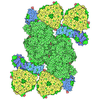
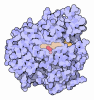
 emd_57280.png
 https://data.pdbj.org/pub/emdb/structures/EMD-57280

 Z (Sec.)
 Y (Row.)
 X (Col.)


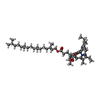
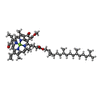
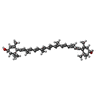
 Sample components
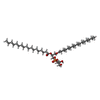
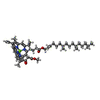
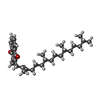
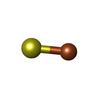
 Processing
 Electron microscopy
 FIELD EMISSION GUN