Movie
 Controller


+ Open data

- Basic information
| Entry | Database: PDB / ID: 29qb | |||||||||
|---|---|---|---|---|---|---|---|---|---|---|
| Title | Avicennia marina PSI | |||||||||
 Components |
| |||||||||
 Keywords | PHOTOSYNTHESIS / Photosystem I Avicennia marina Mangrove Golf region | |||||||||
| Function / homology |  Function and homology information photosystem I reaction center / photosystem I / photosystem I / chloroplast thylakoid membrane / photosynthesis / electron transfer activity / magnesium ion binding Similarity search - Function | |||||||||
| Biological species |  Avicennia marina (plant) | |||||||||
| Method | ELECTRON MICROSCOPY / single particle reconstruction / cryo EM / Resolution: 2.3 Å | |||||||||
 Authors | Malavath, T. / Heilmann, E. / Yuan, X. / Naschberger, A. / Gholami, A. | |||||||||
| Funding support |  Saudi Arabia, 1items
| |||||||||
 Citation | Journal: Int J Biol Macromol / Year: 2026 Title: Cryo-EM structure of photosystem I from the mangrove Avicennia marina under field-grown conditions. Authors: Tirupathi Malavath / Emmanuel Heilmann / Quentin Charras-Ferroussier / Xukun Yuan / Ashraf Al-Amoudi / Andreas Naschberger / Azam Gholami /  Abstract: Photosystem I (PSI) is a multi-subunit pigment-protein supercomplex that mediates light-driven electron transfer in oxygenic photosynthesis. In this study we investigated whether the photosystem I- ...Photosystem I (PSI) is a multi-subunit pigment-protein supercomplex that mediates light-driven electron transfer in oxygenic photosynthesis. In this study we investigated whether the photosystem I-light-harvesting complex I (PSI-LHCI) supercomplex from field-grown Avicennia marina preserves canonical angiosperm architecture or exhibits local structural differences, and characterized lipid-mediated interactions that are positioned at several core-antenna interfaces. Here, we present the 2.04 Å cryo-electron microscopy structure of the PSI-LHCI supercomplex from A. marina, a halotolerant mangrove species dominant in the Arabian Gulf and adapted to extreme coastal conditions. This study provides a structural characterization of detergent solubilized, purified PSI-LHCI isolated from field-grown plants exposed to multiple environmental stresses. This work offers a structural baseline and a practical extraction strategy that facilitate the purification of PSI-LHCI from polyphenol-rich, field-collected leaves. The atomic model contains 12 PSI core subunits, four Lhca antenna proteins, 155 chlorophylls, 35 carotenoids, and 19 modeled membrane-associated lipid molecules. Comparisons with other angiosperm PSI-LHCI structures show a largely conserved architecture and conserved lipid binding positions at several core antenna interfaces. However, lipid-mediated contacts at subunit interfaces may contribute to local structural integrity, although their contribution to PSI-LHCI stability under changing salinity remains to be established. These findings may provide a basis for future studies of PSI structure and function under contrasting environmental conditions. | |||||||||
| History |
|
- Structure visualization
| Structure viewer | Molecule: MolmilJmol/JSmol |
|---|
- Downloads & links
-Download
| PDBx/mmCIF format | 29qb.cif.gz | 927.7 KB | Display | PDBx/mmCIF format |
|---|---|---|---|---|
| PDB format | pdb29qb.ent.gz | 795 KB | Display | PDB format |
| PDBx/mmJSON format | 29qb.json.gz | Tree view | PDBx/mmJSON format | |
| Others |  Other downloads |
-Validation report
| Arichive directory | https://data.pdbj.org/pub/pdb/validation_reports/9q/29qbftp://data.pdbj.org/pub/pdb/validation_reports/9q/29qb | HTTPS FTP |
|---|
-Related structure data
| Related structure data |  57280MC M: map data used to model this data C: citing same article ( |
|---|---|
| Similar structure data |
-Links
 PDBj
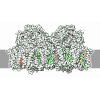
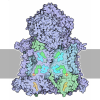
- Assembly
| Deposited unit | 
|
|---|---|
| 1 |
|
-Components
-Protein , 10 types, 10 molecules 4123CDEFGH
| #1: Protein | Mass: 22191.477 Da / Num. of mol.: 1 / Source method: isolated from a natural source / Source: (natural) Avicennia marina (plant) / Organ: Leave |
|---|---|
| #2: Protein | Mass: 21447.637 Da / Num. of mol.: 1 / Source method: isolated from a natural source / Source: (natural) Avicennia marina (plant) / Organ: Leave |
| #3: Protein | Mass: 22229.258 Da / Num. of mol.: 1 / Source method: isolated from a natural source / Source: (natural) Avicennia marina (plant) / Organ: Leave |
| #4: Protein | Mass: 23958.646 Da / Num. of mol.: 1 / Source method: isolated from a natural source / Source: (natural) Avicennia marina (plant) / Organ: Leave |
| #6: Protein | Mass: 8774.184 Da / Num. of mol.: 1 / Source method: isolated from a natural source / Source: (natural) Avicennia marina (plant) / Organ: Leave |
| #7: Protein | Mass: 15982.292 Da / Num. of mol.: 1 / Source method: isolated from a natural source / Source: (natural) Avicennia marina (plant) / Organ: Leave |
| #8: Protein | Mass: 7297.182 Da / Num. of mol.: 1 / Source method: isolated from a natural source / Source: (natural) Avicennia marina (plant) / Organ: Leave |
| #9: Protein | Mass: 17377.133 Da / Num. of mol.: 1 / Source method: isolated from a natural source / Source: (natural) Avicennia marina (plant) / Organ: Leave |
| #10: Protein | Mass: 10816.104 Da / Num. of mol.: 1 / Source method: isolated from a natural source / Source: (natural) Avicennia marina (plant) / Organ: Leave |
| #11: Protein | Mass: 10055.566 Da / Num. of mol.: 1 / Source method: isolated from a natural source / Source: (natural) Avicennia marina (plant) / Organ: Leave |
-Photosystem I P700 chlorophyll a apoprotein ... , 2 types, 2 molecules AB
| #5: Protein | Mass: 82407.172 Da / Num. of mol.: 1 / Source method: isolated from a natural source / Source: (natural) Avicennia marina (plant) / Organ: Leave / References: UniProt: A0A7T8G471, photosystem I |
|---|---|
| #14: Protein | Mass: 82283.383 Da / Num. of mol.: 1 / Source method: isolated from a natural source / Source: (natural) Avicennia marina (plant) / Organ: Leave / References: UniProt: G9IB61, photosystem I |
-Photosystem I reaction center subunit ... , 4 types, 4 molecules IJKL
| #12: Protein/peptide | Mass: 3138.807 Da / Num. of mol.: 1 / Source method: isolated from a natural source / Source: (natural) Avicennia marina (plant) / Organ: Leave / References: UniProt: A0A6B9DLX2 |
|---|---|
| #13: Protein/peptide | Mass: 5029.914 Da / Num. of mol.: 1 / Source method: isolated from a natural source / Source: (natural) Avicennia marina (plant) / Organ: Leave / References: UniProt: Q3C1K9 |
| #15: Protein | Mass: 8506.900 Da / Num. of mol.: 1 / Source method: isolated from a natural source / Source: (natural) Avicennia marina (plant) / Organ: Leave / References: UniProt: A0AAW1LKN9 |
| #16: Protein | Mass: 16259.691 Da / Num. of mol.: 1 / Source method: isolated from a natural source / Source: (natural) Avicennia marina (plant) / Organ: Leave / References: UniProt: A0A2G9G897 |
-Sugars , 2 types, 3 molecules 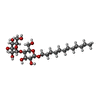
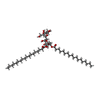
| #28: Sugar |  Type: D-saccharide / Mass: 510.615 Da / Num. of mol.: 2 / Source method: obtained synthetically / Formula: C24H46O11 / Comment: detergent*YM #29: Sugar | ChemComp-DGD / |  Type: saccharide / Mass: 949.299 Da / Num. of mol.: 1 / Source method: obtained synthetically / Formula: C51H96O15 |
|---|
-Non-polymers , 12 types, 632 molecules 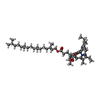
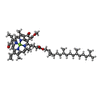
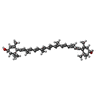
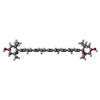
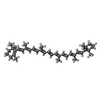
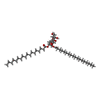
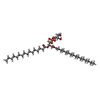
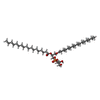
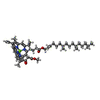
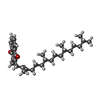
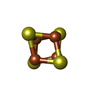
| #17: Chemical | ChemComp-CLA /  Mass: 893.489 Da / Num. of mol.: 142 / Source method: isolated from a natural source / Formula: C55H72MgN4O5 #18: Chemical | ChemComp-CHL /  Mass: 907.472 Da / Num. of mol.: 12 / Source method: obtained synthetically / Formula: C55H70MgN4O6 #19: Chemical | ChemComp-LUT / (  Mass: 568.871 Da / Num. of mol.: 5 / Source method: obtained synthetically / Formula: C40H56O2 #20: Chemical | ChemComp-XAT / (  Mass: 600.870 Da / Num. of mol.: 4 / Source method: obtained synthetically / Formula: C40H56O4 #21: Chemical | ChemComp-BCR /  Mass: 536.873 Da / Num. of mol.: 26 / Source method: obtained synthetically / Formula: C40H56 #22: Chemical |  Mass: 787.158 Da / Num. of mol.: 3 / Source method: obtained synthetically / Formula: C45H86O10 #23: Chemical | ChemComp-LHG /  Mass: 722.970 Da / Num. of mol.: 4 / Source method: obtained synthetically / Formula: C38H75O10P / Comment: phospholipid*YM #24: Chemical |  Mass: 751.023 Da / Num. of mol.: 2 / Source method: obtained synthetically / Formula: C40H79O10P / Comment: phospholipid*YM #25: Chemical | ChemComp-CL0 / |  Mass: 893.489 Da / Num. of mol.: 1 / Source method: obtained synthetically / Formula: C55H72MgN4O5 #26: Chemical |  Mass: 450.696 Da / Num. of mol.: 2 / Source method: obtained synthetically / Formula: C31H46O2 #27: Chemical |  Mass: 351.640 Da / Num. of mol.: 3 / Source method: obtained synthetically / Formula: Fe4S4 #30: Water | ChemComp-HOH / | Mass: 18.015 Da / Num. of mol.: 428 / Source method: isolated from a natural source / Formula: H2O |
|---|
-Details
| Has ligand of interest | N |
|---|---|
| Has protein modification | Y |
-Experimental details
-Experiment
| Experiment | Method: ELECTRON MICROSCOPY |
|---|---|
| EM experiment | Aggregation state: TISSUE / 3D reconstruction method: single particle reconstruction |
- Sample preparation
| Component | Name: Photosystem I / Type: COMPLEX / Entity ID: #3, #1-#2, #4-#14, #16, #15 / Source: NATURAL | ||||||||||||||||||||||||||||||||||||||||||||||||||
|---|---|---|---|---|---|---|---|---|---|---|---|---|---|---|---|---|---|---|---|---|---|---|---|---|---|---|---|---|---|---|---|---|---|---|---|---|---|---|---|---|---|---|---|---|---|---|---|---|---|---|---|
| Molecular weight | Experimental value: NO | ||||||||||||||||||||||||||||||||||||||||||||||||||
| Source (natural) | Organism: Avicennia marina (plant) / Tissue: Leave | ||||||||||||||||||||||||||||||||||||||||||||||||||
| Buffer solution | pH: 7.5 | ||||||||||||||||||||||||||||||||||||||||||||||||||
| Buffer component |
| ||||||||||||||||||||||||||||||||||||||||||||||||||
| Specimen | Conc.: 1.5 mg/ml / Embedding applied: NO / Shadowing applied: NO / Staining applied: NO / Vitrification applied: YES | ||||||||||||||||||||||||||||||||||||||||||||||||||
| Specimen support | Details: 35 mA / Grid material: COPPER / Grid mesh size: 300 divisions/in. / Grid type: Quantifoil R1.2/1.3 | ||||||||||||||||||||||||||||||||||||||||||||||||||
| Vitrification | Instrument: FEI VITROBOT MARK I / Cryogen name: ETHANE / Humidity: 100 % / Chamber temperature: 277 K |
- Electron microscopy imaging
| Experimental equipment | 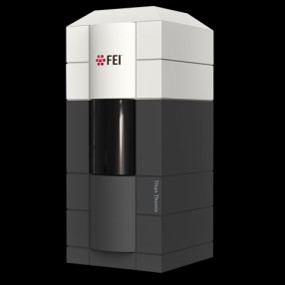 Model: Titan Krios / Image courtesy: FEI Company |
|---|---|
| Microscopy | Model: TFS KRIOS |
| Electron gun | Electron source:  FIELD EMISSION GUN / Accelerating voltage: 300 kV / Illumination mode: FLOOD BEAM |
| Electron lens | Mode: BRIGHT FIELD / Nominal magnification: 165000 X / Nominal defocus max: 21000 nm / Nominal defocus min: 5000 nm |
| Specimen holder | Cryogen: NITROGEN / Specimen holder model: FEI TITAN KRIOS AUTOGRID HOLDER |
| Image recording | Electron dose: 40 e/Å2 / Film or detector model: FEI FALCON IV (4k x 4k) |
- Processing
| EM software |
| ||||||||||||||||||||
|---|---|---|---|---|---|---|---|---|---|---|---|---|---|---|---|---|---|---|---|---|---|
| CTF correction | Type: PHASE FLIPPING AND AMPLITUDE CORRECTION | ||||||||||||||||||||
| 3D reconstruction | Resolution: 2.3 Å / Resolution method: FSC 0.143 CUT-OFF / Num. of particles: 157448 / Symmetry type: POINT |