nucleolus organizer region / protein depropionylation / NAD-dependent protein-lysine depropionylase activity / protein deglutarylation / protein-glutaryllysine deglutarylase activity / histone H3K18 deacetylase activity, NAD-dependent / protein-succinyllysine desuccinylase activity / homologous chromosome pairing at meiosis / R-loop processing / regulation of protein export from nucleus ...nucleolus organizer region / protein depropionylation / NAD-dependent protein-lysine depropionylase activity / protein deglutarylation / protein-glutaryllysine deglutarylase activity / histone H3K18 deacetylase activity, NAD-dependent / protein-succinyllysine desuccinylase activity / homologous chromosome pairing at meiosis / R-loop processing / regulation of protein export from nucleus / positive regulation of transcription of nucleolar large rRNA by RNA polymerase I / protein methyltransferase activity / transposable element silencing / protein acetyllysine N-acetyltransferase / NAD-dependent protein lysine deacetylase activity / regulation of mitochondrion organization / protein deacetylation / positive regulation of rRNA processing / rRNA transcription / negative regulation of gene expression, epigenetic / ChAHP complex assembly / positive regulation of transcription by RNA polymerase I / DNA repair-dependent chromatin remodeling / NAD+ binding / FXIIa activates plasma kallikrein-kinin system / negative regulation of tumor necrosis factor-mediated signaling pathway / Interaction of NuRD complexes with transcription factors / CHD6, CHD7, CHD8, CHD9 subfamily / NuRD complex assembly / CHD1 and CHD2 subfamily / positive regulation of gluconeogenesis / negative regulation of megakaryocyte differentiation / protein localization to CENP-A containing chromatin / Chromatin modifying enzymes / Replacement of protamines by nucleosomes in the male pronucleus / negative regulation of protein ubiquitination / Packaging Of Telomere Ends / Transferases; Acyltransferases; Transferring groups other than aminoacyl groups / Recognition and association of DNA glycosylase with site containing an affected purine / Cleavage of the damaged purine / regulation of DNA repair / telomere organization / Interleukin-7 signaling / Deposition of new CENPA-containing nucleosomes at the centromere / Recognition and association of DNA glycosylase with site containing an affected pyrimidine / Cleavage of the damaged pyrimidine / transcription initiation-coupled chromatin remodeling / RNA Polymerase I Promoter Opening / negative regulation of phosphatidylinositol 3-kinase/protein kinase B signal transduction / Inhibition of DNA recombination at telomere / Assembly of the ORC complex at the origin of replication / SUMOylation of chromatin organization proteins / Regulation of endogenous retroelements by the Human Silencing Hub (HUSH) complex / Meiotic synapsis / DNA methylation / Condensation of Prophase Chromosomes / Chromatin modifications during the maternal to zygotic transition (MZT) / SIRT1 negatively regulates rRNA expression / HCMV Late Events / ERCC6 (CSB) and EHMT2 (G9a) positively regulate rRNA expression / PRC2 methylates histones and DNA / Regulation of endogenous retroelements by KRAB-ZFP proteins / Defective pyroptosis / HDACs deacetylate histones / Transcriptional regulation by small RNAs / lipopolysaccharide binding / Regulation of endogenous retroelements by Piwi-interacting RNAs (piRNAs) / RNA Polymerase I Promoter Escape / Nonhomologous End-Joining (NHEJ) / HDMs demethylate histones / Activated PKN1 stimulates transcription of AR (androgen receptor) regulated genes KLK2 and KLK3 / RUNX1 regulates genes involved in megakaryocyte differentiation and platelet function / Negative Regulation of CDH1 Gene Transcription / NoRC negatively regulates rRNA expression / PKMTs methylate histone lysines / G2/M DNA damage checkpoint / Formation of the beta-catenin:TCF transactivating complex / B-WICH complex positively regulates rRNA expression / DNA Damage/Telomere Stress Induced Senescence / Meiotic recombination / Pre-NOTCH Transcription and Translation / Activation of anterior HOX genes in hindbrain development during early embryogenesis / osteoblast differentiation / Transcriptional regulation of granulopoiesis / nucleosomal DNA binding / RMTs methylate histone arginines / Metalloprotease DUBs / HCMV Early Events / innate immune response in mucosa / structural constituent of chromatin / nucleosome / Regulation of PD-L1(CD274) transcription / UCH proteinases / nucleosome assembly / site of double-strand break / HATs acetylate histones / E3 ubiquitin ligases ubiquitinate target proteins / Recruitment and ATM-mediated phosphorylation of repair and signaling proteins at DNA double strand breaks / Factors involved in megakaryocyte development and platelet production / MLL4 and MLL3 complexes regulate expression of PPARG target genes in adipogenesis and hepatic steatosis Similarity search - Function
Independent Research Fund Denmark - Medical Sciences
#2028.00011B
Denmark
Swiss National Science Foundation
IZLCZO_206089
Switzerland
La Caixa Foundation
100010434
Spain
Citation
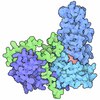
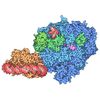
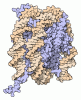
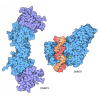
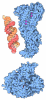
Journal: Nat Commun / Year: 2025 Title: Structural basis of SIRT7 nucleosome engagement and substrate specificity. Authors: Carlos Moreno-Yruela / Babatunde E Ekundayo / Polina N Foteva / Dongchun Ni / Esther Calvino-Sanles / Henning Stahlberg / Beat Fierz / Abstract: Chromatin-modifying enzymes target distinct residues within histones to finetune gene expression profiles. SIRT7 is an NAD-dependent deacylase often deregulated in cancer, which deacetylates either ...Chromatin-modifying enzymes target distinct residues within histones to finetune gene expression profiles. SIRT7 is an NAD-dependent deacylase often deregulated in cancer, which deacetylates either H3 lysine 36 (H3K36) or H3K18 with high specificity within nucleosomes. Here, we report structures of nucleosome-bound SIRT7, and uncover the structural basis of its specificity towards H3K36 and K18 deacylation, combining a mechanism-based cross-linking strategy, cryo-EM, and enzymatic and cellular assays. We show that the SIRT7 N-terminus represents a unique, extended nucleosome-binding domain, reaching across the nucleosomal surface to the acidic patch. The catalytic domain binds at the H3-tail exit site, engaging both DNA gyres of the nucleosome. Contacting H3K36 versus H3K18 requires a change in binding pose, and results in structural changes in both SIRT7 and the nucleosome. These structures reveal the basis of lysine specificity, allowing us to engineer SIRT7 towards enhanced H3K18ac selectivity, and provides a basis for small molecule modulator development.
In the structure databanks used in Yorodumi, some data are registered as the other names, "COVID-19 virus" and "2019-nCoV". Here are the details of the virus and the list of structure data.
Jan 31, 2019. EMDB accession codes are about to change! (news from PDBe EMDB page)
EMDB accession codes are about to change! (news from PDBe EMDB page)
The allocation of 4 digits for EMDB accession codes will soon come to an end. Whilst these codes will remain in use, new EMDB accession codes will include an additional digit and will expand incrementally as the available range of codes is exhausted. The current 4-digit format prefixed with “EMD-” (i.e. EMD-XXXX) will advance to a 5-digit format (i.e. EMD-XXXXX), and so on. It is currently estimated that the 4-digit codes will be depleted around Spring 2019, at which point the 5-digit format will come into force.
The EM Navigator/Yorodumi systems omit the EMD- prefix.
Related info.:Q: What is EMD? / ID/Accession-code notation in Yorodumi/EM Navigator
Yorodumi is a browser for structure data from EMDB, PDB, SASBDB, etc.
This page is also the successor to EM Navigator detail page, and also detail information page/front-end page for Omokage search.
The word "yorodu" (or yorozu) is an old Japanese word meaning "ten thousand". "mi" (miru) is to see.
Related info.:EMDB / PDB / SASBDB / Comparison of 3 databanks / Yorodumi Search / Aug 31, 2016. New EM Navigator & Yorodumi / Yorodumi Papers / Jmol/JSmol / Function and homology information / Changes in new EM Navigator and Yorodumi
 Movie
Movie Controller


 Open data
 Basic information
 Map data
 Sample
 Keywords
 Function and homology information
 Homo sapiens (human)
 Authors
 Switzerland,
  Denmark,
  Spain, 4 items
  Citation
 Structure visualization
 Downloads & links
 emd_51453.png
 https://data.pdbj.org/pub/emdb/structures/EMD-51453

 Z (Sec.)
 Y (Row.)
 X (Col.)


 Sample components
 Escherichia coli (E. coli)
 Processing
 Electron microscopy
 FIELD EMISSION GUN

