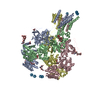
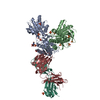
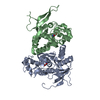
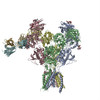
ムービー
ムービー コントローラー


+ データを開く

- 基本情報
基本情報
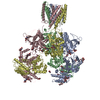
| 登録情報 | データベース: PDB / ID: 6mms | |||||||||
|---|---|---|---|---|---|---|---|---|---|---|
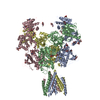
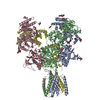
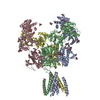
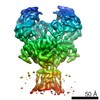
| タイトル | Triheteromeric NMDA receptor GluN1/GluN2A/GluN2A* in the '2-Knuckle-Symmetric' conformation, in complex with glycine and glutamate, in the presence of 1 millimolar EDTA, and at pH 7.4 | |||||||||
 要素 要素 |
| |||||||||
 キーワード キーワード | TRANSPORT PROTEIN / Ligand-gated Ion Channel / NMDA Receptor / ionotropic Glutamate Receptors / membrane protein | |||||||||
| 機能・相同性 |  機能・相同性情報 機能・相同性情報neurotransmitter receptor transport, plasma membrane to endosome / regulation of response to alcohol / response to ammonium ion / receptor recycling / response to environmental enrichment / directional locomotion / positive regulation of Schwann cell migration / pons maturation / regulation of cell communication / EPHB-mediated forward signaling ...neurotransmitter receptor transport, plasma membrane to endosome / regulation of response to alcohol / response to ammonium ion / receptor recycling / response to environmental enrichment / directional locomotion / positive regulation of Schwann cell migration / pons maturation / regulation of cell communication / EPHB-mediated forward signaling / Assembly and cell surface presentation of NMDA receptors / response to hydrogen sulfide / auditory behavior / olfactory learning / conditioned taste aversion / dendritic branch / response to other organism / regulation of respiratory gaseous exchange / regulation of ARF protein signal transduction / protein localization to postsynaptic membrane / cellular response to magnesium ion / serotonin metabolic process / transmitter-gated monoatomic ion channel activity / positive regulation of inhibitory postsynaptic potential / response to methylmercury / suckling behavior / response to manganese ion / response to glycine / response to carbohydrate / propylene metabolic process / sleep / dendritic spine organization / regulation of NMDA receptor activity / locomotion / cellular response to dsRNA / cellular response to lipid / RAF/MAP kinase cascade / regulation of monoatomic cation transmembrane transport / NMDA glutamate receptor activity / Synaptic adhesion-like molecules / voltage-gated monoatomic cation channel activity / response to glycoside / NMDA selective glutamate receptor complex / glutamate binding / ligand-gated sodium channel activity / neurotransmitter receptor complex / response to morphine / glutamate receptor signaling pathway / regulation of axonogenesis / neuromuscular process / calcium ion transmembrane import into cytosol / regulation of dendrite morphogenesis / protein heterotetramerization / male mating behavior / regulation of synapse assembly / glycine binding / spinal cord development / response to amine / cellular response to zinc ion / startle response / parallel fiber to Purkinje cell synapse / positive regulation of reactive oxygen species biosynthetic process / dopamine metabolic process / monoatomic cation transmembrane transport / response to lithium ion / positive regulation of calcium ion transport into cytosol / cellular response to glycine / modulation of excitatory postsynaptic potential / response to light stimulus / regulation of postsynaptic membrane potential / action potential / associative learning / conditioned place preference / excitatory synapse / positive regulation of dendritic spine maintenance / social behavior / monoatomic ion channel complex / monoatomic cation transport / regulation of neuronal synaptic plasticity / glutamate receptor binding / positive regulation of protein targeting to membrane / Unblocking of NMDA receptors, glutamate binding and activation / positive regulation of excitatory postsynaptic potential / long-term memory / neuron development / synaptic cleft / phosphatase binding / prepulse inhibition / positive regulation of synaptic transmission, glutamatergic / multicellular organismal response to stress / postsynaptic density, intracellular component / monoatomic cation channel activity / response to fungicide / calcium ion homeostasis / glutamate-gated receptor activity / cell adhesion molecule binding / regulation of neuron apoptotic process / cellular response to manganese ion / glutamate-gated calcium ion channel activity / presynaptic active zone membrane 類似検索 - 分子機能 | |||||||||
| 生物種 |   Rattus norvegicus (ドブネズミ) Rattus norvegicus (ドブネズミ) | |||||||||
| 手法 | 電子顕微鏡法 / 単粒子再構成法 / クライオ電子顕微鏡法 / 解像度: 5.38 Å | |||||||||
 データ登録者 データ登録者 | Jalali-Yazdi, F. / Chowdhury, S. / Yoshioka, C. / Gouaux, E. | |||||||||
| 資金援助 |  米国, 2件 米国, 2件
| |||||||||
 引用 引用 | ジャーナル: Cell / 年: 2018 タイトル: Mechanisms for Zinc and Proton Inhibition of the GluN1/GluN2A NMDA Receptor. 著者: Farzad Jalali-Yazdi / Sandipan Chowdhury / Craig Yoshioka / Eric Gouaux / 要旨: N-methyl-D-aspartate receptors (NMDARs) play essential roles in memory formation, neuronal plasticity, and brain development, with their dysfunction linked to a range of disorders from ischemia to ...N-methyl-D-aspartate receptors (NMDARs) play essential roles in memory formation, neuronal plasticity, and brain development, with their dysfunction linked to a range of disorders from ischemia to schizophrenia. Zinc and pH are physiological allosteric modulators of NMDARs, with GluN2A-containing receptors inhibited by nanomolar concentrations of divalent zinc and by excursions to low pH. Despite the widespread importance of zinc and proton modulation of NMDARs, the molecular mechanism by which these ions modulate receptor activity has proven elusive. Here, we use cryoelectron microscopy to elucidate the structure of the GluN1/GluN2A NMDAR in a large ensemble of conformations under a range of physiologically relevant zinc and proton concentrations. We show how zinc binding to the amino terminal domain elicits structural changes that are transduced though the ligand-binding domain and result in constriction of the ion channel gate. | |||||||||
| 履歴 |
|
- 構造の表示
構造の表示
| ムービー |
ムービービューア |
|---|---|
| 構造ビューア | 分子: MolmilJmol/JSmol |
- ダウンロードとリンク
-ダウンロード
| PDBx/mmCIF形式 | 6mms.cif.gz | 545.8 KB | 表示 | PDBx/mmCIF形式 |
|---|---|---|---|---|
| PDB形式 | pdb6mms.ent.gz | 448.3 KB | 表示 | PDB形式 |
| PDBx/mmJSON形式 | 6mms.json.gz | ツリー表示 | PDBx/mmJSON形式 | |
| その他 |  その他のダウンロード その他のダウンロード |
-検証レポート
| 文書・要旨 | 6mms_validation.pdf.gz | 1.6 MB | 表示 | wwPDB検証レポート |
|---|---|---|---|---|
| 文書・詳細版 | 6mms_full_validation.pdf.gz | 1.6 MB | 表示 | |
| XML形式データ | 6mms_validation.xml.gz | 88.8 KB | 表示 | |
| CIF形式データ | 6mms_validation.cif.gz | 129.3 KB | 表示 | |
| アーカイブディレクトリ | https://data.pdbj.org/pub/pdb/validation_reports/mm/6mmsftp://data.pdbj.org/pub/pdb/validation_reports/mm/6mms | HTTPS FTP |
-関連構造データ
| 関連構造データ | 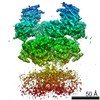 9160MC 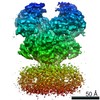 9147C 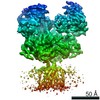 9148C 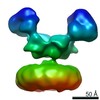 9149C 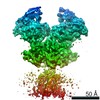 9150C 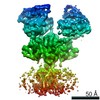 9151C 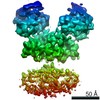 9152C 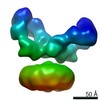 9153C 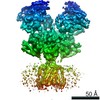 9154C 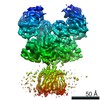 9155C 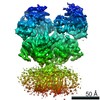 9156C 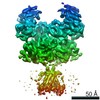 9157C 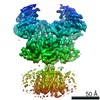 9158C 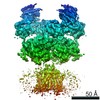 9159C 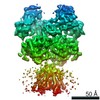 9161C 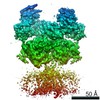 9162C 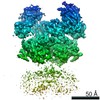 9163C 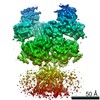 9164C 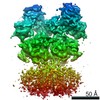 9165C 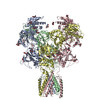 6mm9C 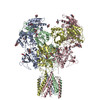 6mmaC 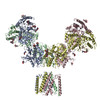 6mmbC 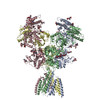 6mmgC 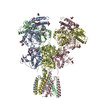 6mmhC  6mmiC  6mmjC  6mmkC  6mmlC  6mmmC  6mmnC  6mmpC  6mmrC 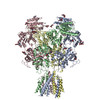 6mmtC 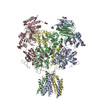 6mmuC 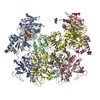 6mmvC 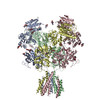 6mmwC 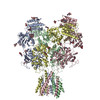 6mmxC M: このデータのモデリングに利用したマップデータ C: 同じ文献を引用 ( |
|---|---|
| 類似構造データ |

-リンク
 PDBj
PDBj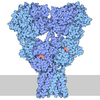
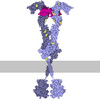
- 集合体
集合体
| 登録構造単位 | 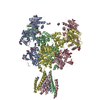
|
|---|---|
| 1 |
|
-要素
| #1: タンパク質 | 分子量: 94189.781 Da / 分子数: 2 / 断片: UNP residues 1-838 / 由来タイプ: 組換発現 / 由来: (組換発現) Rattus norvegicus (ドブネズミ) / 遺伝子: Grin1, Nmdar1 / Variant: 1a / 細胞株 (発現宿主): TSA-201 / 器官 (発現宿主): Kidney / 発現宿主:  Homo sapiens (ヒト) / 参照: UniProt: P35439 Homo sapiens (ヒト) / 参照: UniProt: P35439#2: タンパク質 | 分子量: 93630.258 Da / 分子数: 2 / 断片: UNP residues 1-837 / Mutation: H128S, N687Q / 由来タイプ: 組換発現 / 由来: (組換発現) Rattus norvegicus (ドブネズミ) / 遺伝子: Grin2a / 細胞株 (発現宿主): TSA-201 / 器官 (発現宿主): Kidney / 発現宿主: Homo sapiens (ヒト) / 参照: UniProt: Q00959#3: 多糖 | #4: 糖 | ChemComp-NAG /  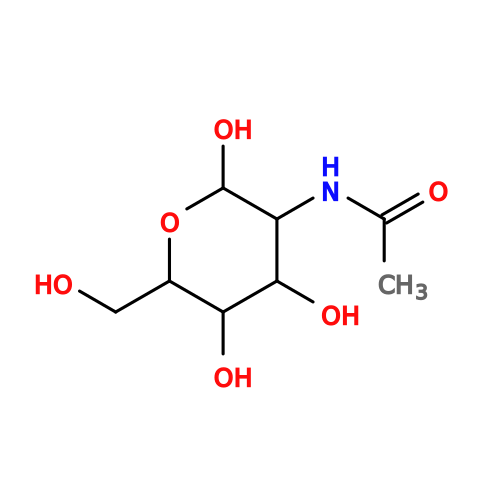 タイプ: D-saccharide, beta linking / 分子量: 221.208 Da / 分子数: 29 / 由来タイプ: 組換発現 / 式: C8H15NO6 タイプ: D-saccharide, beta linking / 分子量: 221.208 Da / 分子数: 29 / 由来タイプ: 組換発現 / 式: C8H15NO6Has protein modification | Y | |
|---|
-実験情報
-実験
| 実験 | 手法: 電子顕微鏡法 |
|---|---|
| EM実験 | 試料の集合状態: PARTICLE / 3次元再構成法: 単粒子再構成法 |
- 試料調製
試料調製
| 構成要素 | 名称: Triheteromeric NMDA receptor GluN1/GluN2A/GluN2A* in the '2-Knuckle-Symmetric' conformation, in complex with glycine and glutamate, in the presence of 1 millimolar EDTA, and at pH 7.4 タイプ: COMPLEX 詳細: Sample was heterologously expressed in TSA-201 cells, detergent solubilized, and affinity purified serially to obtain the triheteromeric receptor Entity ID: #1-#2 / 由来: RECOMBINANT | |||||||||||||||||||||||||
|---|---|---|---|---|---|---|---|---|---|---|---|---|---|---|---|---|---|---|---|---|---|---|---|---|---|---|
| 分子量 | 値: 0.5 MDa / 実験値: NO | |||||||||||||||||||||||||
| 由来(天然) | 生物種: Rattus norvegicus (ドブネズミ) | |||||||||||||||||||||||||
| 由来(組換発現) | 生物種: Homo sapiens (ヒト) / 細胞: TSA-201 | |||||||||||||||||||||||||
| 緩衝液 | pH: 7.4 | |||||||||||||||||||||||||
| 緩衝液成分 |
| |||||||||||||||||||||||||
| 試料 | 濃度: 4 mg/ml / 包埋: NO / シャドウイング: NO / 染色: NO / 凍結: YES / 詳細: This sample was monodisperse | |||||||||||||||||||||||||
| 試料支持 | グリッドの材料: GOLD / グリッドのサイズ: 300 divisions/in. / グリッドのタイプ: Quantifoil R1.2/1.3 | |||||||||||||||||||||||||
| 急速凍結 | 装置: FEI VITROBOT MARK IV / 凍結剤: ETHANE / 湿度: 100 % / 凍結前の試料温度: 291 K / 詳細: Sample was blotted for 3 seconds at blot force 1. |
- 電子顕微鏡撮影
| 実験機器 |  モデル: Titan Krios / 画像提供: FEI Company |
|---|---|
| 顕微鏡 | モデル: FEI TITAN KRIOS |
| 電子銃 | 電子線源:  FIELD EMISSION GUN / 加速電圧: 300 kV / 照射モード: FLOOD BEAM FIELD EMISSION GUN / 加速電圧: 300 kV / 照射モード: FLOOD BEAM |
| 電子レンズ | モード: BRIGHT FIELD / Cs: 2.7 mm |
| 撮影 | 平均露光時間: 22 sec. / 電子線照射量: 52 e/Å2 フィルム・検出器のモデル: GATAN K2 BASE (4k x 4k) 撮影したグリッド数: 1 / 実像数: 690 |
- 解析
解析
| ソフトウェア | 名称: PHENIX / バージョン: 1.13_2998: / 分類: 精密化 | |||||||||||||||||||||||||||||||||
|---|---|---|---|---|---|---|---|---|---|---|---|---|---|---|---|---|---|---|---|---|---|---|---|---|---|---|---|---|---|---|---|---|---|---|
| EMソフトウェア |
| |||||||||||||||||||||||||||||||||
| CTF補正 | タイプ: PHASE FLIPPING AND AMPLITUDE CORRECTION | |||||||||||||||||||||||||||||||||
| 対称性 | 点対称性: C1 (非対称) | |||||||||||||||||||||||||||||||||
| 3次元再構成 | 解像度: 5.38 Å / 解像度の算出法: FSC 0.143 CUT-OFF / 粒子像の数: 33349 / アルゴリズム: FOURIER SPACE / 対称性のタイプ: POINT | |||||||||||||||||||||||||||||||||
| 原子モデル構築 | プロトコル: RIGID BODY FIT | |||||||||||||||||||||||||||||||||
| 原子モデル構築 | 3D fitting-ID: 1 / Source name: PDB / タイプ: experimental model
|