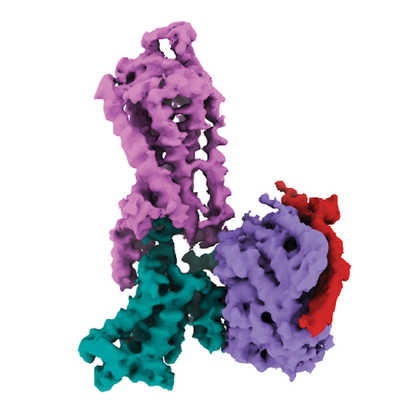
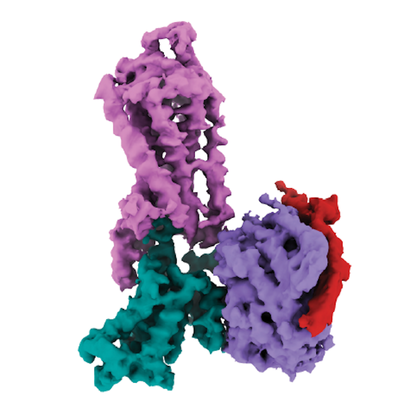
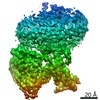
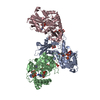
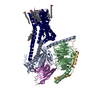
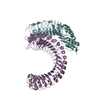
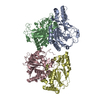
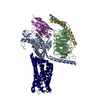
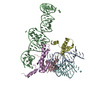
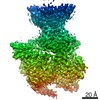
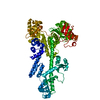
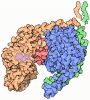
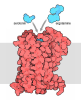
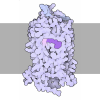
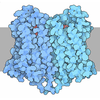
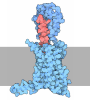
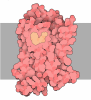
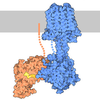
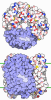
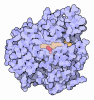
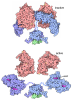
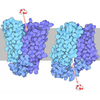
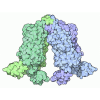
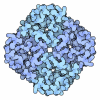
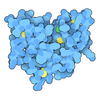
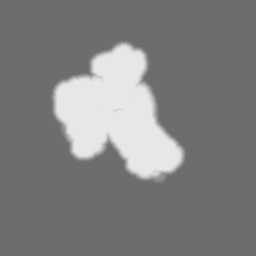
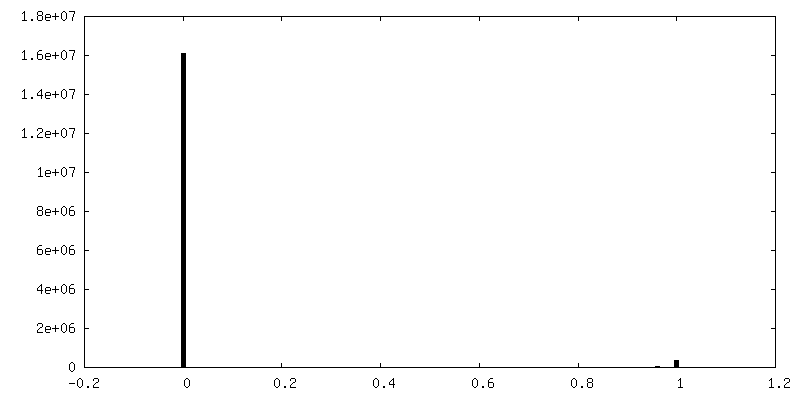
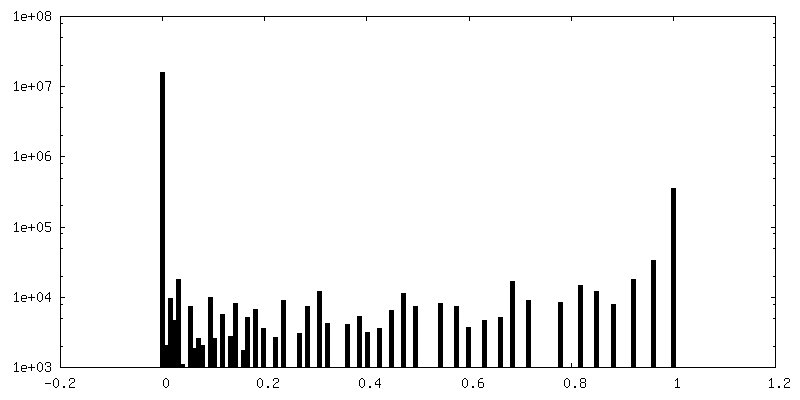
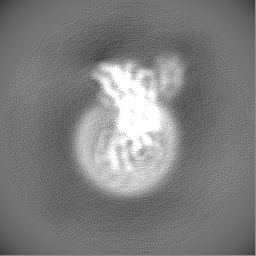
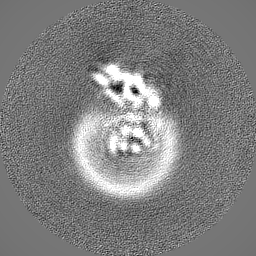
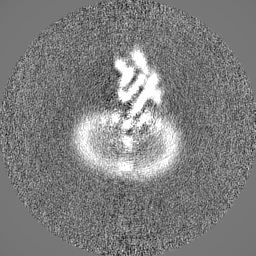
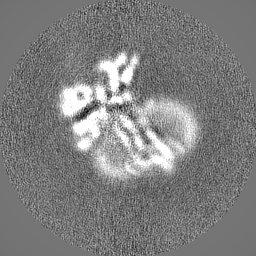
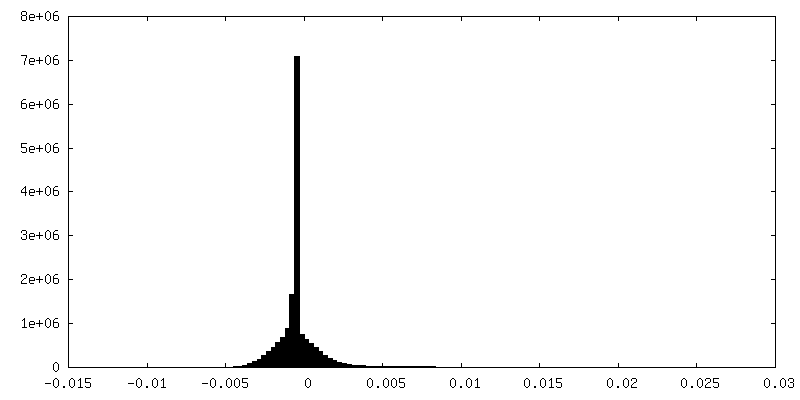
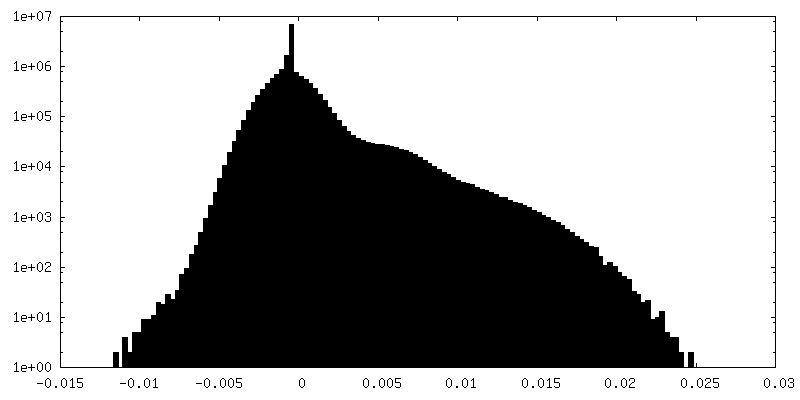
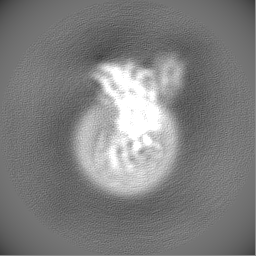
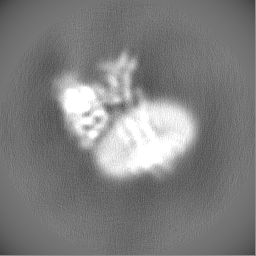
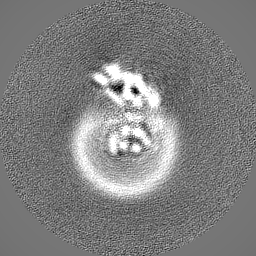
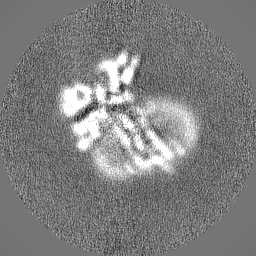
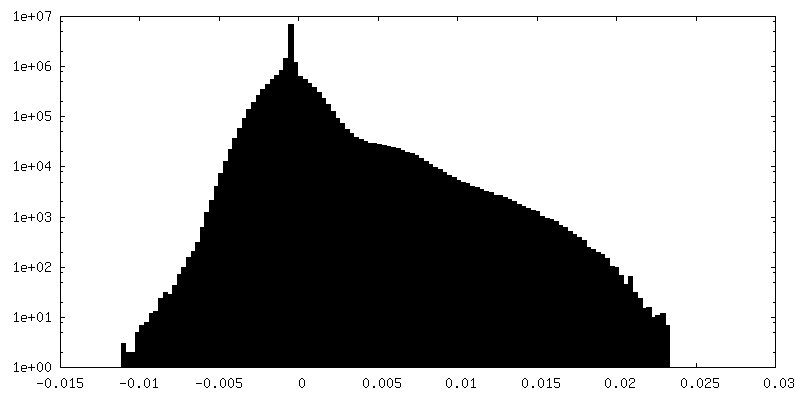
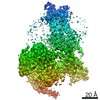
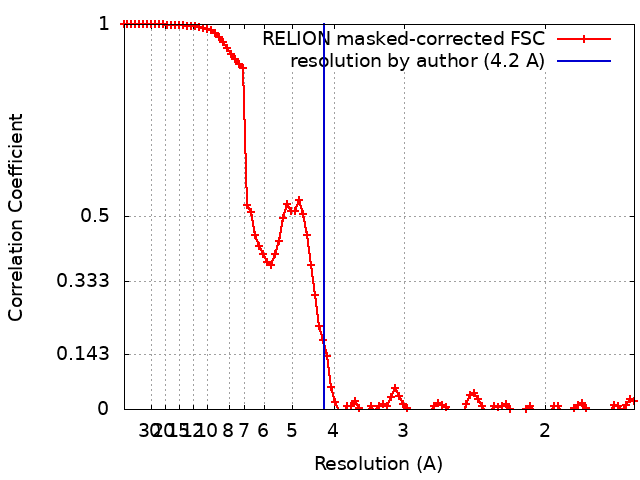
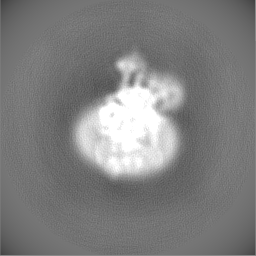
登録情報 データベース : EMDB / ID : EMD-23101 構造の表示 ダウンロードとリンクタイトル Structure of NTS-NTSR1-Gi complex in lipid nanodisc, noncanonical state, AHD and nanodisc mask out マップデータ 詳細 試料複合体 : NTS-NTSR1-Gi complex in lipid nanodisc複合体 : NTSR1タンパク質・ペプチド : Neurotensin receptor type 1複合体 : NTS複合体 : G(i) subunit alpha-1タンパク質・ペプチド : Guanine nucleotide-binding protein G(i) subunit alpha-1複合体 : G(I)/G(S)/G(T) subunit beta-1タンパク質・ペプチド : Guanine nucleotide-binding protein G(I)/G(S)/G(T) subunit beta-1複合体 : G(T) subunit gamma-1タンパク質・ペプチド : Guanine nucleotide-binding protein G(T) subunit gamma-T1 詳細 キーワード GPCR / NTSR1 / NTS / G protein / Nanodisc / SIGNALING PROTEIN機能・相同性 機能・相同性情報分子機能 ドメイン・相同性 構成要素
regulation of locomotion involved in locomotory behavior / Peptide ligand-binding receptors / neuropeptide receptor binding / G protein-coupled neurotensin receptor activity / inositol phosphate catabolic process / symmetric synapse / positive regulation of locomotion / regulation of inositol trisphosphate biosynthetic process / eye photoreceptor cell development / positive regulation of gamma-aminobutyric acid secretion ... regulation of locomotion involved in locomotory behavior / Peptide ligand-binding receptors / neuropeptide receptor binding / G protein-coupled neurotensin receptor activity / inositol phosphate catabolic process / symmetric synapse / positive regulation of locomotion / regulation of inositol trisphosphate biosynthetic process / eye photoreceptor cell development / positive regulation of gamma-aminobutyric acid secretion / D-aspartate import across plasma membrane / response to antipsychotic drug / positive regulation of arachidonate secretion / neuron spine / L-glutamate import across plasma membrane / vocalization behavior / neuropeptide hormone activity / regulation of behavioral fear response / regulation of respiratory gaseous exchange / cAMP biosynthetic process / positive regulation of inhibitory postsynaptic potential / negative regulation of systemic arterial blood pressure / negative regulation of release of sequestered calcium ion into cytosol / G alpha (q) signalling events / hyperosmotic response / digestive tract development / positive regulation of glutamate secretion / response to mineralocorticoid / cellular response to lithium ion / response to food / regulation of membrane depolarization / response to lipid / response to corticosterone / temperature homeostasis / positive regulation of inositol phosphate biosynthetic process / detection of temperature stimulus involved in sensory perception of pain / response to stress / associative learning / phototransduction / cellular response to dexamethasone stimulus / conditioned place preference / response to axon injury / transport vesicle / adenylate cyclase inhibitor activity / positive regulation of protein localization to cell cortex / T cell migration / cardiac muscle cell apoptotic process / positive regulation of relaxation of smooth muscle / Adenylate cyclase inhibitory pathway / D2 dopamine receptor binding / photoreceptor inner segment / adenylate cyclase-inhibiting serotonin receptor signaling pathway / G protein-coupled serotonin receptor binding / cellular response to forskolin / axon terminus / blood vessel diameter maintenance / regulation of mitotic spindle organization / chemokine-mediated signaling pathway / positive regulation of release of sequestered calcium ion into cytosol / dendritic shaft / response to amphetamine / learning / adult locomotory behavior / response to cocaine / Regulation of insulin secretion / neuropeptide signaling pathway / response to prostaglandin E / liver development / cellular response to nerve growth factor stimulus / positive regulation of cholesterol biosynthetic process / negative regulation of insulin secretion / visual learning / G protein-coupled receptor binding / response to peptide hormone / adenylate cyclase-modulating G protein-coupled receptor signaling pathway / cytoplasmic side of plasma membrane / G-protein beta/gamma-subunit complex binding / centriolar satellite / adenylate cyclase-inhibiting G protein-coupled receptor signaling pathway / Olfactory Signaling Pathway / Activation of the phototransduction cascade / G protein-coupled acetylcholine receptor signaling pathway / G beta:gamma signalling through PLC beta / Presynaptic function of Kainate receptors / Thromboxane signalling through TP receptor / terminal bouton / Activation of G protein gated Potassium channels / Inhibition of voltage gated Ca2+ channels via Gbeta/gamma subunits / G-protein activation / Glucagon signaling in metabolic regulation / G beta:gamma signalling through CDC42 / Prostacyclin signalling through prostacyclin receptor / G beta:gamma signalling through BTK / Synthesis, secretion, and inactivation of Glucagon-like Peptide-1 (GLP-1) / photoreceptor disc membrane / ADP signalling through P2Y purinoceptor 12 / Sensory perception of sweet, bitter, and umami (glutamate) taste / Glucagon-type ligand receptors / GDP binding / Adrenaline,noradrenaline inhibits insulin secretion 類似検索 - 分子機能 Neurotensin/neuromedin N / Neurotensin/neuromedin N precursor / Neurotensin receptor / Neurotensin type 1 receptor / G-protein alpha subunit, group I / G protein alpha subunit, helical insertion / G protein alpha subunit / Guanine nucleotide binding protein (G-protein), alpha subunit / G-protein alpha subunit / G-alpha domain profile. ... Neurotensin/neuromedin N / Neurotensin/neuromedin N precursor / Neurotensin receptor / Neurotensin type 1 receptor / G-protein alpha subunit, group I / G protein alpha subunit, helical insertion / G protein alpha subunit / Guanine nucleotide binding protein (G-protein), alpha subunit / G-protein alpha subunit / G-alpha domain profile. / G-protein, gamma subunit / G-protein gamma subunit domain profile. / G-protein gamma-like domain / G-protein gamma-like domain superfamily / GGL domain / G protein gamma subunit-like motifs / GGL domain / G protein beta WD-40 repeat protein / Guanine nucleotide-binding protein, beta subunit / G-protein, beta subunit / G-protein coupled receptors family 1 signature. / 7 transmembrane receptor (rhodopsin family) / G protein-coupled receptor, rhodopsin-like / GPCR, rhodopsin-like, 7TM / G-protein coupled receptors family 1 profile. / G-protein beta WD-40 repeat / WD40 repeat, conserved site / Trp-Asp (WD) repeats signature. / Trp-Asp (WD) repeats profile. / Trp-Asp (WD) repeats circular profile. / WD40 repeats / WD40 repeat / WD40-repeat-containing domain superfamily / WD40/YVTN repeat-like-containing domain superfamily / P-loop containing nucleoside triphosphate hydrolase 類似検索 - ドメイン・相同性 Neurotensin/neuromedin N / Neurotensin receptor type 1 / Guanine nucleotide-binding protein G(I)/G(S)/G(T) subunit beta-1 / Guanine nucleotide-binding protein G(i) subunit alpha-1 / Guanine nucleotide-binding protein G(T) subunit gamma-T1 類似検索 - 構成要素生物種 Rattus norvegicus (ドブネズミ) / Homo sapiens (ヒト)手法 単粒子再構成法 / クライオ電子顕微鏡法 / 解像度 : 4.2 Å 詳細 データ登録者Zhang M / Gui M 引用ジャーナル : Nat Struct Mol Biol / 年 : 2021タイトル : Cryo-EM structure of an activated GPCR-G protein complex in lipid nanodiscs.著者: Meng Zhang / Miao Gui / Zi-Fu Wang / Christoph Gorgulla / James J Yu / Hao Wu / Zhen-Yu J Sun / Christoph Klenk / Lisa Merklinger / Lena Morstein / Franz Hagn / Andreas Plückthun / Alan ... 著者 : Meng Zhang / Miao Gui / Zi-Fu Wang / Christoph Gorgulla / James J Yu / Hao Wu / Zhen-Yu J Sun / Christoph Klenk / Lisa Merklinger / Lena Morstein / Franz Hagn / Andreas Plückthun / Alan Brown / Mahmoud L Nasr / Gerhard Wagner / 要旨 : G-protein-coupled receptors (GPCRs) are the largest superfamily of transmembrane proteins and the targets of over 30% of currently marketed pharmaceuticals. Although several structures have been ... G-protein-coupled receptors (GPCRs) are the largest superfamily of transmembrane proteins and the targets of over 30% of currently marketed pharmaceuticals. Although several structures have been solved for GPCR-G protein complexes, few are in a lipid membrane environment. Here, we report cryo-EM structures of complexes of neurotensin, neurotensin receptor 1 and Gαβγ in two conformational states, resolved to resolutions of 4.1 and 4.2 Å. The structures, determined in a lipid bilayer without any stabilizing antibodies or nanobodies, reveal an extended network of protein-protein interactions at the GPCR-G protein interface as compared to structures obtained in detergent micelles. The findings show that the lipid membrane modulates the structure and dynamics of complex formation and provide a molecular explanation for the stronger interaction between GPCRs and G proteins in lipid bilayers. We propose an allosteric mechanism for GDP release, providing new insights into the activation of G proteins for downstream signaling. 履歴 登録 2020年12月12日 - ヘッダ(付随情報) 公開 2021年1月6日 - マップ公開 2021年1月6日 - 更新 2024年10月23日 - 現状 2024年10月23日 処理サイト : RCSB / 状態 : 公開
すべて表示 表示を減らす