 Movie
Movie Controller
 Structure viewers
 About Yorodumi Papers


+Search query
-Structure paper
| Title | Deep mining of the human antibody repertoire identifies frequent and genetically diverse CDRH3 topologies targetable by vaccination. |
|---|---|
| Journal, issue, pages | Proc Natl Acad Sci U S A, Vol. 123, Issue 18, Page e2532810123, Year 2026 |
| Publish date | May 5, 2026 |
 Authors Authors | Rumi Habib / Shahlo O Solieva / Zi Jie Lin / Sukanya Ghosh / Kelly Bayruns / Maya Singh / Colby J Agostino / Nicholas J Tursi / Kirsten J Sowers / Jinwei Huang / Ryan S Roark / Mansi Purwar / Younghoon Park / Kasirajan Ayyanathan / Hui Li / John W Carey / Amber Kim / Joyce Park / Madison E McCanna / Ashwin N Skelly / Neethu Chokkalingam / Sinja Kriete / Nicholas Shupin / Alana Huynh / Susanne Walker / Roopak Sadeesh / Niklas Laenger / Jianqiu Du / Jiayan Cui / Ami Patel / Amelia Escolano / Peter D Kwong / Lawrence Shapiro / Gregory R Bowman / Beatrice H Hahn / George M Shaw / David B Weiner / Jesper Pallesen / Daniel W Kulp /  |
| PubMed Abstract | Germline targeting vaccination strategies against highly variable pathogens such as HIV aim to elicit broadly neutralizing antibodies (bnAbs) with particular immunogenetic or structural features. The ...Germline targeting vaccination strategies against highly variable pathogens such as HIV aim to elicit broadly neutralizing antibodies (bnAbs) with particular immunogenetic or structural features. The V2 apex of the HIV Env protein is a promising target for a class of bnAbs that contain conserved structural motifs in the heavy chain complementarity determining region 3 (CDRH3). Here, we show that these structural motifs are targetable by vaccination by characterizing V2 apex "axe-like" CDRH3s in the human repertoire and developing immunogens capable of engaging them. We determined the frequency and diversity of axe-like CDRH3s in healthy human donors using a series of structural informatics approaches, finding these precursors in nearly 90% of donors. Axe-targeting immunogens based on the HIV Env Q23.17 bound axe-like precursors in cryo-electron microscopy structures, induced V2 apex-specific antibody responses in humanized mice, and induced axe-like heterologous neutralizing antibodies in rhesus macaques infected with a germline-targeted simian-HIV. These results illustrate a structure-guided immunoinformatic vaccine design paradigm that can be employed to elicit immunogenetically diverse yet structurally conserved classes of antibodies. |
 External links External links | Proc Natl Acad Sci U S A / PubMed:42054357 / PubMed Central |
| Methods | EM (single particle) |
| Resolution | 3.19 - 4.17 Å |
| Structure data | EMDB-46884, PDB-9dhw: EMDB-46914, PDB-9dim: EMDB-73949, PDB-9z9l:  EMDB-73950: CryoEM map of CK52.1 in complex with Q23.V033GT |
| Chemicals | 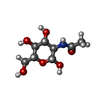 ChemComp-NAG: |
| Source |
|
 Keywords Keywords | VIRAL PROTEIN/IMMUNE SYSTEM / Antibody / Complex / VIRAL PROTEIN / VIRAL PROTEIN-IMMUNE SYSTEM complex / HIV-1 Env / VIRUS |


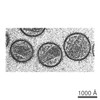 human immunodeficiency virus 1
 homo sapiens (human)