[English] 日本語
Yorodumi Papers
- Database of articles cited by EMDB/PDB/SASBDB data -

+
Search query

Keywords
Structure methods
Author
Journal
IF

-
Structure paper

TitleBacterial genome-encoded ParMs.
Journal, issue, pagesJ Biol Chem, Vol. 301, Issue 7, Page 110351, Year 2025
Publish dateJun 9, 2025
AuthorsSamson Ali / Adrian Koh / David Popp / Kotaro Tanaka / Yoshihito Kitaoku / Naoyuki Miyazaki / Kenji Iwasaki / Kaoru Mitsuoka / Robert C Robinson / Akihiro Narita /
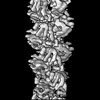
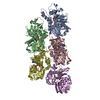
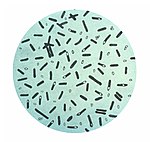
PubMed AbstractParMs generally exist on low-copy number plasmids where they contribute to plasmid segregation and stable inheritance. We carried out bioinformatics analysis, which indicated that ParM genes are not ...ParMs generally exist on low-copy number plasmids where they contribute to plasmid segregation and stable inheritance. We carried out bioinformatics analysis, which indicated that ParM genes are not only confined to plasmids but are also occasionally found on genomes. Here we report the discovery and characterization of two chromosome-encoded ParMs (cParMs) from the genomes of Desulfitobacterium hafniense (Dh-cParM1) and Clostridium botulinum (Cb-cParM). Both cParMs form filaments, exhibit nucleotide hydrolysis, and possess characteristic ParM subunit structures. Dh-cParM1 forms single and tightly coupled double filaments and is highly conserved on the chromosomes of five of six Desulfitobacterium species. Interestingly, these bacteria have not been reported to harbor plasmids. Cb-cParM possesses unique properties. Its filaments were stable after nucleotide hydrolysis and Pi release, and its ParR (Cb-cParR) did not affect the initial phase of Cb-cParM polymerization but displayed properties of a depolymerization factor for mature filaments. These results indicate functional, polymerizing ParMs can be encoded on genomes, suggesting that ParM roles may extend to other functions beyond plasmid segregation.
External linksJ Biol Chem / PubMed:40499760 / PubMed Central
MethodsEM (helical sym.)
Resolution3.5 - 8.6 Å
Structure data

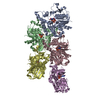
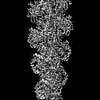
EMDB-33007, PDB-7x54:
A Cbc-ParM filament with ADP
Method: EM (helical sym.) / Resolution: 3.9 Å

EMDB-33008, PDB-7x55:
A Cbc-ParM filament with GTP and a short incubation time
Method: EM (helical sym.) / Resolution: 8.6 Å

EMDB-33009, PDB-7x56:
A Cbc-ParM filament with GDP
Method: EM (helical sym.) / Resolution: 3.5 Å

EMDB-33012, PDB-7x59:
A Cbc-ParM filament with GTP or GDPPi
Method: EM (helical sym.) / Resolution: 6.5 Å

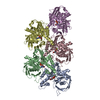
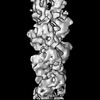
EMDB-37996: ParM present of genome of Desufitobacterium hafniense - Dc-cParM1
PDB-8x1i: ParM present of genome of Desufitobacterium hafniense - Dh-cParM1
Method: EM (helical sym.) / Resolution: 4.0 Å

Chemicals

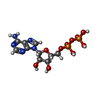
ChemComp-ADP:
ADENOSINE-5'-DIPHOSPHATE / ADP, energy-carrying molecule*YM

ChemComp-MG:
Unknown entry

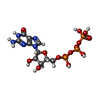
ChemComp-GTP:
GUANOSINE-5'-TRIPHOSPHATE / GTP, energy-carrying molecule*YM

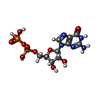
ChemComp-GDP:
GUANOSINE-5'-DIPHOSPHATE / GDP, energy-carrying molecule*YM

Source
  • clostridium botulinum (bacteria)
  • clostridium botulinum bf (bacteria)
  • desulfitobacterium hafniense y51 (bacteria)
KeywordsCELL CYCLE / ParM actin-like plasmid segregation / STRUCTURAL PROTEIN / ParM / genome / segregation / plasmid

+
About Yorodumi Papers

-
News

-
Feb 9, 2022. New format data for meta-information of EMDB entries

New format data for meta-information of EMDB entries

  • Version 3 of the EMDB header file is now the official format.
  • The previous official version 1.9 will be removed from the archive.

Related info.:EMDB header

External links:wwPDB to switch to version 3 of the EMDB data model

-
Aug 12, 2020. Covid-19 info

Covid-19 info

URL: https://pdbj.org/emnavi/covid19.php

New page: Covid-19 featured information page in EM Navigator.

Related info.:Covid-19 info / Mar 5, 2020. Novel coronavirus structure data

+
Mar 5, 2020. Novel coronavirus structure data

Novel coronavirus structure data

Related info.:Yorodumi Speices / Aug 12, 2020. Covid-19 info

External links:COVID-19 featured content - PDBj / Molecule of the Month (242):Coronavirus Proteases

+
Jan 31, 2019. EMDB accession codes are about to change! (news from PDBe EMDB page)

EMDB accession codes are about to change! (news from PDBe EMDB page)

  • The allocation of 4 digits for EMDB accession codes will soon come to an end. Whilst these codes will remain in use, new EMDB accession codes will include an additional digit and will expand incrementally as the available range of codes is exhausted. The current 4-digit format prefixed with “EMD-” (i.e. EMD-XXXX) will advance to a 5-digit format (i.e. EMD-XXXXX), and so on. It is currently estimated that the 4-digit codes will be depleted around Spring 2019, at which point the 5-digit format will come into force.
  • The EM Navigator/Yorodumi systems omit the EMD- prefix.

Related info.:Q: What is EMD? / ID/Accession-code notation in Yorodumi/EM Navigator

External links:EMDB Accession Codes are Changing Soon! / Contact to PDBj

+
Jul 12, 2017. Major update of PDB

Major update of PDB

  • wwPDB released updated PDB data conforming to the new PDBx/mmCIF dictionary.
  • This is a major update changing the version number from 4 to 5, and with Remediation, in which all the entries are updated.
  • In this update, many items about electron microscopy experimental information are reorganized (e.g. em_software).
  • Now, EM Navigator and Yorodumi are based on the updated data.

External links:wwPDB Remediation / Enriched Model Files Conforming to OneDep Data Standards Now Available in the PDB FTP Archive

-
Yorodumi Papers

Database of articles cited by EMDB/PDB/SASBDB data

  • Database of articles cited by EMDB, PDB, and SASBDB entries
  • Using PubMed data

Related info.:EMDB / PDB / SASBDB / Yorodumi / EMN Papers / Changes in new EM Navigator and Yorodumi

Read more