 Movie
Movie Controller
 Structure viewers
 About Yorodumi Papers


+Search query
-Structure paper
| Title | Engineering HIV antibodies with enhanced breadth and potency of neutralization through multistate affinity maturation. |
|---|---|
| Journal, issue, pages | bioRxiv, Year 2025 |
| Publish date | Oct 23, 2025 |
 Authors Authors | Mateusz Kędzior / Swastik Phulera / Monica L Fernández-Quintero / Johannes R Loeffler / Collin Joyce / Jordan Woehl / Abdolrahim Abbasi / Maryam Karimi / Arash Aslanabadi / Mahsa Hojabri / Roza Zareidoodeji / Ben Atkinson / Eduar Fernando Pinzon Burgos / Alonso Heredia / Karen Saye-Francisco / Quoc Tran / Yoojin Kim / Fernando Acosta-Puente / Lara Shahin / Amelia Zhou / Pilar X Altman / Nathaniel R Felbinger / Brian G Pierce / Devin Sok / Michael S Seaman / Dennis R Burton / Anthony L DeVico / Andrew B Ward / Gabriel Ozorowski / Mohammad M Sajadi / Joseph G Jardine /  |
| PubMed Abstract | Broadly neutralizing antibodies (bnAbs) against HIV hold promise as therapeutic and prophylactic agents, but realizing this potential requires antibodies that function across the antigenic ...Broadly neutralizing antibodies (bnAbs) against HIV hold promise as therapeutic and prophylactic agents, but realizing this potential requires antibodies that function across the antigenic heterogeneity of the HIV envelope glycoprotein (Env). Although numerous bnAbs have been isolated from infected individuals, their breadth and potency may not be sufficient to tackle global viral diversity, motivating efforts to further improve their neutralization capacity. Here, we address this challenge using a multistate antibody engineering approach integrating deep mutational scanning with combinatorial library screening across diverse Env variants. This strategy enables identification of mutation patterns that confer improved binding across antigenically distinct targets. Starting from one of the best-in-class CD4-binding site bnAbs, we performed iterative optimization to increase binding affinity across diverse Env variants. The resulting lead candidate exhibited improved breadth and up to 100-fold higher potency against pseudoviruses from large cross-clade historical and contemporary panels while maintaining biophysical and pharmacokinetic profiles conducive to clinical development. Structural and molecular dynamics analyses revealed a unique tri-tyrosine aromatic triad and reinforced electrostatic contacts that stabilized the bnAb/Env interface. These findings demonstrate that systematic engineering can generate bnAbs with enhanced breadth and potency, providing a generalizable strategy for developing therapeutic antibodies against highly diverse pathogens. |
 External links External links | bioRxiv / PubMed:41279620 / PubMed Central |
| Methods | EM (single particle) |
| Resolution | 2.7 Å |
| Structure data | EMDB-71307, PDB-9p6e: EMDB-71308, PDB-9p6g: |
| Chemicals | 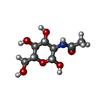 ChemComp-NAG: |
| Source |
|
 Keywords Keywords | VIRAL PROTEIN / antibody engineering / HIV-1 / bnAb / broadly neutralizing antibody / CD4 binding site / Env |


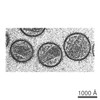 human immunodeficiency virus 1
 macaca mulatta (Rhesus monkey)
 homo sapiens (human)