 Movie
Movie Controller
 Structure viewers
 About Yorodumi Papers


+Search query
-Structure paper
| Title | Omicron-specific ultra-potent SARS-CoV-2 neutralizing antibodies targeting the N1/N2 loop of Spike N-terminal domain. |
|---|---|
| Journal, issue, pages | Emerg Microbes Infect, Vol. 13, Issue 1, Page 2412990, Year 2024 |
| Publish date | Oct 28, 2024 |
 Authors Authors | Xiao Niu / Zhiqiang Li / Jing Wang / Fanchong Jian / Yuanling Yu / Weiliang Song / Ayijiang Yisimayi / Shuo Du / Zhiying Zhang / Qianran Wang / Jing Wang / Ran An / Yao Wang / Peng Wang / Haiyan Sun / Lingling Yu / Sijie Yang / Tianhe Xiao / Qingqing Gu / Fei Shao / Youchun Wang / Junyu Xiao / Yunlong Cao /  |
| PubMed Abstract | A multitude of functional mutations continue to emerge on the N-terminal domain (NTD) of the spike protein in SARS-CoV-2 Omicron subvariants. Understanding the immunogenicity of Omicron NTD and the ...A multitude of functional mutations continue to emerge on the N-terminal domain (NTD) of the spike protein in SARS-CoV-2 Omicron subvariants. Understanding the immunogenicity of Omicron NTD and the properties of antibodies elicited by it is crucial for comprehending the impact of NTD mutations on viral fitness and guiding vaccine design. In this study, we find that most of NTD-targeting antibodies isolated from individuals with BA.5/BF.7 breakthrough infection (BTI) are ancestral (wild-type or WT)-reactive and non-neutralizing. Surprisingly, we identified five ultra-potent neutralizing antibodies (NAbs) that can only bind to Omicron but not WT NTD. Structural analysis revealed that they bind to a unique epitope on the N1/N2 loop of NTD and interact with the receptor-binding domain (RBD) via the light chain. These Omicron-specific NAbs achieve neutralization through ACE2 competition and blockage of ACE2-mediated S1 shedding. However, BA.2.86 and BA.2.87.1, which carry insertions or deletions on the N1/N2 loop, can evade these antibodies. Together, we provided a detailed map of the NTD-targeting antibody repertoire in the post-Omicron era, demonstrating their vulnerability to NTD mutations enabled by its evolutionary flexibility, despite their potent neutralization. These results revealed the function of the indels in the NTD of BA.2.86/JN.1 sublineage in evading neutralizing antibodies and highlighted the importance of considering the immunogenicity of NTD in vaccine design. |
 External links External links | Emerg Microbes Infect / PubMed:39361729 / PubMed Central |
| Methods | EM (single particle) |
| Resolution | 3.77 Å |
| Structure data | EMDB-66856, PDB-9xgo: |
| Chemicals | 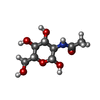 ChemComp-NAG: |
| Source |
|
 Keywords Keywords | VIRAL PROTEIN/IMMUNE SYSTEM / SARS-CoV-2; N-terminal domain; antibodies; N1/N2 loop; ACE2 competition / VIRAL PROTEIN-IMMUNE SYSTEM complex |


 homo sapiens (human)
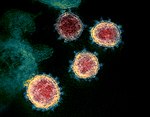 severe acute respiratory syndrome coronavirus 2