 Movie
Movie Controller
 Structure viewers
 About Yorodumi Papers


+Search query
-Structure paper
| Title | Insights into G-protein coupling preference from cryo-EM structures of G-bound PTH1R. |
|---|---|
| Journal, issue, pages | Nat Chem Biol, Vol. 21, Issue 12, Page 1906-1914, Year 2025 |
| Publish date | Jun 26, 2025 |
 Authors Authors | Fumiya K Sano / Kota Shimizume / Kazuhiro Kobayashi / Toshikuni Awazu / Kouki Kawakami / Hiroaki Akasaka / Takaaki A Kobayashi / Tatsuki Tanaka / Hiroyuki H Okamoto / Hisato Hirano / Tsukasa Kusakizako / Wataru Shihoya / Yoshiaki Kise / Yuzuru Itoh / Ryuichiro Ishitani / Yasushi Okada / Yasushi Sako / Masataka Yanagawa / Asuka Inoue / Osamu Nureki /   |
| PubMed Abstract | The parathyroid hormone type 1 receptor (PTH1R) is a prototypical class B1 G-protein-coupled receptor that couples to both G and G, having a crucial role in calcium homeostasis and serving as a ...The parathyroid hormone type 1 receptor (PTH1R) is a prototypical class B1 G-protein-coupled receptor that couples to both G and G, having a crucial role in calcium homeostasis and serving as a therapeutic target for osteoporosis. Therapies targeting PTH1R face challenges because of G-associated prolonged signaling, which leads to bone resorption. To address this, selective activation of G signaling is desirable. However, the structural basis of G-mediated signaling remains unclear, limiting the development of signal-selective drugs. Here, we present cryo-electron microscopy structures of the PTH1R-G complex in two distinct extracellular conformations, demonstrating the role of N-linked glycans at N176 in stabilizing the ligand-tilted conformation. Comparison with a G-bound PTH1R structure highlights the role of key interactions involving both the C terminus of Gα and the receptor's intracellular loop 2 in G signaling. These structural insights provide a foundation for understanding the molecular mechanisms of PTH1R signaling. |
 External links External links | Nat Chem Biol / PubMed:40571720 / PubMed Central |
| Methods | EM (single particle) |
| Resolution | 2.75 - 2.8 Å |
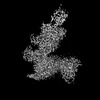
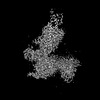
| Structure data | EMDB-61746, PDB-9jr2: EMDB-61747, PDB-9jr3:  EMDB-61795: Cryo-EM structure of PTH-PTH1R-Gq complex (upright state; consensus refinement)  EMDB-61796: Cryo-EM structure of PTH-PTH1R-Gq complex (upright state; receptor focused refinement)  EMDB-61797: Cryo-EM structure of PTH-PTH1R-Gq complex (tilted state; consensus refinement map)  EMDB-61798: Cryo-EM structure of PTH-PTH1R-Gq complex (tilted state; focused refinement map) |
| Chemicals |  ChemComp-HOH: |
| Source |
|
 Keywords Keywords | SIGNALING PROTEIN/IMMUNE SYSTEM / Class B GPCRs / Gq / PTH / SIGNALING PROTEIN / SIGNALING PROTEIN-IMMUNE SYSTEM complex |


 homo sapiens (human)
 rattus rattus (black rat)
 bos taurus (domestic cattle)
 mus musculus (house mouse)