 Movie
Movie Controller
 Structure viewers
 About Yorodumi Papers


+Search query
-Structure paper
| Title | Fully human monoclonal antibody targeting the cysteine-rich substrate-interacting region of ADAM17 on cancer cells. |
|---|---|
| Journal, issue, pages | Biomed Pharmacother, Vol. 180, Page 117605, Year 2024 |
| Publish date | Oct 25, 2024 |
 Authors Authors | Nayanendu Saha / Sang Gyu Lee / Eeva-Christine Brockmann / M Jason de la Cruz / Yehuda Goldgur / Rachelle P Mendoza / Elisa de Stanchina / Tanzy M Love / Josh Marvald / Yan Xu / Kai Xu / Juha P Himanen / Urpo Lamminmäki / Darren Veach / Dimitar B Nikolov /  |
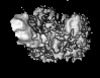
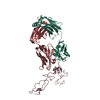
| PubMed Abstract | ADAM17 sheds EGFR/erbB ligands and triggers oncogenic pathways that lead to the progression of solid tumors. We targeted the ADAM17 disintegrin and cysteine rich domain region (D+C) to generate a ...ADAM17 sheds EGFR/erbB ligands and triggers oncogenic pathways that lead to the progression of solid tumors. We targeted the ADAM17 disintegrin and cysteine rich domain region (D+C) to generate a panel of single-chain antibody fragments (scFvs) that selectively bind to the D or C domains of ADAM17, but not of ADAM10 or ADAM19. From the panel, we selected one scFv, referred to as C12, based on its high binding affinity towards the target, and re-formatted it to a full IgG for further studies. High-resolution cryo-electron microscopy studies documented that the mAb binds to the ADAM17 C-domain that in ADAM proteases, notably ADAM10 and ADAM17, is known to impart substrate-specificity. The C12 mAb significantly inhibited EGFR phosphorylation in cancer cell lines by hindering the cleavage of EGFR ligands tethered to the cell surface. This inhibition provides a mechanism for potential anti-tumor effects, and indeed C12 diminished the viability of a variety of EGFR-expressing cancer cell lines. Cell-based ELISA studies revealed that C12 preferentially bound to activated ADAM17 present on tumor cells, as compared to the autoinhibited ADAM17 that is the predominant form on HEK293 and other non-tumor cells. C12 also exhibited tumor growth inhibition in an ovarian cancer xenograft mouse model. Consistent with its selective tumor cell binding in vitro, radioimmuno PET (positron emission tomography) imaging with Zr-DFO-C12 in mouse xenograft models confirmed tumoral accumulation of the C12 mAb. |
 External links External links | Biomed Pharmacother / PubMed:39461016 / PubMed Central |
| Methods | EM (single particle) |
| Resolution | 3.15 Å |
| Structure data | EMDB-47571, PDB-9e6k: |
| Source |
|
 Keywords Keywords | ANTITUMOR PROTEIN/IMMUNE SYSTEM / inhibitor / complex / ONCOPROTEIN / ANTITUMOR PROTEIN / ANTITUMOR PROTEIN-IMMUNE SYSTEM complex |
 homo sapiens (human)