 Movie
Movie Controller
 Structure viewers
 About Yorodumi Papers


+Search query
-Structure paper
| Title | Rapid clonal expansion and somatic hypermutation contribute to the fate of SARS-CoV-2 broadly neutralizing antibodies. |
|---|---|
| Journal, issue, pages | J Immunol, Vol. 214, Issue 2, Page 278-289, Year 2025 |
| Publish date | Feb 1, 2025 |
 Authors Authors | Miao Wang / Congcong Liu / Qing Fan / Yuehong Sun / Shilong Tang / Huimin Guo / Bing Zhou / Haiyan Wang / Xiangyang Ge / Zheng Zhang / Bin Ju /  |
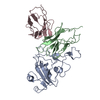
| PubMed Abstract | Several vaccines and immunization strategies, including inactivated vaccines, have proven effective in eliciting antibodies against severe acute respiratory syndrome coronavirus 2 (SARS-CoV-2), ...Several vaccines and immunization strategies, including inactivated vaccines, have proven effective in eliciting antibodies against severe acute respiratory syndrome coronavirus 2 (SARS-CoV-2), providing an opportunity to characterize the antibody response. In this study, we investigated the monoclonal antibody responses elicited by wild-type SARS-CoV-2 inactivated vaccination compared to those elicited by natural infection and mRNA vaccination. The analysis showed that antibodies encoded by biased germline genes were shared between SARS-CoV-2 vaccinated and naturally infected individuals. Among the 35 shared clonotypes identified, besides the well-known IGHV3-53 and IGHV1-58, we identified a class of IGHV4-59 antibodies characterized by rapid response and neutralizing activity, elicited by 3 doses of inactivated vaccine. Members of this lineage exhibited similar sensitivity against wild-type SARS-CoV-2, whereas different neutralizing activities against SARS-CoV-2 variants, especially against various Omicron subvariants, BA.1, BA.2, BA.2.12.1, BA.4/5, and BA.2.75. Structural analysis of BA.1 spike complexed with VacBB-639 revealed that the IGHV4-59-lineage antibodies belonged to the Class 2/3 group. Using sequence alignment, site-mutation assays, and functional verification, we identified two substitutions, N60K in HFR3 and S56G in HCDR2, contributing to opposite neutralization changes of IGHV4-59-lineage antibodies against these Omicron subvariants. These results demonstrate the importance of somatic hypermutation in the evolution of prototypical antigen-elicited antibodies in terms of their neutralization breadth and potency against SARS-CoV-2 Omicron variants. |
 External links External links | J Immunol / PubMed:40073246 |
| Methods | EM (single particle) |
| Resolution | 4.19 Å |
| Structure data | EMDB-38610, PDB-8xrq: |
| Source |
|
 Keywords Keywords | PROTEIN BINDING / Antibody / VIRAL PROTEIN-IMMUNE SYSTEM COMPLEX |

 severe acute respiratory syndrome coronavirus 2
 homo sapiens (human)