 Movie
Movie Controller
 Structure viewers
 About Yorodumi Papers


+Search query
-Structure paper
| Title | Native structure of mosquito salivary protein uncovers domains relevant to pathogen transmission. |
|---|---|
| Journal, issue, pages | Nat Commun, Vol. 14, Issue 1, Page 899, Year 2023 |
| Publish date | Feb 17, 2023 |
 Authors Authors | Shiheng Liu / Xian Xia / Eric Calvo / Z Hong Zhou /  |
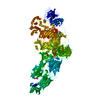
| PubMed Abstract | Female mosquitoes inject saliva into vertebrate hosts during blood feeding. This process transmits mosquito-borne human pathogens that collectively cause ~1,000,000 deaths/year. Among the most ...Female mosquitoes inject saliva into vertebrate hosts during blood feeding. This process transmits mosquito-borne human pathogens that collectively cause ~1,000,000 deaths/year. Among the most abundant and conserved proteins secreted by female salivary glands is a high-molecular weight protein called salivary gland surface protein 1 (SGS1) that facilitates pathogen transmission, but its mechanism remains elusive. Here, we determine the native structure of SGS1 by the cryoID approach, showing that the 3364 amino-acid protein has a Tc toxin-like Rhs/YD shell, four receptor domains, and a set of C-terminal daisy-chained helices. These helices are partially shielded inside the Rhs/YD shell and poised to transform into predicted transmembrane helices. This transformation, and the numerous receptor domains on the surface of SGS1, are likely key in facilitating sporozoite/arbovirus invasion into the salivary glands and manipulating the host's immune response. |
 External links External links | Nat Commun / PubMed:36797290 / PubMed Central |
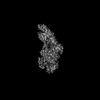
| Methods | EM (single particle) |
| Resolution | 3.3 Å |
| Structure data | EMDB-29245, PDB-8fjp: |
| Chemicals | 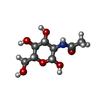 ChemComp-NAG: |
| Source |
|
 Keywords Keywords | ALLERGEN / Rhs/YD-repeats / mosquito salivary protein / receptor domain / pathogen transmission |

 aedes aegypti (yellow fever mosquito)