 Movie
Movie Controller
 Structure viewers
 About Yorodumi Papers


+Search query
-Structure paper
| Title | Dual MYC and GSPT1 Protein Degrader for MYC-Driven Hematologic Malignancies. |
|---|---|
| Journal, issue, pages | Blood, Year 2026 |
| Publish date | Aug 17, 2026 |
 Authors Authors | Yuki Nishida / Valeria Impedovo / Edward Ayoub / Natalia Baran / Darah A Scruggs / Hideaki Mizuno / Shayaun Khazaei / Lauren B Ostermann / Kazuharu Kamachi / Liang Zhang / Jo Ishizawa / Sandeep Singh / Andrea D Bedoy / Po Yee Mak / Bing Z Carter / Eiji Sugihara / Tetsuya Takimoto / Youzhi Tong / Honghua Yan / Dong Chen / Ji Huang / Hsu-Feng Chu / Liang Tong / Zamal Ahmed / Sarita Namjoshi / John Tainer / Mihai Gagea / Thomas Huynh / Abhishek Maiti / Koji Sasaki / Branko Cuglievan / Steffen Boettcher / Torsten Haferlach / Stefano Tiziani / Liandong Ma / Michael Andreeff /      |
| PubMed Abstract | Direct targeting of the oncoprotein MYC has not yet been successful. We here report a novel dual protein degrader, GT19630, which binds directly to MYC and G1 to S phase transition protein 1 (GSPT1). ...Direct targeting of the oncoprotein MYC has not yet been successful. We here report a novel dual protein degrader, GT19630, which binds directly to MYC and G1 to S phase transition protein 1 (GSPT1). GT19630 disrupts a novel feedforward loop of MYC and GSPT1, where MYC promotes transcription of GSPT1, and GSPT1 senses the stop codon of MYC to properly terminate its translation. The agent induces integrated stress response and abrogates oxidative phosphorylation through inhibition of the TCA cycle, resulting in apoptosis. GT19630 has superior activity compared to GSPT1- targeting molecular glues. GT19630 induces profound anti-proliferative effects and apoptosis at low nanomolar concentrations in a multitude of leukemia and lymphoma cell lines and primary samples, including those with TP53 mutations. GT19630 is highly active in vivo in models of therapy-resistant hematologic malignancies, including Burkitt's lymphoma, acute myeloid leukemia (AML) and multiple myeloma. CD34+ AML blasts overexpress MYC protein compared to normal hematopoietic stem/progenitor cells (HSPCs) and GT19630 induces greater cytotoxicity in AML cells compared to normal HSPCs. Further, GT19630 restores sensitivity to venetoclax and profoundly prolongs survival in vivo in venetoclax-resistant AML. GT19630 was well tolerated in humanized Crbn mice. In conclusion, our data support the development of the MYC/GSPT1 degrader GT19630 as a therapeutic strategy of MYC-driven hematologic malignancies. |
 External links External links | Blood / PubMed:42607078 |
| Methods | EM (single particle) |
| Resolution | 2.9 Å |
| Structure data | EMDB-76291, PDB-12bp: |
| Chemicals |  PDB-1dbr:  ChemComp-ZN: |
| Source |
|
 Keywords Keywords | HYDROLASE / Protein Degrader |

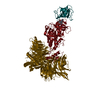
 homo sapiens (human)