[English] 日本語
Yorodumi Papers
- Database of articles cited by EMDB/PDB/SASBDB data -

+
Search query

Keywords
Structure methods
Author
Journal
IF

-
Structure paper

TitleStructural basis of membrane engagement and polyreactivity control in HIV-1 MPER broadly neutralizing antibodies.
Journal, issue, pagesProc Natl Acad Sci U S A, Vol. 123, Issue 29, Page e2609827123, Year 2026
Publish dateJul 21, 2026
AuthorsSo Yeon Cho / Kimmo Rantalainen / Gabriel Ozorowski / Danny Lu / Ryan Tingle / Wen-Hsin Lee / Andrew B Ward / William R Schief / Ian A Wilson /
PubMed AbstractThe membrane-proximal external region (MPER) of HIV-1 Env represents a critical target for broadly neutralizing antibodies (bnAbs) due to its conservation and functional importance. However, MPER- ...The membrane-proximal external region (MPER) of HIV-1 Env represents a critical target for broadly neutralizing antibodies (bnAbs) due to its conservation and functional importance. However, MPER-targeting bnAbs recognize composite epitopes comprising peptide and viral membrane lipid components, creating an inherent tension between viral neutralization efficacy and polyreactivity. 10E8-class antibodies exhibit high neutralization potency with low polyreactivity, whereas 4E10-class antibodies show comparably broad neutralization but higher polyreactivity, underscoring the need to understand the structural basis of this distinction. We therefore determined crystal structures of DH511.1 (memory B cell-derived), DH511.12P (plasma cell-derived), and VRC42.01 in complex with MPER peptide and phosphatidic acid, along with a cryo-EM reconstruction of DH511.2 bound to membrane-embedded Env. Through integrative analysis taking into account previously determined structures of other MPER bnAbs, we reveal two distinct lipid recognition strategies. Groove-mediated binders, including 10E8 and DH511, engage lipids through antibody-membrane interface grooves with distinct geometries and angular approaches to the membrane. In contrast, heavy chain-mediated binders, including 4E10, PGZL1, and VRC42, utilize positively charged CDR H1 patches for direct lipid headgroup recognition. Importantly, DH511 lineage members exhibited differential cardiolipin polyreactivity linked to their maturation stage. PGZL1 and VRC42.01 employ weaker positive patches at lipid-binding sites than 4E10, and PGZL1 additionally introduces a CDR H3-mediated negative patch that creates electrostatic repulsion with negatively charged lipid headgroups, thereby limiting nonspecific interactions. These findings provide a structural framework for understanding how MPER bnAbs balance lipid binding with specificity and inform immunogen design for inducing safe and effective neutralizing responses.
External linksProc Natl Acad Sci U S A / PubMed:42446980 / PubMed Central
MethodsEM (single particle) / X-ray diffraction
Resolution1.66 - 4.5 Å
Structure data

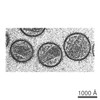
EMDB-74063: BG505 MD39.3 Env gp151 MPER nanodisc in complex with DH511.2, BG18, and VRC01 Fabs
Method: EM (single particle) / Resolution: 4.5 Å

PDB-9zg7:
Crystal structure of DH511.1 Fab in complex with HIV-1 gp41 MPER peptide and phosphatidic acid (06:0 PA)
Method: X-RAY DIFFRACTION / Resolution: 2.06 Å

PDB-9zg8:
Crystal structure of DH511.1 Fab crystallized in the presence of HIV-1 gp41 MPER peptide and phosphatidic acid (06:0 PA); unbound form
Method: X-RAY DIFFRACTION / Resolution: 1.66 Å

PDB-9zg9:
Crystal structure of DH511.12P Fab in complex with HIV-1 gp41 MPER peptide and phosphatidic acid (06:0 PA); single-lipid form
Method: X-RAY DIFFRACTION / Resolution: 2.21 Å

PDB-9zga:
Crystal structure of DH511.12P Fab in complex with HIV-1 gp41 MPER peptide and phosphatidic acid (06:0 PA); double-lipid form
Method: X-RAY DIFFRACTION / Resolution: 1.97 Å

PDB-9zgb:
Crystal structure of VRC42.01 Fab in complex with HIV-1 gp41 MPER peptide and phosphatidic acid (06:0 PA)
Method: X-RAY DIFFRACTION / Resolution: 3.45 Å

PDB-9zgd:
Crystal structure of VRC42.01 Fab in the presence of HIV-1 gp41 MPER peptide and phosphatidic acid (06:0 PA); unliganded form
Method: X-RAY DIFFRACTION / Resolution: 3.1 Å

Chemicals

ChemComp-PEG:
DI(HYDROXYETHYL)ETHER

ChemComp-44E:
(2R)-3-(phosphonooxy)propane-1,2-diyl dihexanoate / phospholipid*YM

ChemComp-HOH:
WATER

ChemComp-PO4:
PHOSPHATE ION

Source
  • human immunodeficiency virus 1
  • homo sapiens (human)
KeywordsVIRAL PROTEIN/IMMUNE SYSTEM / Antibody / VIRAL PROTEIN-IMMUNE SYSTEM complex / IMMUNE SYSTEM

+
About Yorodumi Papers

-
News

-
Feb 9, 2022. New format data for meta-information of EMDB entries

New format data for meta-information of EMDB entries

  • Version 3 of the EMDB header file is now the official format.
  • The previous official version 1.9 will be removed from the archive.

Related info.:EMDB header

External links:wwPDB to switch to version 3 of the EMDB data model

-
Aug 12, 2020. Covid-19 info

Covid-19 info

URL: https://pdbj.org/emnavi/covid19.php

New page: Covid-19 featured information page in EM Navigator.

Related info.:Covid-19 info / Mar 5, 2020. Novel coronavirus structure data

+
Mar 5, 2020. Novel coronavirus structure data

Novel coronavirus structure data

Related info.:Yorodumi Speices / Aug 12, 2020. Covid-19 info

External links:COVID-19 featured content - PDBj / Molecule of the Month (242):Coronavirus Proteases

+
Jan 31, 2019. EMDB accession codes are about to change! (news from PDBe EMDB page)

EMDB accession codes are about to change! (news from PDBe EMDB page)

  • The allocation of 4 digits for EMDB accession codes will soon come to an end. Whilst these codes will remain in use, new EMDB accession codes will include an additional digit and will expand incrementally as the available range of codes is exhausted. The current 4-digit format prefixed with “EMD-” (i.e. EMD-XXXX) will advance to a 5-digit format (i.e. EMD-XXXXX), and so on. It is currently estimated that the 4-digit codes will be depleted around Spring 2019, at which point the 5-digit format will come into force.
  • The EM Navigator/Yorodumi systems omit the EMD- prefix.

Related info.:Q: What is EMD? / ID/Accession-code notation in Yorodumi/EM Navigator

External links:EMDB Accession Codes are Changing Soon! / Contact to PDBj

+
Jul 12, 2017. Major update of PDB

Major update of PDB

  • wwPDB released updated PDB data conforming to the new PDBx/mmCIF dictionary.
  • This is a major update changing the version number from 4 to 5, and with Remediation, in which all the entries are updated.
  • In this update, many items about electron microscopy experimental information are reorganized (e.g. em_software).
  • Now, EM Navigator and Yorodumi are based on the updated data.

External links:wwPDB Remediation / Enriched Model Files Conforming to OneDep Data Standards Now Available in the PDB FTP Archive

-
Yorodumi Papers

Database of articles cited by EMDB/PDB/SASBDB data

  • Database of articles cited by EMDB, PDB, and SASBDB entries
  • Using PubMed data

Related info.:EMDB / PDB / SASBDB / Yorodumi / EMN Papers / Changes in new EM Navigator and Yorodumi

Read more