 Movie
Movie Controller
 Structure viewers
 About Yorodumi Papers


+Search query
-Structure paper
| Title | Multivalent nanobodies for potent and broad neutralization of Staphylococcus aureus toxins. |
|---|---|
| Journal, issue, pages | Nat Commun, Vol. 17, Issue 1, Year 2026 |
| Publish date | May 20, 2026 |
 Authors Authors | Yong Joon Jeffrey Kim / Nicholas R Walton / Wei Huang / Madison Lee / Yufei Xiang / Zhe Sang / Chaya Sussman / Sarah K L Moore / Derek J Taylor / Kong Chen / Jaime L Hook / John K McCormick / Yi Shi /   |
| PubMed Abstract | Staphylococcus aureus is a leading cause of lethal bacteremia and pneumonia, which are driven by potent virulence factors such as T-cell superantigens and alpha hemolysin. S. aureus has among the ...Staphylococcus aureus is a leading cause of lethal bacteremia and pneumonia, which are driven by potent virulence factors such as T-cell superantigens and alpha hemolysin. S. aureus has among the highest rates of antibiotic resistance, yet no vaccines or alternative therapies are available. Here, we developed a repertoire of potent, high-affinity nanobodies (Nbs) targeting key toxins in S. aureus infection, including Hla and superantigens SEB, SEC, and TSST-1. Comprehensive cryo-EM and AlphaFold3 analyses of these Nbs, which were elicited with clinical cocktail vaccines, revealed diverse neutralizing epitopes and mechanisms that provide insights for immunotherapy and vaccine strategies. Guided by these findings, we engineered stable, multivalent, and multifunctional Nb constructs. These constructs included an aerosolizable trimeric Nb with enhanced neutralization activity against Hla and SEC, and a decameric Nb-IgG-Fc fusion construct with pM or better potencies against a wide range of major toxins in S. aureus sepsis (SEB, SEC, TSST-1, and Hla). These multifunctional Nbs demonstrated protective activity in murine models of pneumonia and sepsis, underscoring their potential as versatile immunotherapies that address the complex virulence of S. aureus. Our work lays a foundation for precision immunotherapies beyond current treatment options to combat complex bacterial infections with multiple virulence mechanisms. |
 External links External links | Nat Commun / PubMed:42161902 / PubMed Central |
| Methods | EM (single particle) |
| Resolution | 3.1 Å |
| Structure data | EMDB-72377, PDB-9xzx: |
| Chemicals |  ChemComp-ZN: |
| Source |
|
 Keywords Keywords | IMMUNE SYSTEM / Nanobody / VHH |


 Homo sapiens (human)
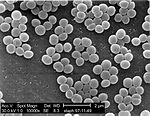 staphylococcus aureus (bacteria)
 lama glama (llama)