[English] 日本語
Yorodumi Papers
- Database of articles cited by EMDB/PDB/SASBDB data -

+
Search query

Keywords
Structure methods
Author
Journal
IF

-
Structure paper

TitleMolecular basis of ligand binding and receptor activation at the human A adenosine receptor.
Journal, issue, pagesNat Commun, Vol. 16, Issue 1, Page 7674, Year 2025
Publish dateAug 18, 2025
AuthorsLiudi Zhang / Jesse I Mobbs / Felix M Bennetts / Hariprasad Venugopal / Anh T N Nguyen / Arthur Christopoulos / Daan van der Es / Laura H Heitman / Lauren T May / Alisa Glukhova / David M Thal /
PubMed AbstractAdenosine receptors (ARs: AAR, AAR, AAR, and AAR) are crucial therapeutic targets; however, developing selective, efficacious drugs for them remains a significant challenge. Here, we present high- ...Adenosine receptors (ARs: AAR, AAR, AAR, and AAR) are crucial therapeutic targets; however, developing selective, efficacious drugs for them remains a significant challenge. Here, we present high-resolution cryo-electron microscopy (cryo-EM) structures of the human AAR in three distinct functional states: bound to the endogenous agonist adenosine, the clinically relevant agonist Piclidenoson, and the covalent antagonist LUF7602. These structures, complemented by mutagenesis and pharmacological studies, reveal an AAR activation mechanism that involves an extensive hydrogen bond network from the extracellular surface down to the orthosteric binding site. In addition, we identify a cryptic pocket that accommodates the N-iodobenzyl group of Piclidenoson through a ligand-dependent conformational change of M174. Our comprehensive structural and functional characterisation of AAR advances our understanding of adenosine receptor pharmacology and establishes a foundation for developing more selective therapeutics for various disorders, including inflammatory diseases, cancer, and glaucoma.
External linksNat Commun / PubMed:40825947 / PubMed Central
MethodsEM (single particle)
Resolution2.6 - 3.6 Å
Structure data

EMDB-47879, PDB-9ebh:
Human adenosine A3 receptor Gi1 complex bound to adenosine
Method: EM (single particle) / Resolution: 3.6 Å

EMDB-47880, PDB-9ebi:
Human adenosine A3 receptor Gi complex (mini-Gsi chimera) bound to Piclidenoson (CF101, IB-MECA)
Method: EM (single particle) / Resolution: 3.6 Å

EMDB-47994: Focused refinement map of the human A3 adenosine receptor bound to adenosine (receptor only)
Method: EM (single particle) / Resolution: 3.44 Å

EMDB-47998: Focused refinement map of the human A3 adenosine receptor bound to Piclidenoson (receptor only)
Method: EM (single particle) / Resolution: 3.1 Å

EMDB-48063: Consensus map for A3AR-LUF7602 complex.
Method: EM (single particle) / Resolution: 2.6 Å

EMDB-48064: Focused refinement map of the structure of a human adenosine A3 receptor complex bound to the covalent antagonist LUF7602 (receptor only)
Method: EM (single particle) / Resolution: 3.3 Å

EMDB-48065, PDB-9ehs:
Structure of a human adenosine A3 receptor complex bound to the covalent antagonist LUF7602
Method: EM (single particle) / Resolution: 3.2 Å

Chemicals

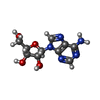
ChemComp-ADN:
ADENOSINE

ChemComp-Q8L:
Piclidenoson

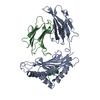
PDB-1bii:
THE CRYSTAL STRUCTURE OF H-2DD MHC CLASS I IN COMPLEX WITH THE HIV-1 DERIVED PEPTIDE P18-110

Source
  • homo sapiens (human)
  • mus musculus (house mouse)
  • lama glama (llama)
  • synthetic construct (others)
KeywordsMEMBRANE PROTEIN / G protein-coupled receptor / adenosine binding / seven transmembrane protein / SIGNALING PROTEIN

+
About Yorodumi Papers

-
News

-
Feb 9, 2022. New format data for meta-information of EMDB entries

New format data for meta-information of EMDB entries

  • Version 3 of the EMDB header file is now the official format.
  • The previous official version 1.9 will be removed from the archive.

Related info.:EMDB header

External links:wwPDB to switch to version 3 of the EMDB data model

-
Aug 12, 2020. Covid-19 info

Covid-19 info

URL: https://pdbj.org/emnavi/covid19.php

New page: Covid-19 featured information page in EM Navigator.

Related info.:Covid-19 info / Mar 5, 2020. Novel coronavirus structure data

+
Mar 5, 2020. Novel coronavirus structure data

Novel coronavirus structure data

Related info.:Yorodumi Speices / Aug 12, 2020. Covid-19 info

External links:COVID-19 featured content - PDBj / Molecule of the Month (242):Coronavirus Proteases

+
Jan 31, 2019. EMDB accession codes are about to change! (news from PDBe EMDB page)

EMDB accession codes are about to change! (news from PDBe EMDB page)

  • The allocation of 4 digits for EMDB accession codes will soon come to an end. Whilst these codes will remain in use, new EMDB accession codes will include an additional digit and will expand incrementally as the available range of codes is exhausted. The current 4-digit format prefixed with “EMD-” (i.e. EMD-XXXX) will advance to a 5-digit format (i.e. EMD-XXXXX), and so on. It is currently estimated that the 4-digit codes will be depleted around Spring 2019, at which point the 5-digit format will come into force.
  • The EM Navigator/Yorodumi systems omit the EMD- prefix.

Related info.:Q: What is EMD? / ID/Accession-code notation in Yorodumi/EM Navigator

External links:EMDB Accession Codes are Changing Soon! / Contact to PDBj

+
Jul 12, 2017. Major update of PDB

Major update of PDB

  • wwPDB released updated PDB data conforming to the new PDBx/mmCIF dictionary.
  • This is a major update changing the version number from 4 to 5, and with Remediation, in which all the entries are updated.
  • In this update, many items about electron microscopy experimental information are reorganized (e.g. em_software).
  • Now, EM Navigator and Yorodumi are based on the updated data.

External links:wwPDB Remediation / Enriched Model Files Conforming to OneDep Data Standards Now Available in the PDB FTP Archive

-
Yorodumi Papers

Database of articles cited by EMDB/PDB/SASBDB data

  • Database of articles cited by EMDB, PDB, and SASBDB entries
  • Using PubMed data

Related info.:EMDB / PDB / SASBDB / Yorodumi / EMN Papers / Changes in new EM Navigator and Yorodumi

Read more