National Institutes of Health/National Institute of General Medical Sciences (NIH/NIGMS)
R00 GM141261
United States
National Institutes of Health/National Institute of General Medical Sciences (NIH/NIGMS)
R01 GM155152
United States
Welch Foundation
I-2218-20240404
United States
Citation
Journal: Nat Commun / Year: 2026 Title: Mechanisms of human mitochondrial leaderless mRNA translation initiation. Authors: Shuangjie Shen / Yinghua Xu / Daniel L Kober / Jinfan Wang / Abstract: Mitochondrial translation is essential for cellular function, and its dysregulation is associated with mitochondrial disorders and cancer. However, the mechanisms by which human mitochondrial ...Mitochondrial translation is essential for cellular function, and its dysregulation is associated with mitochondrial disorders and cancer. However, the mechanisms by which human mitochondrial ribosomes initiate translation remain poorly understood, particularly because mitochondrial mRNAs generally lack the 5' untranslated regions that guide translation initiation in bacterial and cytoplasmic systems. Using real-time single-molecule fluorescence measurements, biochemical assays, and cryo-EM analysis, we show that human mitochondrial translation initiation occurs through two parallel pathways. In one pathway, leaderless mRNA first loads onto the 28S small subunit, followed by recruitment of the 39S large subunit to form the 55S initiation complex. In the second pathway, a preassembled 55S monosome directly loads onto leaderless mRNA. Both pathways require recruitment of mtIF2 and fMet-tRNA before mRNA binding. However, the monosome-loading pathway tolerates non-formylated Met-tRNA and is suppressed by mtIF3. Together, these findings define the heterogeneous pathways of human mitochondrial translation initiation on leaderless mRNAs.
In the structure databanks used in Yorodumi, some data are registered as the other names, "COVID-19 virus" and "2019-nCoV". Here are the details of the virus and the list of structure data.
Jan 31, 2019. EMDB accession codes are about to change! (news from PDBe EMDB page)
EMDB accession codes are about to change! (news from PDBe EMDB page)
The allocation of 4 digits for EMDB accession codes will soon come to an end. Whilst these codes will remain in use, new EMDB accession codes will include an additional digit and will expand incrementally as the available range of codes is exhausted. The current 4-digit format prefixed with “EMD-” (i.e. EMD-XXXX) will advance to a 5-digit format (i.e. EMD-XXXXX), and so on. It is currently estimated that the 4-digit codes will be depleted around Spring 2019, at which point the 5-digit format will come into force.
The EM Navigator/Yorodumi systems omit the EMD- prefix.
Related info.:Q: What is EMD? / ID/Accession-code notation in Yorodumi/EM Navigator
Yorodumi is a browser for structure data from EMDB, PDB, SASBDB, etc.
This page is also the successor to EM Navigator detail page, and also detail information page/front-end page for Omokage search.
The word "yorodu" (or yorozu) is an old Japanese word meaning "ten thousand". "mi" (miru) is to see.
Related info.:EMDB / PDB / SASBDB / Comparison of 3 databanks / Yorodumi Search / Aug 31, 2016. New EM Navigator & Yorodumi / Yorodumi Papers / Jmol/JSmol / Function and homology information / Changes in new EM Navigator and Yorodumi
 Movie
Movie Controller


 Open data
 Basic information
 Map data
 Sample
 Keywords
 Homo sapiens (human)
 Authors
 United States, 3 items
  Citation
 Structure visualization
 Downloads & links
 EMDB map data format
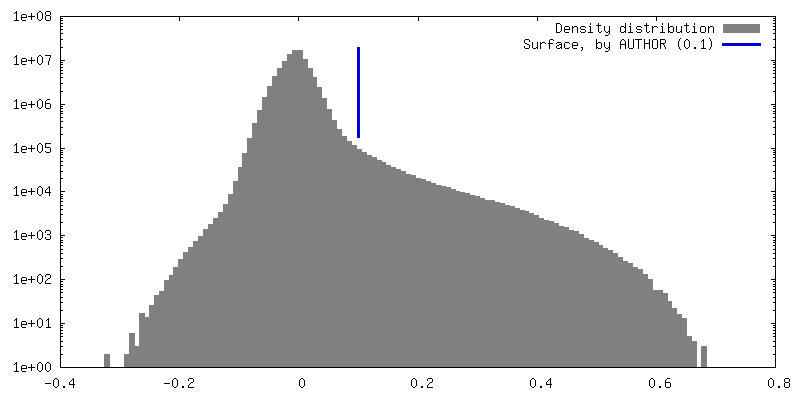
 emd_70533.png
 http://ftp.pdbj.org/pub/emdb/structures/EMD-70533

 Z (Sec.)
 Y (Row.)
 X (Col.)




 Sample components
 Processing
 Electron microscopy
 FIELD EMISSION GUN

