Peroxisomal protein import / : / mitochondria-associated ubiquitin-dependent protein catabolic process / cytoplasm protein quality control by the ubiquitin-proteasome system / : / ubiquitin-dependent protein catabolic process via the multivesicular body sorting pathway / ribosome-associated ubiquitin-dependent protein catabolic process / ubiquitin-ubiquitin ligase activity / E2 ubiquitin-conjugating enzyme / Formation of the ternary complex, and subsequently, the 43S complex ...Peroxisomal protein import / : / mitochondria-associated ubiquitin-dependent protein catabolic process / cytoplasm protein quality control by the ubiquitin-proteasome system / : / ubiquitin-dependent protein catabolic process via the multivesicular body sorting pathway / ribosome-associated ubiquitin-dependent protein catabolic process / ubiquitin-ubiquitin ligase activity / E2 ubiquitin-conjugating enzyme / Formation of the ternary complex, and subsequently, the 43S complex / proteasome binding / Ribosomal scanning and start codon recognition / Translation initiation complex formation / ubiquitin conjugating enzyme activity / Antigen processing: Ubiquitination & Proteasome degradation / SARS-CoV-1 modulates host translation machinery / Peptide chain elongation / cellular response to ethanol / Selenocysteine synthesis / Formation of a pool of free 40S subunits / Eukaryotic Translation Termination / SRP-dependent cotranslational protein targeting to membrane / Response of EIF2AK4 (GCN2) to amino acid deficiency / Viral mRNA Translation / ubiquitin ligase complex / Nonsense Mediated Decay (NMD) independent of the Exon Junction Complex (EJC) / GTP hydrolysis and joining of the 60S ribosomal subunit / L13a-mediated translational silencing of Ceruloplasmin expression / Major pathway of rRNA processing in the nucleolus and cytosol / Nonsense Mediated Decay (NMD) enhanced by the Exon Junction Complex (EJC) / ERAD pathway / protein K48-linked ubiquitination / Maturation of protein E / Maturation of protein E / ER Quality Control Compartment (ERQC) / Myoclonic epilepsy of Lafora / FLT3 signaling by CBL mutants / IRAK2 mediated activation of TAK1 complex / Prevention of phagosomal-lysosomal fusion / Alpha-protein kinase 1 signaling pathway / Glycogen synthesis / IRAK1 recruits IKK complex / IRAK1 recruits IKK complex upon TLR7/8 or 9 stimulation / Endosomal Sorting Complex Required For Transport (ESCRT) / Membrane binding and targetting of GAG proteins / Negative regulation of FLT3 / Regulation of TBK1, IKKε (IKBKE)-mediated activation of IRF3, IRF7 / PTK6 Regulates RTKs and Their Effectors AKT1 and DOK1 / Regulation of TBK1, IKKε-mediated activation of IRF3, IRF7 upon TLR3 ligation / IRAK2 mediated activation of TAK1 complex upon TLR7/8 or 9 stimulation / Constitutive Signaling by NOTCH1 HD Domain Mutants / NOTCH2 Activation and Transmission of Signal to the Nucleus / TICAM1,TRAF6-dependent induction of TAK1 complex / rescue of stalled cytosolic ribosome / cytosolic ribosome / TICAM1-dependent activation of IRF3/IRF7 / APC/C:Cdc20 mediated degradation of Cyclin B / Regulation of FZD by ubiquitination / Downregulation of ERBB4 signaling / APC-Cdc20 mediated degradation of Nek2A / p75NTR recruits signalling complexes / InlA-mediated entry of Listeria monocytogenes into host cells / TRAF6 mediated IRF7 activation in TLR7/8 or 9 signaling / NF-kB is activated and signals survival / TRAF6-mediated induction of TAK1 complex within TLR4 complex / Regulation of pyruvate metabolism / Pexophagy / Regulation of innate immune responses to cytosolic DNA / NRIF signals cell death from the nucleus / Downregulation of ERBB2:ERBB3 signaling / Regulation of PTEN localization / positive regulation of protein ubiquitination / VLDLR internalisation and degradation / Activated NOTCH1 Transmits Signal to the Nucleus / Synthesis of active ubiquitin: roles of E1 and E2 enzymes / Translesion synthesis by REV1 / TICAM1, RIP1-mediated IKK complex recruitment / Regulation of BACH1 activity / Translesion synthesis by POLK / InlB-mediated entry of Listeria monocytogenes into host cell / JNK (c-Jun kinases) phosphorylation and activation mediated by activated human TAK1 / MAP3K8 (TPL2)-dependent MAPK1/3 activation / Activation of IRF3, IRF7 mediated by TBK1, IKKε (IKBKE) / Downregulation of TGF-beta receptor signaling / Translesion synthesis by POLI / Josephin domain DUBs / IKK complex recruitment mediated by RIP1 / Gap-filling DNA repair synthesis and ligation in GG-NER / PINK1-PRKN Mediated Mitophagy / TGF-beta receptor signaling in EMT (epithelial to mesenchymal transition) / Regulation of activated PAK-2p34 by proteasome mediated degradation / TNFR1-induced NF-kappa-B signaling pathway / TCF dependent signaling in response to WNT / Regulation of NF-kappa B signaling / activated TAK1 mediates p38 MAPK activation / Autodegradation of Cdh1 by Cdh1:APC/C / APC/C:Cdc20 mediated degradation of Securin / ubiquitin binding / Asymmetric localization of PCP proteins / Regulation of signaling by CBL 類似検索 - 分子機能
National Natural Science Foundation of China (NSFC)
22137005, 92253302, 22227810, 22407121, T2488301, 22277073 and 92253302,
中国
引用
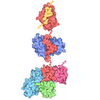
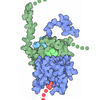
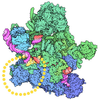
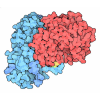
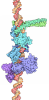
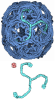
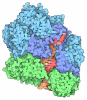
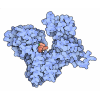
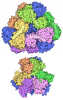
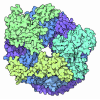
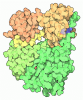
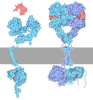
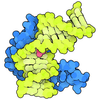
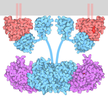
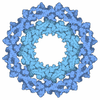
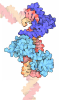
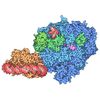
ジャーナル: Nat Chem Biol / 年: 2026 タイトル: Structural basis for E4 enzyme Ufd2-catalyzed K48/K29 branched ubiquitin chains. 著者: Zebin Tong / Xiangwei Wu / Hongyi Cai / Shidian Wu / Tianyi Zhang / Zhiheng Deng / Ziyu Xu / Rujing Yuan / Huasong Ai / Lei Liu / Man Pan / 要旨: E4 enzymes amplify and remodel ubiquitin chain signals beyond the conventional E1-E2-E3 cascade. The first identified E4 enzyme Ufd2 preferentially catalyzes K48/K29 branched ubiquitin chains, yet ...E4 enzymes amplify and remodel ubiquitin chain signals beyond the conventional E1-E2-E3 cascade. The first identified E4 enzyme Ufd2 preferentially catalyzes K48/K29 branched ubiquitin chains, yet the structural mechanism remains unknown. Here, we combined chemical biology and cryo-electron microscopy to visualize stable intermediates in Ufd2 loading ubiquitin at K48 of proximal ubiquitin on K29-linked di- and triubiquitin. Our data reveal that the core region of Ufd2 functions as an unprecedented K29 diubiquitin binding domain, interacting extensively with proximal and distal ubiquitin, which orients the K48 site of proximal ubiquitin toward the active site of Ubc4, facilitating K48/K29 branched ubiquitin chain formation. We also identified a unique dimeric conformation where dimerized Ufd2 and Ubc4 stabilize each other's distal ubiquitin during branching on K29 triubiquitin. Our findings provide mechanistic insights into the assembly of K48/K29 branched ubiquitin chains by the E4 enzyme Ufd2 and highlight the spatial cooperation among multiple pairs of ubiquitin-related enzymes on longer ubiquitin chains.
 ムービー
ムービー コントローラー


 データを開く
 基本情報
基本情報
 マップデータ
 試料
試料 キーワード
キーワード 機能・相同性情報
 Saccharomyces cerevisiae (strain ATCC 204508 / S288c) (パン酵母) /
  Homo sapiens (ヒト)
 データ登録者
 中国, 1件
  引用
引用
 構造の表示
構造の表示
 ダウンロードとリンク
 emd_62353.png
 http://ftp.pdbj.org/pub/emdb/structures/EMD-62353



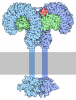
 Z (Sec.)
 Y (Row.)
 X (Col.)


 試料の構成要素
 Escherichia coli (大腸菌)
 解析
解析 電子顕微鏡法
 FIELD EMISSION GUN

