negative regulation of beige fat cell differentiation / cullin-RING-type E3 NEDD8 transferase / NEDD8 transferase activity / cullin-RING ubiquitin ligase complex / Cul7-RING ubiquitin ligase complex / cellular response to chemical stress / Loss of Function of FBXW7 in Cancer and NOTCH1 Signaling / target-directed miRNA degradation / elongin complex / positive regulation of protein autoubiquitination ...negative regulation of beige fat cell differentiation / cullin-RING-type E3 NEDD8 transferase / NEDD8 transferase activity / cullin-RING ubiquitin ligase complex / Cul7-RING ubiquitin ligase complex / cellular response to chemical stress / Loss of Function of FBXW7 in Cancer and NOTCH1 Signaling / target-directed miRNA degradation / elongin complex / positive regulation of protein autoubiquitination / RNA polymerase II transcription initiation surveillance / protein neddylation / NEDD8 ligase activity / protein K27-linked ubiquitination / microtubule associated complex / negative regulation of response to oxidative stress / microtubule motor activity / VCB complex / Cul5-RING ubiquitin ligase complex / ubiquitin-ubiquitin ligase activity / ubiquitin-dependent protein catabolic process via the C-end degron rule pathway / SCF ubiquitin ligase complex / Cul2-RING ubiquitin ligase complex / Cul3-RING ubiquitin ligase complex / negative regulation of type I interferon production / SCF-dependent proteasomal ubiquitin-dependent protein catabolic process / Cul4A-RING E3 ubiquitin ligase complex / Cul4-RING E3 ubiquitin ligase complex / Prolactin receptor signaling / negative regulation of mitophagy / Cul4B-RING E3 ubiquitin ligase complex / ubiquitin ligase complex scaffold activity / Pausing and recovery of Tat-mediated HIV elongation / Tat-mediated HIV elongation arrest and recovery / HIV elongation arrest and recovery / Pausing and recovery of HIV elongation / cullin family protein binding / intracellular transport / protein monoubiquitination / Tat-mediated elongation of the HIV-1 transcript / Formation of HIV-1 elongation complex containing HIV-1 Tat / Formation of HIV elongation complex in the absence of HIV Tat / ubiquitin-like ligase-substrate adaptor activity / site of DNA damage / RNA Polymerase II Transcription Elongation / Formation of RNA Pol II elongation complex / signal transduction in response to DNA damage / Nuclear events stimulated by ALK signaling in cancer / protein K48-linked ubiquitination / transcription-coupled nucleotide-excision repair / negative regulation of insulin receptor signaling pathway / RNA Polymerase II Pre-transcription Events / regulation of cellular response to insulin stimulus / positive regulation of TORC1 signaling / post-translational protein modification / intrinsic apoptotic signaling pathway / cytoplasmic vesicle membrane / T cell activation / Regulation of BACH1 activity / transcription corepressor binding / negative regulation of canonical NF-kappaB signal transduction / TP53 Regulates Transcription of DNA Repair Genes / transcription initiation at RNA polymerase II promoter / cellular response to amino acid stimulus / transcription elongation by RNA polymerase II / Degradation of DVL / Degradation of CRY and PER proteins / G1/S transition of mitotic cell cycle / Degradation of GLI1 by the proteasome / negative regulation of canonical Wnt signaling pathway / GSK3B and BTRC:CUL1-mediated-degradation of NFE2L2 / Negative regulation of NOTCH4 signaling / intracellular protein transport / Recognition of DNA damage by PCNA-containing replication complex / Hedgehog 'on' state / Vif-mediated degradation of APOBEC3G / FBXL7 down-regulates AURKA during mitotic entry and in early mitosis / Ubiquitin-Mediated Degradation of Phosphorylated Cdc25A / Degradation of GLI2 by the proteasome / GLI3 is processed to GLI3R by the proteasome / RING-type E3 ubiquitin transferase / Inactivation of CSF3 (G-CSF) signaling / Degradation of beta-catenin by the destruction complex / NOTCH1 Intracellular Domain Regulates Transcription / Evasion by RSV of host interferon responses / Oxygen-dependent proline hydroxylation of Hypoxia-inducible Factor Alpha / DNA Damage Recognition in GG-NER / Constitutive Signaling by NOTCH1 PEST Domain Mutants / Constitutive Signaling by NOTCH1 HD+PEST Domain Mutants / Dual Incision in GG-NER / Transcription-Coupled Nucleotide Excision Repair (TC-NER) / Formation of TC-NER Pre-Incision Complex / Regulation of expression of SLITs and ROBOs / Formation of Incision Complex in GG-NER / Interleukin-1 signaling / Orc1 removal from chromatin / Dual incision in TC-NER / protein polyubiquitination / Regulation of RAS by GAPs / Regulation of RUNX2 expression and activity 類似検索 - 分子機能
National Natural Science Foundation of China (NSFC)
中国
引用
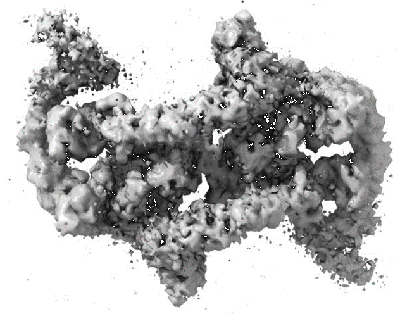
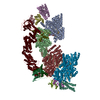
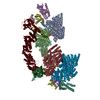
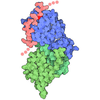
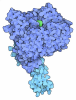
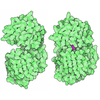
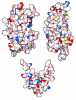
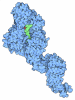
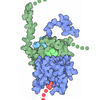
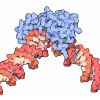
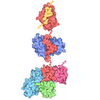
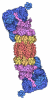
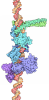
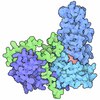
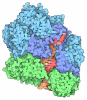
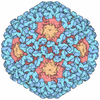
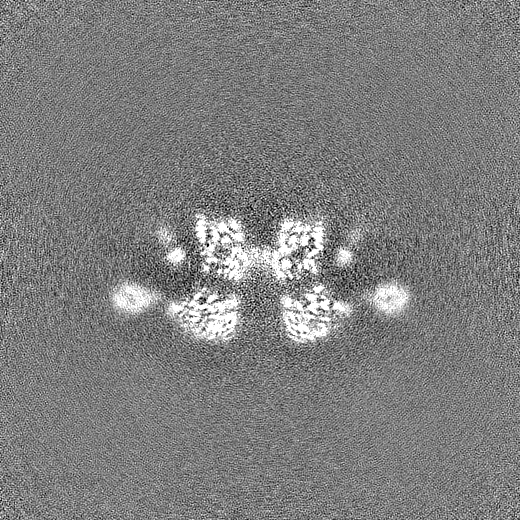
ジャーナル: Proc Natl Acad Sci U S A / 年: 2023 タイトル: Molecular basis for C-degron recognition by CRL2 ubiquitin ligase. 著者: Shidong Zhao / Diana Olmayev-Yaakobov / Wenwen Ru / Shanshan Li / Xinyan Chen / Jiahai Zhang / Xuebiao Yao / Itay Koren / Kaiming Zhang / Chao Xu / 要旨: E3 ubiquitin ligases determine the specificity of eukaryotic protein degradation by selective binding to destabilizing protein motifs, termed degrons, in substrates for ubiquitin-mediated proteolysis. ...E3 ubiquitin ligases determine the specificity of eukaryotic protein degradation by selective binding to destabilizing protein motifs, termed degrons, in substrates for ubiquitin-mediated proteolysis. The exposed C-terminal residues of proteins can act as C-degrons that are recognized by distinct substrate receptors (SRs) as part of dedicated cullin-RING E3 ubiquitin ligase (CRL) complexes. APPBP2, an SR of Cullin 2-RING ligase (CRL2), has been shown to recognize R-x-x-G/C-degron; however, the molecular mechanism of recognition remains elusive. By solving several cryogenic electron microscopy structures of active CRL2 bound with different R-x-x-G/C-degrons, we unveiled the molecular mechanisms underlying the assembly of the CRL2 dimer and tetramer, as well as C-degron recognition. The structural study, complemented by binding experiments and cell-based assays, demonstrates that APPBP2 specifically recognizes the R-x-x-G/C-degron via a bipartite mechanism; arginine and glycine, which play critical roles in C-degron recognition, accommodate distinct pockets that are spaced by two residues. In addition, the binding pocket is deep enough to enable the interaction of APPBP2 with the motif placed at or up to three residues upstream of the C-end. Overall, our study not only provides structural insight into CRL2-mediated protein turnover but also serves as the basis for future structure-based chemical probe design.
 ムービー
ムービー コントローラー


 データを開く
 基本情報
基本情報
 マップデータ
 試料
試料 キーワード
キーワード 機能・相同性情報
 Homo sapiens (ヒト)
 データ登録者
 中国, 1件
  引用
引用
 構造の表示
構造の表示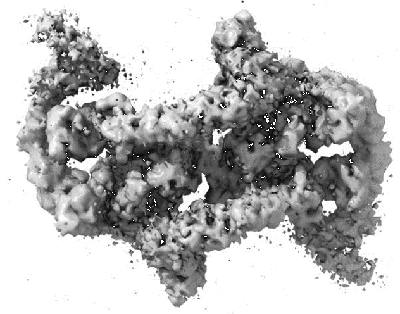
 ダウンロードとリンク
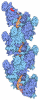
 emd_36131.png
 http://ftp.pdbj.org/pub/emdb/structures/EMD-36131




 Z (Sec.)
 Y (Row.)
 X (Col.)





 試料の構成要素
 Escherichia coli (大腸菌)
 解析
解析 電子顕微鏡法
 FIELD EMISSION GUN
