 Movie
Movie Controller

[English] 日本語
 Yorodumi
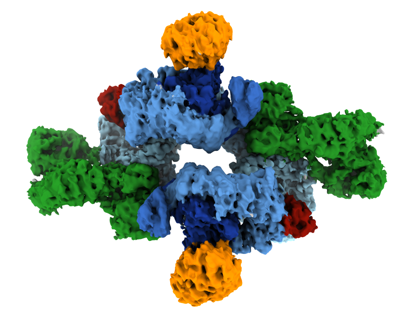
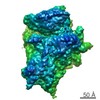
- EMDB-13350: cryo-EM structure of DEPTOR bound to human mTOR complex 1, overal... -
+ Open data

- Basic information
| Entry | Database: EMDB / ID: EMD-13350 | |||||||||
|---|---|---|---|---|---|---|---|---|---|---|
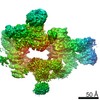
| Title | cryo-EM structure of DEPTOR bound to human mTOR complex 1, overall refinement | |||||||||
 Map data Map data | ||||||||||
 Sample Sample |
| |||||||||
 Keywords Keywords | DEPTOR / mTOR / regulator / inhibitor / mTORC1 / DEP-domain / PDZ-domain / SIGNALING PROTEIN | |||||||||
| Function / homology |  Function and homology information Function and homology informationregulation of extrinsic apoptotic signaling pathway / positive regulation of SCF-dependent proteasomal ubiquitin-dependent catabolic process / RNA polymerase III type 2 promoter sequence-specific DNA binding / RNA polymerase III type 1 promoter sequence-specific DNA binding / positive regulation of cytoplasmic translational initiation / regulation of locomotor rhythm / T-helper 1 cell lineage commitment / positive regulation of pentose-phosphate shunt / positive regulation of wound healing, spreading of epidermal cells / TORC2 complex ...regulation of extrinsic apoptotic signaling pathway / positive regulation of SCF-dependent proteasomal ubiquitin-dependent catabolic process / RNA polymerase III type 2 promoter sequence-specific DNA binding / RNA polymerase III type 1 promoter sequence-specific DNA binding / positive regulation of cytoplasmic translational initiation / regulation of locomotor rhythm / T-helper 1 cell lineage commitment / positive regulation of pentose-phosphate shunt / positive regulation of wound healing, spreading of epidermal cells / TORC2 complex / regulation of membrane permeability / cellular response to leucine starvation / TFIIIC-class transcription factor complex binding / heart valve morphogenesis / negative regulation of lysosome organization / TORC1 complex / voluntary musculoskeletal movement / positive regulation of odontoblast differentiation / negative regulation of TORC2 signaling / positive regulation of transcription of nucleolar large rRNA by RNA polymerase I / calcineurin-NFAT signaling cascade / RNA polymerase III type 3 promoter sequence-specific DNA binding / positive regulation of keratinocyte migration / regulation of osteoclast differentiation / MTOR signalling / energy reserve metabolic process / cellular response to L-leucine / regulation of lysosome organization / regulation of autophagosome assembly / Energy dependent regulation of mTOR by LKB1-AMPK / cellular response to nutrient / Amino acids regulate mTORC1 / phosphatidic acid binding / cellular response to methionine / TORC2 signaling / negative regulation of cell size / positive regulation of osteoclast differentiation / negative regulation of TOR signaling / cellular response to osmotic stress / anoikis / cell projection organization / inositol hexakisphosphate binding / cardiac muscle cell development / negative regulation of calcineurin-NFAT signaling cascade / positive regulation of ubiquitin-dependent protein catabolic process / regulation of myelination / negative regulation of protein localization to nucleus / positive regulation of transcription by RNA polymerase III / positive regulation of ruffle assembly / regulation of cell size / negative regulation of macroautophagy / positive regulation of myotube differentiation / Macroautophagy / Constitutive Signaling by AKT1 E17K in Cancer / germ cell development / protein kinase inhibitor activity / positive regulation of actin filament polymerization / oligodendrocyte differentiation / TORC1 signaling / positive regulation of oligodendrocyte differentiation / behavioral response to pain / TOR signaling / mTORC1-mediated signalling / response to amino acid / positive regulation of translational initiation / CD28 dependent PI3K/Akt signaling / HSF1-dependent transactivation / regulation of macroautophagy / positive regulation of TOR signaling / protein kinase activator activity / protein serine/threonine kinase inhibitor activity / enzyme-substrate adaptor activity / social behavior / 'de novo' pyrimidine nucleobase biosynthetic process / positive regulation of epithelial to mesenchymal transition / positive regulation of lipid biosynthetic process / positive regulation of G1/S transition of mitotic cell cycle / negative regulation of protein kinase activity / vascular endothelial cell response to laminar fluid shear stress / heart morphogenesis / regulation of cellular response to heat / positive regulation of lamellipodium assembly / neuronal action potential / phagocytic vesicle / T cell costimulation / cardiac muscle contraction / positive regulation of stress fiber assembly / negative regulation of TORC1 signaling / positive regulation of endothelial cell proliferation / negative regulation of insulin receptor signaling pathway / cytoskeleton organization / 14-3-3 protein binding / endomembrane system / positive regulation of autophagy / guanyl-nucleotide exchange factor activity / cellular response to nutrient levels / positive regulation of glycolytic process / cellular response to amino acid starvation / cellular response to starvation / Regulation of PTEN gene transcription Similarity search - Function | |||||||||
| Biological species |  Homo sapiens (human) Homo sapiens (human) | |||||||||
| Method | single particle reconstruction / cryo EM / Resolution: 4.07 Å | |||||||||
 Authors Authors | Waelchli M / Maier T | |||||||||
| Funding support |  Switzerland, 1 items Switzerland, 1 items
| |||||||||
 Citation Citation | Journal: Elife / Year: 2021 Title: Regulation of human mTOR complexes by DEPTOR. Authors: Matthias Wälchli / Karolin Berneiser / Francesca Mangia / Stefan Imseng / Louise-Marie Craigie / Edward Stuttfeld / Michael N Hall / Timm Maier / Abstract: The vertebrate-specific DEP domain-containing mTOR interacting protein (DEPTOR), an oncoprotein or tumor suppressor, has important roles in metabolism, immunity, and cancer. It is the only protein ...The vertebrate-specific DEP domain-containing mTOR interacting protein (DEPTOR), an oncoprotein or tumor suppressor, has important roles in metabolism, immunity, and cancer. It is the only protein that binds and regulates both complexes of mammalian target of rapamycin (mTOR), a central regulator of cell growth. Biochemical analysis and cryo-EM reconstructions of DEPTOR bound to human mTOR complex 1 (mTORC1) and mTORC2 reveal that both structured regions of DEPTOR, the PDZ domain and the DEP domain tandem (DEPt), are involved in mTOR interaction. The PDZ domain binds tightly with mildly activating effect, but then acts as an anchor for DEPt association that allosterically suppresses mTOR activation. The binding interfaces of the PDZ domain and DEPt also support further regulation by other signaling pathways. A separate, substrate-like mode of interaction for DEPTOR phosphorylation by mTOR complexes rationalizes inhibition of non-stimulated mTOR activity at higher DEPTOR concentrations. The multifaceted interplay between DEPTOR and mTOR provides a basis for understanding the divergent roles of DEPTOR in physiology and opens new routes for targeting the mTOR-DEPTOR interaction in disease. | |||||||||
| History |
|
- Structure visualization
| Movie |
Movie viewer |
|---|---|
| Structure viewer | EM map: SurfViewMolmilJmol/JSmol |
| Supplemental images |
- Downloads & links
-EMDB archive
| Map data | emd_13350.map.gz | 398.5 MB | EMDB map data format | |
|---|---|---|---|---|
| Header (meta data) | emd-13350-v30.xmlemd-13350.xml | 20.3 KB 20.3 KB | Display Display | EMDB header |
| Images | 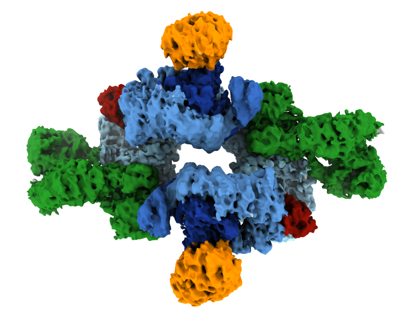 emd_13350.png emd_13350.png | 104.2 KB | ||
| Masks | emd_13350_msk_1.map | 421.9 MB | Mask map | |
| Filedesc metadata | emd-13350.cif.gz | 8.9 KB | ||
| Archive directory |  http://ftp.pdbj.org/pub/emdb/structures/EMD-13350ftp://ftp.pdbj.org/pub/emdb/structures/EMD-13350 http://ftp.pdbj.org/pub/emdb/structures/EMD-13350ftp://ftp.pdbj.org/pub/emdb/structures/EMD-13350 | HTTPS FTP |
-Related structure data
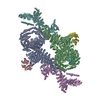
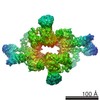
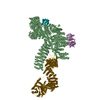
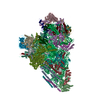
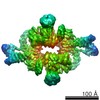
| Related structure data |  7peaMC  7pe7C 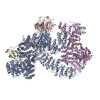 7pe8C 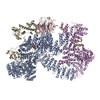 7pe9C 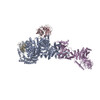 7pebC 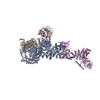 7pecC 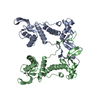 7pedC M: atomic model generated by this map C: citing same article ( |
|---|---|
| Similar structure data |
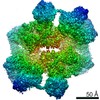

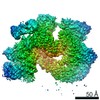
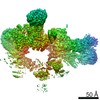


-Links
| EMDB pages | EMDB (EBI/PDBe) / EMDataResource |
|---|---|
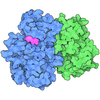
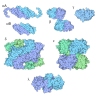
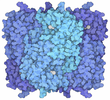
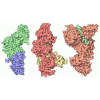
| Related items in Molecule of the Month |

-Map
| File | Download / File: emd_13350.map.gz / Format: CCP4 / Size: 421.9 MB / Type: IMAGE STORED AS FLOATING POINT NUMBER (4 BYTES) | ||||||||||||||||||||||||||||||||||||||||||||||||||||||||||||
|---|---|---|---|---|---|---|---|---|---|---|---|---|---|---|---|---|---|---|---|---|---|---|---|---|---|---|---|---|---|---|---|---|---|---|---|---|---|---|---|---|---|---|---|---|---|---|---|---|---|---|---|---|---|---|---|---|---|---|---|---|---|
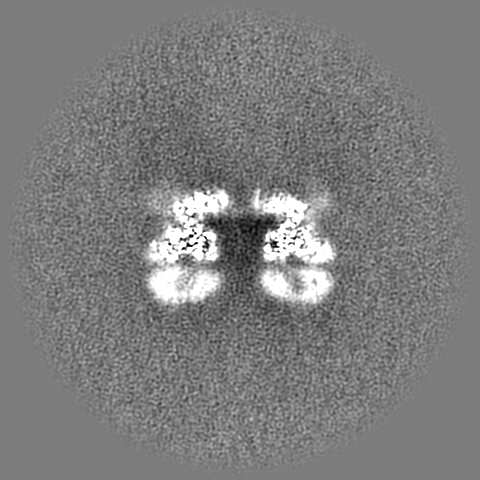
| Projections & slices | Image control
Images are generated by Spider. | ||||||||||||||||||||||||||||||||||||||||||||||||||||||||||||
| Voxel size | X=Y=Z: 1.112 Å | ||||||||||||||||||||||||||||||||||||||||||||||||||||||||||||
| Density |
| ||||||||||||||||||||||||||||||||||||||||||||||||||||||||||||
| Symmetry | Space group: 1 | ||||||||||||||||||||||||||||||||||||||||||||||||||||||||||||
| Details | EMDB XML:
CCP4 map header:
| ||||||||||||||||||||||||||||||||||||||||||||||||||||||||||||
 Z (Sec.)
 Y (Row.)
 X (Col.)




-Supplemental data
-Mask #1
| File | emd_13350_msk_1.map | ||||||||||||
|---|---|---|---|---|---|---|---|---|---|---|---|---|---|
| Projections & Slices |
| ||||||||||||
| Density Histograms |








- Sample components
-Entire : mTORC1 in complex with its regulator DEPTOR
| Entire | Name: mTORC1 in complex with its regulator DEPTOR |
|---|---|
| Components |
|
-Supramolecule #1: mTORC1 in complex with its regulator DEPTOR
| Supramolecule | Name: mTORC1 in complex with its regulator DEPTOR / type: complex / ID: 1 / Parent: 0 / Macromolecule list: #1-#4 |
|---|---|
| Source (natural) | Organism: Homo sapiens (human) |
| Molecular weight | Theoretical: 1.04 MDa |
-Macromolecule #1: Serine/threonine-protein kinase mTOR
| Macromolecule | Name: Serine/threonine-protein kinase mTOR / type: protein_or_peptide / ID: 1 / Number of copies: 2 / Enantiomer: LEVO / EC number: non-specific serine/threonine protein kinase |
|---|---|
| Source (natural) | Organism: Homo sapiens (human) |
| Molecular weight | Theoretical: 287.484156 KDa |
| Recombinant expression | Organism:   Spodoptera frugiperda (fall armyworm) Spodoptera frugiperda (fall armyworm) |
| Sequence | String: MLGTGPAAAT TAATTS(UNK)(UNK)(UNK)(UNK) (UNK)(UNK)(UNK)(UNK)(UNK)(UNK)(UNK)(UNK) (UNK) (UNK)SRNEET(UNK)(UNK)(UNK) (UNK)(UNK)(UNK)(UNK)(UNK)(UNK)(UNK)(UNK)(UNK) (UNK)(UNK)(UNK)(UNK)(UNK)EMSQE ...String: MLGTGPAAAT TAATTS(UNK)(UNK)(UNK)(UNK) (UNK)(UNK)(UNK)(UNK)(UNK)(UNK)(UNK)(UNK) (UNK) (UNK)SRNEET(UNK)(UNK)(UNK) (UNK)(UNK)(UNK)(UNK)(UNK)(UNK)(UNK)(UNK)(UNK) (UNK)(UNK)(UNK)(UNK)(UNK)EMSQE ESTRFYDQLN HHIFELVSSS DANERKGGIL AIASLIGVEG GNATRIGRFA NYLRNLLPS NDPVVMEMAS KAIGRLAMAG DTFTAEYVEF EVKRALEWLG ADRNEGRRHA AVLVLRELAI SVPTFFFQQV Q PFFDNIFV AVWDPKQAIR EGAVAALRAC LILTTQREPK EMQKPQWYRH TFEEAEKGFD ETLAKEKGMN RDDRIHGALL IL NELVRIS SMEGERLREE MEEITQQQLV HDKYCKDLMG FGTKPRHITP FTSFQAVQPQ QSNALVGLLG YSSHQGLMGF GTS PSPAKS T(UNK)(UNK)(UNK)(UNK)(UNK)(UNK)(UNK)(UNK)(UNK) (UNK)(UNK)(UNK)(UNK)(UNK) (UNK)(UNK)(UNK)(UNK) (UNK)(UNK)(UNK)(UNK)(UNK)(UNK)(UNK)RNS KNSLIQMTIL NLLPRLAAFR PS AFTDTQY LQDTMNHVLS CVKKEKERTA AFQALGLLSV AVRSEFKVYL PRVLDIIRAA LPPKDFAHKR QKAMQVDATV FTC ISMLAR AMGPGIQQDI KELLEPMLAV GLSPALTAVL YDLSRQIPQL KKDIQDGLLK MLSLVLMHKP LRHPGMPKGL AHQL ASPGL TTLPEASDVG SITLALRTLG SFEFEGHSLT QFVRHCADHF LNSEHKEIRM EAARTCSRLL TPSIHLISGH AHVVS QTAV QVVADVLSKL LVVGITDPDP DIRYCVLASL DERFDAHLAQ AENLQALFVA LNDQVFEIRE LAICTVGRLS SMNPAF VMP FLRKMLIQIL TELEHSGIGR IKEQSARMLG HLVSNAPRLI RPYMEPILKA LILKLKDPDP DPNPGVINNV LATIGEL AQ VSGLEMRKWV DELFIIIMDM LQDSSLLAKR QVALWTLGQL VASTGYVVEP YRKYPTLLEV LLNFLKTEQN QGTRREAI R VLGLLGALDP YKHKVNIGMI DQSRDASAVS LSESKSSQDS SDYSTSEMLV NMGNLPLDEF YPAVSMVALM RIFRDQSLS HHHTMVVQAI TFIFKSLGLK CVQFLPQVMP TFLNVIRVCD GAIREFLFQQ LGMLVSFVKS HIRPYMDEIV TLMREFWVMN TSIQSTIIL LIEQIVVALG GEFKLYLPQL IPHMLRVFMH DNSPGRIVSI KLLAAIQLFG ANLDDYLHLL LPPIVKLFDA P EAPLPSRK AALETVDRLT ESLDFTDYAS RIIHPIVRTL DQSPELRSTA MDTLSSLVFQ LGKKYQIFIP MVNKVLVRHR IN HQRYDVL ICRIVKGYTL ADEEEDPLIY QHRMLRSGQG DALASGPVET GPMKKLHVST INLQKAWGAA RRVSKDDWLE WLR RLSLEL LKDSSSPSLR SCWALAQAYN PMARDLFNAA FVSCWSELNE DQQDELIRSI ELALTSQDIA EVTQTLLNLA EFME HSDKG PLPLRDDNGI VLLGERAAKC RAYAKALHYK ELEFQKGPTP AILESLISIN NKLQQPEAAA GVLEYAMKHF GELEI QATW YEKLHEWEDA LVAYDKKMDT NKDDPELMLG RMRCLEALGE WGQLHQQCCE KWTLVNDETQ AKMARMAAAA AWGLGQ WDS MEEYTCMIPR DTHDGAFYRA VLALHQDLFS LAQQCIDKAR DLLDAELTAM AGESYSRAYG AMVSCHMLSE LEEVIQY KL VPERREIIRQ IWWERLQGCQ RIVEDWQKIL MVRSLVVSPH EDMRTWLKYA SLCGKSGRLA LAHKTLVLLL GVDPSRQL D HPLPTVHPQV TYAYMKNMWK SARKIDAFQH MQHFVQTMQQ QAQHAIATED QQHKQELHKL MARCFLKLGE WQLNLQGIN ESTIPKVLQY YSAATEHDRS WYKAWHAWAV MNFEAVLHYK HQNQARDEKK KLRHASGANI TNATTAATTA ATATTTASTE GSNSESEAE STENSPTPSP LQKKVTEDLS KTLLMYTVPA VQGFFRSISL SRGNNLQDTL RVLTLWFDYG HWPDVNEALV E GVKAIQID TWLQVIPQLI ARIDTPRPLV GRLIHQLLTD IGRYHPQALI YPLTVASKST TTARHNAANK ILKNMCEHSN TL VQQAMMV SEELIRVAIL WHEMWHEGLE EASRLYFGER NVKGMFEVLE PLHAMMERGP QTLKETSFNQ AYGRDLMEAQ EWC RKYMKS GNVKDLTQAW DLYYHVFRRI SKQLPQLTSL ELQYVSPKLL MCRDLELAVP GTYDPNQPII RIQSIAPSLQ VITS KQRPR KLTLMGSNGH EFVFLLKGHE DLRQDERVMQ LFGLVNTLLA NDPTSLRKNL SIQRYAVIPL STNSGLIGWV PHCDT LHAL IRDYREKKKI LLNIEHRIML RMAPDYDHLT LMQKVEVFEH AVNNTAGDDL AKLLWLKSPS SEVWFDRRTN YTRSLA VMS MVGYILGLGD RHPSNLMLDR LSGKILHIDF GDCFEVAMTR EKFPEKIPFR LTRMLTNAME VTGLDGNYRI TCHTVME VL REHKDSVMAV LEAFVYDPLL NWRLMDTNTK GNKRSRTRTD SYSAGQSVEI LDGVELGEPA HKKTGTTVPE SIHSFIGD G LVKPEALNKK AIQIINRVRD KLTGRDFSHD DTLDVPTQVE LLIKQATSHE NLCQCYIGWC PFW UniProtKB: Serine/threonine-protein kinase mTOR, Serine/threonine-protein kinase mTOR, Serine/threonine-protein kinase mTOR, Serine/threonine-protein kinase mTOR |
-Macromolecule #2: Target of rapamycin complex subunit LST8
| Macromolecule | Name: Target of rapamycin complex subunit LST8 / type: protein_or_peptide / ID: 2 / Number of copies: 2 / Enantiomer: LEVO |
|---|---|
| Source (natural) | Organism: Homo sapiens (human) |
| Molecular weight | Theoretical: 35.91009 KDa |
| Recombinant expression | Organism: Spodoptera frugiperda (fall armyworm) |
| Sequence | String: MNTSPGTVGS DPVILATAGY DHTVRFWQAH SGICTRTVQH QDSQVNALEV TPDRSMIAAA GYQHIRMYDL NSNNPNPIIS YDGVNKNIA SVGFHEDGRW MYTGGEDCTA RIWDLRSRNL QCQRIFQVNA PINCVCLHPN QAELIVGDQS GAIHIWDLKT D HNEQLIPE ...String: MNTSPGTVGS DPVILATAGY DHTVRFWQAH SGICTRTVQH QDSQVNALEV TPDRSMIAAA GYQHIRMYDL NSNNPNPIIS YDGVNKNIA SVGFHEDGRW MYTGGEDCTA RIWDLRSRNL QCQRIFQVNA PINCVCLHPN QAELIVGDQS GAIHIWDLKT D HNEQLIPE PEVSITSAHI DPDASYMAAV NSTGNCYVWN LTGGIGDEVT QLIPKTKIPA HTRYALQCRF SPDSTLLATC SA DQTCKIW RTSNFSLMTE LSIKSGNPGE SSRGWMWGCA FSGDSQYIVT ASSDNLARLW CVETGEIKRE YGGHQKAVVC LAF NDSVLG UniProtKB: Target of rapamycin complex subunit LST8 |
-Macromolecule #3: Regulatory-associated protein of mTOR
| Macromolecule | Name: Regulatory-associated protein of mTOR / type: protein_or_peptide / ID: 3 / Number of copies: 2 / Enantiomer: LEVO |
|---|---|
| Source (natural) | Organism: Homo sapiens (human) |
| Molecular weight | Theoretical: 155.963094 KDa |
| Recombinant expression | Organism: Spodoptera frugiperda (fall armyworm) |
| Sequence | String: MAHHHHHHHH HHGSTSGSGE QKLISEEDLG STSGSGDYKD DDDKLTSLYK KAGLENLYFQ GMESEMLQSP LLGLGEEDEA DLTDWNLPL AFMKKRHCEK IEGSKSLAQS WRMKDRMKTV SVALVLCLNV GVDPPDVVKT TPCARLECWI DPLSMGPQKA L ETIGANLQ ...String: MAHHHHHHHH HHGSTSGSGE QKLISEEDLG STSGSGDYKD DDDKLTSLYK KAGLENLYFQ GMESEMLQSP LLGLGEEDEA DLTDWNLPL AFMKKRHCEK IEGSKSLAQS WRMKDRMKTV SVALVLCLNV GVDPPDVVKT TPCARLECWI DPLSMGPQKA L ETIGANLQ KQYENWQPRA RYKQSLDPTV DEVKKLCTSL RRNAKEERVL FHYNGHGVPR PTVNGEVWVF NKNYTQYIPL SI YDLQTWM GSPSIFVYDC SNAGLIVKSF KQFALQREQE LEVAAINPNH PLAQMPLPPS MKNCIQLAAC EATELLPMIP DLP ADLFTS CLTTPIKIAL RWFCMQKCVS LVPGVTLDLI EKIPGRLNDR RTPLGELNWI FTAITDTIAW NVLPRDLFQK LFRQ DLLVA SLFRNFLLAE RIMRSYNCTP VSSPRLPPTY MHAMWQAWDL AVDICLSQLP TIIEEGTAFR HSPFFAEQLT AFQVW LTMG VENRNPPEQL PIVLQVLLSQ VHRLRALDLL GRFLDLGPWA VSLALSVGIF PYVLKLLQSS ARELRPLLVF IWAKIL AVD SSCQADLVKD NGHKYFLSVL ADPYMPAEHR TMTAFILAVI VNSYHTGQEA CLQGNLIAIC LEQLNDPHPL LRQWVAI CL GRIWQNFDSA RWCGVRDSAH EKLYSLLSDP IPEVRCAAVF ALGTFVGNSA ERTDHSTTID HNVAMMLAQL VSDGSPMV R KELVVALSHL VVQYESNFCT VALQFIEEEK NYALPSPATT EGGSLTPVRD SPCTPRLRSV SSYGNIRAVA TARSLNKSL QNLSLTEESG GAVAFSPGNL STSSSASSTL GSPENEEHIL SFETIDKMRR ASSYSSLNSL IGVSFNSVYT QIWRVLLHLA ADPYPEVSD VAMKVLNSIA YKATVNARPQ RVLDTSSLTQ SAPASPTNKG VHIHQAGGSP PASSTSSSSL TNDVAKQPVS R DLPSGRPG TTGPAGAQYT PHSHQFPRTR KMFDKGPEQT ADDADDAAGH KSFISATVQT GFCDWSARYF AQPVMKIPEE HD LESQIRK EREWRFLRNS RVRRQAQQVI QKGITRLDDQ IFLNRNPGVP SVVKFHPFTP CIAVADKDSI CFWDWEKGEK LDY FHNGNP RYTRVTAMEY LNGQDCSLLL TATDDGAIRV WKNFADLEKN PEMVTAWQGL SDMLPTTRGA GMVVDWEQET GLLM SSGDV RIVRIWDTDR EMKVQDIPTG ADSCVTSLSC DSHRSLIVAG LGDGSIRVYD RRMALSECRV MTYREHTAWV VKASL QKRP DGHIVSVSVN GDVRIFDPRM PESVNVLQIV KGLTALDIHP QADLIACGSV NQFTAIYNSS GELINNIKYY DGFMGQ RVG AISCLAFHPH WPHLAVGSND YYISVYSVEK RVR UniProtKB: Regulatory-associated protein of mTOR |
-Macromolecule #4: DEP domain-containing mTOR-interacting protein
| Macromolecule | Name: DEP domain-containing mTOR-interacting protein / type: protein_or_peptide / ID: 4 / Number of copies: 2 / Enantiomer: LEVO |
|---|---|
| Source (natural) | Organism: Homo sapiens (human) |
| Molecular weight | Theoretical: 46.365832 KDa |
| Recombinant expression | Organism: Spodoptera frugiperda (fall armyworm) |
| Sequence | String: MEEGGSTGSA GSDSSTSGSG GAQQRELERM AEVLVTGEQL RLRLHEEKVI KDRRHHLKTY PNCFVAKELI DWLIEHKEAS DRETAIKLM QKLADRGIIH HVCDEHKEFK DVKLFYRFRK DDGTFPLDNE VKAFMRGQRL YEKLMSPENT LLQPREEEGV K YERTFMAS ...String: MEEGGSTGSA GSDSSTSGSG GAQQRELERM AEVLVTGEQL RLRLHEEKVI KDRRHHLKTY PNCFVAKELI DWLIEHKEAS DRETAIKLM QKLADRGIIH HVCDEHKEFK DVKLFYRFRK DDGTFPLDNE VKAFMRGQRL YEKLMSPENT LLQPREEEGV K YERTFMAS EFLDWLVQEG EATTRKEAEQ LCHRLMEHGI IQHVSSKHPF VDSNLLYQFR MNFRRRRRLM ELLNEKSPSS QE THDSPFC LRKQSHDNRK STSFMSVSPS KEIKIVSAVR RSSMSSCGSS GYFSSSPTLS SSPPVLCNPK SVLKRPVTSE ELL TPGAPY ARKTFTIVGD AVGWGFVVRG SKPCHIQAVD PSGPAAAAGM KVCQFVVSVN GLNVLHVDYR TVNNLILTGP RTIV MEVME ELEC UniProtKB: DEP domain-containing mTOR-interacting protein |
-Macromolecule #5: INOSITOL HEXAKISPHOSPHATE
| Macromolecule | Name: INOSITOL HEXAKISPHOSPHATE / type: ligand / ID: 5 / Number of copies: 2 / Formula: IHP |
|---|---|
| Molecular weight | Theoretical: 660.035 Da |
| Chemical component information | 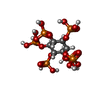 ChemComp-IHP: |
-Experimental details
-Structure determination
| Method | cryo EM |
|---|---|
 Processing Processing | single particle reconstruction |
| Aggregation state | particle |
-Sample preparation
| Concentration | 1.4 mg/mL | ||||||||||||||||||
|---|---|---|---|---|---|---|---|---|---|---|---|---|---|---|---|---|---|---|---|
| Buffer | pH: 7.5 Component:
| ||||||||||||||||||
| Vitrification | Cryogen name: ETHANE |
- Electron microscopy
| Microscope | TFS GLACIOS |
|---|---|
| Image recording | Film or detector model: GATAN K3 (6k x 4k) / Detector mode: COUNTING / Average electron dose: 50.0 e/Å2 |
| Electron beam | Acceleration voltage: 200 kV / Electron source:  FIELD EMISSION GUN FIELD EMISSION GUN |
| Electron optics | Illumination mode: FLOOD BEAM / Imaging mode: BRIGHT FIELD |
| Sample stage | Specimen holder model: FEI TITAN KRIOS AUTOGRID HOLDER / Cooling holder cryogen: NITROGEN |

