 Movie
Movie Controller

[English] 日本語
 Yorodumi
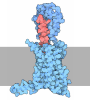
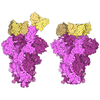
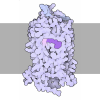
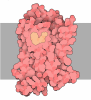
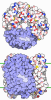
- PDB-9zxd: Structure of AT118-R nanobody in complex with the angiotensin II ... -
+ Open data

- Basic information
| Entry | Database: PDB / ID: 9zxd | ||||||||||||||||||||||||||||||
|---|---|---|---|---|---|---|---|---|---|---|---|---|---|---|---|---|---|---|---|---|---|---|---|---|---|---|---|---|---|---|---|
| Title | Structure of AT118-R nanobody in complex with the angiotensin II type I receptor bound to L-162,313 | ||||||||||||||||||||||||||||||
 Components Components |
| ||||||||||||||||||||||||||||||
 Keywords Keywords | MEMBRANE PROTEIN / GPCR / nanobody | ||||||||||||||||||||||||||||||
| Function / homology |  Function and homology information Function and homology informationangiotensin type I receptor activity / angiotensin type II receptor activity / regulation of renal sodium excretion / maintenance of blood vessel diameter homeostasis by renin-angiotensin / renin-angiotensin regulation of aldosterone production / phospholipase C-activating angiotensin-activated signaling pathway / bradykinin receptor binding / positive regulation of blood vessel endothelial cell proliferation involved in sprouting angiogenesis / positive regulation of cholesterol metabolic process / low-density lipoprotein particle remodeling ...angiotensin type I receptor activity / angiotensin type II receptor activity / regulation of renal sodium excretion / maintenance of blood vessel diameter homeostasis by renin-angiotensin / renin-angiotensin regulation of aldosterone production / phospholipase C-activating angiotensin-activated signaling pathway / bradykinin receptor binding / positive regulation of blood vessel endothelial cell proliferation involved in sprouting angiogenesis / positive regulation of cholesterol metabolic process / low-density lipoprotein particle remodeling / positive regulation of macrophage derived foam cell differentiation / regulation of systemic arterial blood pressure by renin-angiotensin / Rho protein signal transduction / regulation of vasoconstriction / kidney development / blood vessel diameter maintenance / angiotensin-activated signaling pathway / Peptide ligand-binding receptors / calcium-mediated signaling / cell chemotaxis / regulation of cell growth / electron transport chain / regulation of blood pressure / positive regulation of reactive oxygen species metabolic process / positive regulation of inflammatory response / phospholipase C-activating G protein-coupled receptor signaling pathway / regulation of cell population proliferation / Cargo recognition for clathrin-mediated endocytosis / Clathrin-mediated endocytosis / regulation of inflammatory response / positive regulation of cytosolic calcium ion concentration / G alpha (q) signalling events / electron transfer activity / periplasmic space / inflammatory response / iron ion binding / G protein-coupled receptor signaling pathway / protein heterodimerization activity / heme binding / symbiont entry into host cell / membrane / plasma membrane Similarity search - Function | ||||||||||||||||||||||||||||||
| Biological species | synthetic construct (others) Homo sapiens (human) Homo sapiens (human)  Escherichia coli (E. coli) Escherichia coli (E. coli) | ||||||||||||||||||||||||||||||
| Method | ELECTRON MICROSCOPY / single particle reconstruction / cryo EM / Resolution: 3.2 Å | ||||||||||||||||||||||||||||||
 Authors Authors | Skiba, M.A. / Kruse, A.C. | ||||||||||||||||||||||||||||||
| Funding support |  United States, 4items United States, 4items
| ||||||||||||||||||||||||||||||
 Citation Citation | Journal: Proc Natl Acad Sci U S A / Year: 2026 Title: Activation of the angiotensin II type I receptor by a nonpeptide agonist. Authors: Meredith A Skiba / Jinghan Liu / Pengxiang Shen / Jihee Kim / Elizabeth Wren / Morgan S A Gilman / Dean Staus / Conor McMahon / Jeffrey S Smith / Robert J Lefkowitz / Daniel Kahne / Laura M ...Authors: Meredith A Skiba / Jinghan Liu / Pengxiang Shen / Jihee Kim / Elizabeth Wren / Morgan S A Gilman / Dean Staus / Conor McMahon / Jeffrey S Smith / Robert J Lefkowitz / Daniel Kahne / Laura M Wingler / Andrew C Kruse / Abstract: The angiotensin II type I receptor (AT1R) is a G protein-coupled receptor that regulates the cardiovascular system and as a result is one of the most successful pharmacological targets for the ...The angiotensin II type I receptor (AT1R) is a G protein-coupled receptor that regulates the cardiovascular system and as a result is one of the most successful pharmacological targets for the treatment of hypertension. Within the angiotensin receptor pharmacological landscape, agonists are peptide ligands, whereas potent antagonists are predominantly small molecules. Three decades ago, a small number of nonpeptide AT1R agonists were identified. These molecules largely share a chemical scaffold with AT1R antagonists, but appeared to interact with the receptor in a manner that diverges from both antagonists and peptide agonists. Here, we revisit L-162,313, the prototype nonpeptide AT1R agonist and determine how the antagonist-like chemical scaffold acts as an agonist. L-162,313 binds similarly to AT1R antagonists, but unlike antagonists, it engages the same activation switches as peptide agonists. We map the spatial relationship required for activation of AT1R by nonpeptide agonists and used this information to design a small library of L-162,313 derivatives. These rationally designed derivatives had the expected reduced or enhanced potency based on the structural basis for activation. Our data resolve a long-standing pharmacological mystery and provide a foundation for generating more efficacious small molecule AT1R agonists. | ||||||||||||||||||||||||||||||
| History |
|
- Structure visualization
| Structure viewer | Molecule: MolmilJmol/JSmol |
|---|
- Downloads & links
-Download
| PDBx/mmCIF format | 9zxd.cif.gz | 167.3 KB | Display | PDBx/mmCIF format |
|---|---|---|---|---|
| PDB format | pdb9zxd.ent.gz | Display | PDB format | |
| PDBx/mmJSON format | 9zxd.json.gz | Tree view | PDBx/mmJSON format | |
| Others |  Other downloads Other downloads |
-Validation report
| Arichive directory | https://data.pdbj.org/pub/pdb/validation_reports/zx/9zxdftp://data.pdbj.org/pub/pdb/validation_reports/zx/9zxd | HTTPS FTP |
|---|
-Related structure data
| Related structure data |  74920MC  9zxcC M: map data used to model this data C: citing same article ( |
|---|---|
| Similar structure data |

-Links
 PDBj
PDBj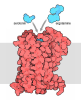
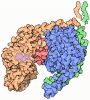
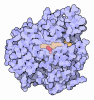
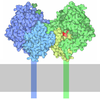
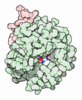
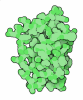
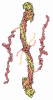
- Assembly
| Deposited unit | 
|
|---|---|
| 1 |
|
-Components
| #1: Protein | Mass: 65389.816 Da / Num. of mol.: 1 Source method: isolated from a genetically manipulated source Source: (gene. exp.) synthetic construct (others), (gene. exp.) Homo sapiens (human), (gene. exp.) Escherichia coli (E. coli)Gene: AGTR1, AGTR1A, AGTR1B, AT2R1, AT2R1B, cybC / Production host: Homo sapiens (human) / References: UniProt: P30556, UniProt: P0ABE7 |
|---|---|
| #2: Antibody | Mass: 24539.314 Da / Num. of mol.: 1 Source method: isolated from a genetically manipulated source Source: (gene. exp.) synthetic construct (others) / Production host: Homo sapiens (human) |
| #3: Antibody | Mass: 23541.164 Da / Num. of mol.: 1 Source method: isolated from a genetically manipulated source Source: (gene. exp.) synthetic construct (others) / Production host: Homo sapiens (human) |
| #4: Chemical | ChemComp-Y01 / 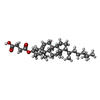 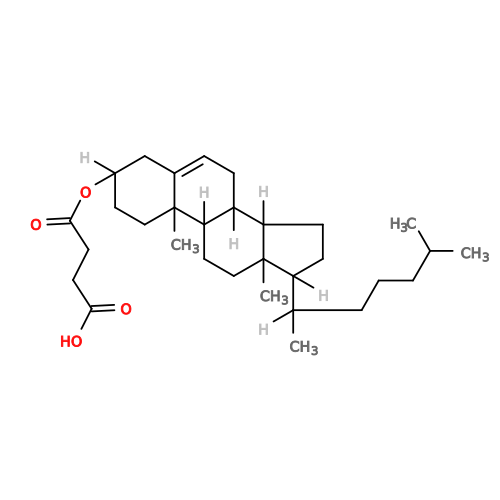 Mass: 486.726 Da / Num. of mol.: 1 / Source method: obtained synthetically / Formula: C31H50O4 Mass: 486.726 Da / Num. of mol.: 1 / Source method: obtained synthetically / Formula: C31H50O4 |
| #5: Chemical | ChemComp-A1C42 / Mass: 582.777 Da / Num. of mol.: 1 / Source method: obtained synthetically / Formula: C30H38N4O4S2 / Feature type: SUBJECT OF INVESTIGATION |
| Has ligand of interest | Y |
| Has protein modification | Y |
-Experimental details
-Experiment
| Experiment | Method: ELECTRON MICROSCOPY |
|---|---|
| EM experiment | Aggregation state: PARTICLE / 3D reconstruction method: single particle reconstruction |
- Sample preparation
| Component |
| ||||||||||||||||||||||||
|---|---|---|---|---|---|---|---|---|---|---|---|---|---|---|---|---|---|---|---|---|---|---|---|---|---|
| Molecular weight | Experimental value: NO | ||||||||||||||||||||||||
| Source (natural) |
| ||||||||||||||||||||||||
| Source (recombinant) |
| ||||||||||||||||||||||||
| Buffer solution | pH: 7.4 | ||||||||||||||||||||||||
| Specimen | Embedding applied: NO / Shadowing applied: NO / Staining applied: NO / Vitrification applied: YES | ||||||||||||||||||||||||
| Vitrification | Cryogen name: ETHANE |
- Electron microscopy imaging
| Experimental equipment |  Model: Titan Krios / Image courtesy: FEI Company |
|---|---|
| Microscopy | Model: TFS KRIOS |
| Electron gun | Electron source:  FIELD EMISSION GUN / Accelerating voltage: 300 kV / Illumination mode: FLOOD BEAM FIELD EMISSION GUN / Accelerating voltage: 300 kV / Illumination mode: FLOOD BEAM |
| Electron lens | Mode: BRIGHT FIELD / Nominal defocus max: 1800 nm / Nominal defocus min: 800 nm / Cs: 2.7 mm / C2 aperture diameter: 50 µm |
| Specimen holder | Specimen holder model: FEI TITAN KRIOS AUTOGRID HOLDER |
| Image recording | Electron dose: 63.88 e/Å2 / Film or detector model: GATAN K3 BIOQUANTUM (6k x 4k) / Num. of real images: 6182 |
| EM imaging optics | Energyfilter slit width: 20 eV |
- Processing
| EM software |
| |||||||||||||||||||||||||||||||||||||||||||||||||||||||||||||||||
|---|---|---|---|---|---|---|---|---|---|---|---|---|---|---|---|---|---|---|---|---|---|---|---|---|---|---|---|---|---|---|---|---|---|---|---|---|---|---|---|---|---|---|---|---|---|---|---|---|---|---|---|---|---|---|---|---|---|---|---|---|---|---|---|---|---|---|
| Image processing |
| |||||||||||||||||||||||||||||||||||||||||||||||||||||||||||||||||
| CTF correction |
| |||||||||||||||||||||||||||||||||||||||||||||||||||||||||||||||||
| Particle selection |
| |||||||||||||||||||||||||||||||||||||||||||||||||||||||||||||||||
| 3D reconstruction |
| |||||||||||||||||||||||||||||||||||||||||||||||||||||||||||||||||
| Refinement | Highest resolution: 3.2 Å Stereochemistry target values: REAL-SPACE (WEIGHTED MAP SUM AT ATOM CENTERS) | |||||||||||||||||||||||||||||||||||||||||||||||||||||||||||||||||
| Refine LS restraints |
|
