National Institutes of Health/National Institute Of Allergy and Infectious Diseases (NIH/NIAID)
DP2 AI171113
United States
American Cancer Society
PF-24-1322561-01-RMC
United States
Citation
Journal: bioRxiv / Year: 2026 Title: Conserved assembly architecture of the essential herpesvirus packaging accessory factor. Authors: Elizabeth J Bailey / Swapnil C Devarkar / Renata Szczepaniak / Laura M Meißner / Xinyu Chen / Chunxiang Wu / Sandra K Weller / Yong Xiong / Allison L Didychuk / Abstract: To create a new wave of infectious virions, all herpesviruses require an accessory factor of unknown function to package their viral genomes into nascent capsids. Here, we present cryo-EM structures ...To create a new wave of infectious virions, all herpesviruses require an accessory factor of unknown function to package their viral genomes into nascent capsids. Here, we present cryo-EM structures of the packaging accessory factor from the α-herpesvirus herpes simplex virus type 1 (HSV-1, UL32) and the β-herpesvirus human cytomegalovirus (HCMV, UL52). Unlike homologs from the γ-herpesviruses, neither UL32 nor UL52 form stable homopentameric rings. UL52 forms incomplete pentameric rings lacking one or two protomers. UL32 does not form stable higher-order species, but stabilization through chemical crosslinking revealed a novel quaternary structure where three pentameric rings assemble into a "tripentamer." Our results reveal that herpesvirus packaging accessory factors adopt distinct oligomeric states but are constrained to pentameric symmetry. Assembly of protomers into a ring creates a positively charged central channel that we show is critical for infectious virus production in HSV-1. Taken together, our study points to a structurally conserved, essential function of packaging accessory factors across the .
History
Deposition
Dec 9, 2025
Deposition site: RCSB / Processing site: RCSB
Revision 1.0
Jul 1, 2026
Provider: repository / Type: Initial release
Revision 1.0
Jul 1, 2026
Data content type: EM metadata / Data content type: EM metadata / Provider: repository / Type: Initial release
Revision 1.0
Jul 1, 2026
Data content type: FSC / Data content type: FSC / Provider: repository / Type: Initial release
Revision 1.0
Jul 1, 2026
Data content type: Half map / Part number: 1 / Data content type: Half map / Provider: repository / Type: Initial release
Revision 1.0
Jul 1, 2026
Data content type: Half map / Part number: 2 / Data content type: Half map / Provider: repository / Type: Initial release
Revision 1.0
Jul 1, 2026
Data content type: Image / Data content type: Image / Provider: repository / Type: Initial release
Revision 1.0
Jul 1, 2026
Data content type: Mask / Part number: 1 / Data content type: Mask / Provider: repository / Type: Initial release
Revision 1.0
Jul 1, 2026
Data content type: Primary map / Data content type: Primary map / Provider: repository / Type: Initial release
A: Packaging protein UL32 B: Packaging protein UL32 C: Packaging protein UL32 D: Packaging protein UL32 E: Packaging protein UL32 F: Packaging protein UL32 G: Packaging protein UL32 H: Packaging protein UL32 I: Packaging protein UL32 J: Packaging protein UL32 K: Packaging protein UL32 L: Packaging protein UL32 M: Packaging protein UL32 N: Packaging protein UL32 O: Packaging protein UL32 hetero molecules
In the structure databanks used in Yorodumi, some data are registered as the other names, "COVID-19 virus" and "2019-nCoV". Here are the details of the virus and the list of structure data.
Jan 31, 2019. EMDB accession codes are about to change! (news from PDBe EMDB page)
EMDB accession codes are about to change! (news from PDBe EMDB page)
The allocation of 4 digits for EMDB accession codes will soon come to an end. Whilst these codes will remain in use, new EMDB accession codes will include an additional digit and will expand incrementally as the available range of codes is exhausted. The current 4-digit format prefixed with “EMD-” (i.e. EMD-XXXX) will advance to a 5-digit format (i.e. EMD-XXXXX), and so on. It is currently estimated that the 4-digit codes will be depleted around Spring 2019, at which point the 5-digit format will come into force.
The EM Navigator/Yorodumi systems omit the EMD- prefix.
Related info.:Q: What is EMD? / ID/Accession-code notation in Yorodumi/EM Navigator
Yorodumi is a browser for structure data from EMDB, PDB, SASBDB, etc.
This page is also the successor to EM Navigator detail page, and also detail information page/front-end page for Omokage search.
The word "yorodu" (or yorozu) is an old Japanese word meaning "ten thousand". "mi" (miru) is to see.
Related info.:EMDB / PDB / SASBDB / Comparison of 3 databanks / Yorodumi Search / Aug 31, 2016. New EM Navigator & Yorodumi / Yorodumi Papers / Jmol/JSmol / Function and homology information / Changes in new EM Navigator and Yorodumi
 Movie
Movie Controller


 Open data
 Basic information
 Components
 Keywords
 Function and homology information
 Human alphaherpesvirus 1 strain 17
 Authors
 United States, 2items
  Citation
 Structure visualization
 Downloads & links
 Other downloads


 PDBj
PDBj Assembly

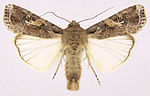 Spodoptera frugiperda (fall armyworm) / References: UniProt: P10216
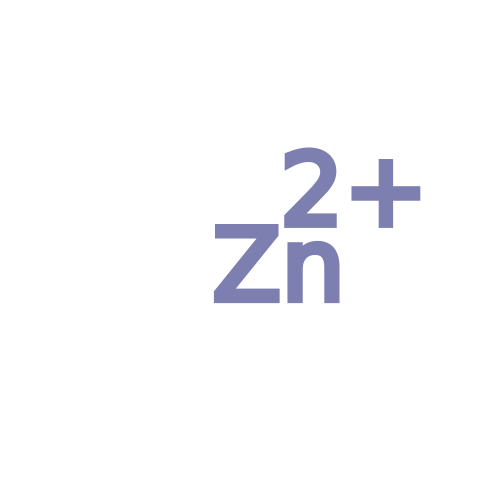 Mass: 65.409 Da / Num. of mol.: 45 / Source method: obtained synthetically / Formula: Zn / Feature type: SUBJECT OF INVESTIGATION
 Sample preparation
 Electron microscopy imaging
 FIELD EMISSION GUN / Accelerating voltage: 300 kV / Illumination mode: FLOOD BEAM
 Processing