 Movie
Movie Controller


+ Open data

- Basic information
| Entry | Database: PDB / ID: 9yrb | |||||||||||||||||||||
|---|---|---|---|---|---|---|---|---|---|---|---|---|---|---|---|---|---|---|---|---|---|---|
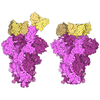
| Title | Factor XIa in complex with Fab fragment of REGN7508-Cat | |||||||||||||||||||||
 Components Components |
| |||||||||||||||||||||
 Keywords Keywords | BLOOD CLOTTING / Coagulation / protease | |||||||||||||||||||||
| Function / homology |  Function and homology information Function and homology informationcoagulation factor XIa / serine-type aminopeptidase activity / Defective F9 activation / positive regulation of fibrinolysis / plasminogen activation / : / serine-type peptidase activity / blood coagulation / heparin binding / serine-type endopeptidase activity ...coagulation factor XIa / serine-type aminopeptidase activity / Defective F9 activation / positive regulation of fibrinolysis / plasminogen activation / : / serine-type peptidase activity / blood coagulation / heparin binding / serine-type endopeptidase activity / : / extracellular exosome / extracellular region / membrane / identical protein binding / plasma membrane Similarity search - Function | |||||||||||||||||||||
| Biological species |  Homo sapiens (human) Homo sapiens (human) | |||||||||||||||||||||
| Method | ELECTRON MICROSCOPY / single particle reconstruction / cryo EM / Resolution: 3.06 Å | |||||||||||||||||||||
 Authors Authors | Saotome, K. / Franklin, M.C. | |||||||||||||||||||||
| Funding support | 1items
| |||||||||||||||||||||
 Citation Citation | Journal: Blood / Year: 2026 Title: Anticoagulation with mechanistically distinct FXI/FXIa antibodies amrecibart (REGN9933A2) and cenvacibart (REGN7508Cat). Authors: Dan Chalothorn / Aaron Paul Kithcart / Ethan Marin / Selin Somersan-Karakaya / KehDih Lai / Frederic Cauwberghs / Jonathan Peter Robert Ackroyd / Kusha Mohammadi / Anju Shrestha / George K ...Authors: Dan Chalothorn / Aaron Paul Kithcart / Ethan Marin / Selin Somersan-Karakaya / KehDih Lai / Frederic Cauwberghs / Jonathan Peter Robert Ackroyd / Kusha Mohammadi / Anju Shrestha / George K Ehrlich / Ashique Rafique / Ishita Chatterjee / Kei Saotome / Matthew C Franklin / Andrew J Murphy / William C Olson / Benjamin A Olenchock / Gary A Herman / David E Gutstein / Andres Sirulnik / George D Yancopoulos / Lori G Morton /    Abstract: Thrombosis is a major contributor to global morbidity and mortality. Current standards of care target the extrinsic and/or common pathways of coagulation, effectively inhibiting thrombosis but also ...Thrombosis is a major contributor to global morbidity and mortality. Current standards of care target the extrinsic and/or common pathways of coagulation, effectively inhibiting thrombosis but also increasing bleeding risk, highlighting the unmet need for additional treatment options. Genetic deficiency in factor XI (FXI), a component of the intrinsic pathway, reduces thrombosis risk without spontaneous bleeding. We generated 2 FXI monoclonal antibodies (mAbs) with distinct profiles to provide new approaches to anticoagulation. Cenvacibart (REGN7508Cat) targets the catalytic domain to completely block FXI activity (induced by FXIIa or FXIa in the intrinsic pathway or thrombin in an intrinsic/common pathway amplification loop), thereby maximizing anticoagulation; amrecibart (REGN9933A2) targets the apple 2 domain of FXI/FXIa to specifically prevent FXI activity induced by FXIIa-delivering perhaps less anticoagulation but with potentially lower bleeding risk. We evaluated the anticoagulant effects of both mAbs in vitro in human/non-human primate plasma, in vivo in non-human primates, and healthy volunteers. Both mAbs inhibited intrinsic pathway-triggered coagulation, assessed by activated partial thromboplastin time (aPTT); cenvacibart exhibited a greater increase in aPTT versus amrecibart or other FXI-targeted inhibitors. Neither amrecibart nor cenvacibart affected the extrinsic pathway, assessed by prothrombin time (PT). In non-human primates, both mAbs prevented thrombosis without increasing bleeding. In first-in-human studies, both mAbs were generally well tolerated and dose-dependently inhibited intrinsic pathway-triggered coagulation, with durable aPTT prolongation without affecting PT. Amrecibart and cenvacibart may offer tailored therapies for patients with different bleeding risk profiles. The trials are registered at www.clinicaltrials.gov as #NCT05102136 and #NCT05603195. #1: Journal: Acta Crystallogr D Struct Biol / Year: 2019 Title: Macromolecular structure determination using X-rays, neutrons and electrons: recent developments in Phenix. Authors: Dorothee Liebschner / Pavel V Afonine / Matthew L Baker / Gábor Bunkóczi / Vincent B Chen / Tristan I Croll / Bradley Hintze / Li Wei Hung / Swati Jain / Airlie J McCoy / Nigel W Moriarty ...Authors: Dorothee Liebschner / Pavel V Afonine / Matthew L Baker / Gábor Bunkóczi / Vincent B Chen / Tristan I Croll / Bradley Hintze / Li Wei Hung / Swati Jain / Airlie J McCoy / Nigel W Moriarty / Robert D Oeffner / Billy K Poon / Michael G Prisant / Randy J Read / Jane S Richardson / David C Richardson / Massimo D Sammito / Oleg V Sobolev / Duncan H Stockwell / Thomas C Terwilliger / Alexandre G Urzhumtsev / Lizbeth L Videau / Christopher J Williams / Paul D Adams /  Abstract: Diffraction (X-ray, neutron and electron) and electron cryo-microscopy are powerful methods to determine three-dimensional macromolecular structures, which are required to understand biological ...Diffraction (X-ray, neutron and electron) and electron cryo-microscopy are powerful methods to determine three-dimensional macromolecular structures, which are required to understand biological processes and to develop new therapeutics against diseases. The overall structure-solution workflow is similar for these techniques, but nuances exist because the properties of the reduced experimental data are different. Software tools for structure determination should therefore be tailored for each method. Phenix is a comprehensive software package for macromolecular structure determination that handles data from any of these techniques. Tasks performed with Phenix include data-quality assessment, map improvement, model building, the validation/rebuilding/refinement cycle and deposition. Each tool caters to the type of experimental data. The design of Phenix emphasizes the automation of procedures, where possible, to minimize repetitive and time-consuming manual tasks, while default parameters are chosen to encourage best practice. A graphical user interface provides access to many command-line features of Phenix and streamlines the transition between programs, project tracking and re-running of previous tasks. | |||||||||||||||||||||
| History |
|
- Structure visualization
| Structure viewer | Molecule: MolmilJmol/JSmol |
|---|
- Downloads & links
-Download
| PDBx/mmCIF format | 9yrb.cif.gz | 417.6 KB | Display | PDBx/mmCIF format |
|---|---|---|---|---|
| PDB format | pdb9yrb.ent.gz | 271 KB | Display | PDB format |
| PDBx/mmJSON format | 9yrb.json.gz | Tree view | PDBx/mmJSON format | |
| Others |  Other downloads Other downloads |
-Validation report
| Arichive directory | https://data.pdbj.org/pub/pdb/validation_reports/yr/9yrbftp://data.pdbj.org/pub/pdb/validation_reports/yr/9yrb | HTTPS FTP |
|---|
-Related structure data
| Related structure data |  73364MC  9yrqC M: map data used to model this data C: citing same article ( |
|---|---|
| Similar structure data |

-Links
 PDBj
PDBj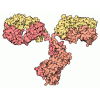
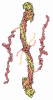
- Assembly
| Deposited unit | 
| ||||||||||||||||||||||||||||||||||||||||||||||||||||||||||||||||||||||||||||||||||||||||||||||||||||||||||||||||||||||||||||||||||||||||||||||||||||||
|---|---|---|---|---|---|---|---|---|---|---|---|---|---|---|---|---|---|---|---|---|---|---|---|---|---|---|---|---|---|---|---|---|---|---|---|---|---|---|---|---|---|---|---|---|---|---|---|---|---|---|---|---|---|---|---|---|---|---|---|---|---|---|---|---|---|---|---|---|---|---|---|---|---|---|---|---|---|---|---|---|---|---|---|---|---|---|---|---|---|---|---|---|---|---|---|---|---|---|---|---|---|---|---|---|---|---|---|---|---|---|---|---|---|---|---|---|---|---|---|---|---|---|---|---|---|---|---|---|---|---|---|---|---|---|---|---|---|---|---|---|---|---|---|---|---|---|---|---|---|---|---|
| 1 |
| ||||||||||||||||||||||||||||||||||||||||||||||||||||||||||||||||||||||||||||||||||||||||||||||||||||||||||||||||||||||||||||||||||||||||||||||||||||||
| Noncrystallographic symmetry (NCS) | NCS domain:
NCS domain segments:
|