MEMBRANE PROTEIN / Teichoic acid / Flippase / Transporter / Lipid transport
Function / homology
Function and homology information
electron transport chain / electron transfer activity / periplasmic space / iron ion binding / heme binding / plasma membrane Similarity search - Function
National Institutes of Health/National Institute of General Medical Sciences (NIH/NIGMS)
R35GM158187
United States
Citation
Journal: bioRxiv / Year: 2026 Title: Mechanistic basis of teichoic acid transport by a gatekeeper flippase. Authors: Gonzalo Cebrero / Amrutha H Chidananda / Eric Cester / Julien Dénéréaz / Elif Sena Demir / Alen T Mathew / D Ryan Bhowmik / Mario de Capitani / Jean-Louis Reymond / Natarajan Kannan / ...Authors: Gonzalo Cebrero / Amrutha H Chidananda / Eric Cester / Julien Dénéréaz / Elif Sena Demir / Alen T Mathew / D Ryan Bhowmik / Mario de Capitani / Jean-Louis Reymond / Natarajan Kannan / Fikri Y Avci / Jan-Willem Veening / Ahmad Reza Mehdipour / Camilo Perez Abstract: The cell wall is a complex structure that protects bacteria from environmental threats. Phosphocholine-containing teichoic acids are key cell wall biopolymers critical for host colonization, immune ...The cell wall is a complex structure that protects bacteria from environmental threats. Phosphocholine-containing teichoic acids are key cell wall biopolymers critical for host colonization, immune evasion, competence, and persistence in . The flippase TacF, a member of the multidrug/oligosaccharide-lipid/polysaccharide (MOP) superfamily, monitors the phosphocholine content of teichoic acids during transport, yet the underlying mechanism of this process remains unknown. We present a cryo-EM structure of TacF in lipid nanodiscs. complementation assays and molecular dynamics simulations reveal key residues involved in teichoic acid recognition and transport, while coevolutionary and conservation analyses delineate common mechanistic elements among MOP flippases, indicating a shared mechanism for polyprenyl-diphosphate-linked oligosaccharide lipid transport. Our findings provide mechanistic insights into an essential flippase involved in pathogenesis and a potential drug target.
History
Deposition
Aug 27, 2025
Deposition site: RCSB / Processing site: RCSB
Revision 1.0
Apr 29, 2026
Provider: repository / Type: Initial release
Revision 1.0
Apr 29, 2026
Data content type: EM metadata / Data content type: EM metadata / Provider: repository / Type: Initial release
Revision 1.0
Apr 29, 2026
Data content type: FSC / Data content type: FSC / Provider: repository / Type: Initial release
Revision 1.0
Apr 29, 2026
Data content type: Half map / Part number: 1 / Data content type: Half map / Provider: repository / Type: Initial release
Revision 1.0
Apr 29, 2026
Data content type: Half map / Part number: 2 / Data content type: Half map / Provider: repository / Type: Initial release
Revision 1.0
Apr 29, 2026
Data content type: Image / Data content type: Image / Provider: repository / Type: Initial release
Revision 1.0
Apr 29, 2026
Data content type: Primary map / Data content type: Primary map / Provider: repository / Type: Initial release
Data content type: EM metadata / Data content type: EM metadata / EM metadata / Group: Database references / Experimental summary / Data content type: EM metadata / EM metadata / EM metadata / Category: citation / citation_author / em_admin Data content type: EM metadata / EM metadata ...EM metadata / EM metadata / EM metadata / EM metadata / EM metadata / EM metadata / EM metadata / EM metadata / EM metadata Item: _citation.country / _citation.journal_abbrev ..._citation.country / _citation.journal_abbrev / _citation.journal_id_CSD / _citation.journal_id_ISSN / _citation.pdbx_database_id_DOI / _citation.pdbx_database_id_PubMed / _citation.title / _citation.year / _em_admin.last_update
In the structure databanks used in Yorodumi, some data are registered as the other names, "COVID-19 virus" and "2019-nCoV". Here are the details of the virus and the list of structure data.
Jan 31, 2019. EMDB accession codes are about to change! (news from PDBe EMDB page)
EMDB accession codes are about to change! (news from PDBe EMDB page)
The allocation of 4 digits for EMDB accession codes will soon come to an end. Whilst these codes will remain in use, new EMDB accession codes will include an additional digit and will expand incrementally as the available range of codes is exhausted. The current 4-digit format prefixed with “EMD-” (i.e. EMD-XXXX) will advance to a 5-digit format (i.e. EMD-XXXXX), and so on. It is currently estimated that the 4-digit codes will be depleted around Spring 2019, at which point the 5-digit format will come into force.
The EM Navigator/Yorodumi systems omit the EMD- prefix.
Related info.:Q: What is EMD? / ID/Accession-code notation in Yorodumi/EM Navigator
Yorodumi is a browser for structure data from EMDB, PDB, SASBDB, etc.
This page is also the successor to EM Navigator detail page, and also detail information page/front-end page for Omokage search.
The word "yorodu" (or yorozu) is an old Japanese word meaning "ten thousand". "mi" (miru) is to see.
Related info.:EMDB / PDB / SASBDB / Comparison of 3 databanks / Yorodumi Search / Aug 31, 2016. New EM Navigator & Yorodumi / Yorodumi Papers / Jmol/JSmol / Function and homology information / Changes in new EM Navigator and Yorodumi
 Movie
Movie Controller


 Open data
 Basic information
 Components
 Keywords
 Function and homology information
 Escherichia coli (E. coli)
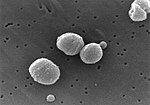 Streptococcus pneumoniae (bacteria)
 Authors
 Switzerland,
  United States, 2items
  Citation
 Structure visualization
 Downloads & links
 Other downloads
 PDBj
PDBj
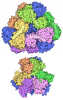
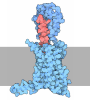
 Assembly
 Sample preparation
 Homo sapiens (human)
 Electron microscopy imaging
 FIELD EMISSION GUN / Accelerating voltage: 200 kV / Illumination mode: FLOOD BEAM
 Processing