 Movie
Movie Controller

[English] 日本語
 Yorodumi
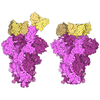
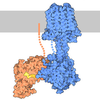
- PDB-9xn3: Glucose-dependent insulinotropic polypeptide receptor-Gs complex ... -
+ Open data

- Basic information
| Entry | Database: PDB / ID: 9xn3 | ||||||||||||
|---|---|---|---|---|---|---|---|---|---|---|---|---|---|
| Title | Glucose-dependent insulinotropic polypeptide receptor-Gs complex activated by the small molecule agonist SIM1 | ||||||||||||
 Components Components |
| ||||||||||||
 Keywords Keywords | MEMBRANE PROTEIN/IMMUNE SYSTEM / Small molecule agonist / complex / GIPR / MEMBRANE PROTEIN / MEMBRANE PROTEIN-IMMUNE SYSTEM complex | ||||||||||||
| Function / homology |  Function and homology information Function and homology informationgastric inhibitory peptide receptor activity / glucagon family peptide binding / gastric inhibitory peptide signaling pathway / response to fatty acid / desensitization of G protein-coupled receptor signaling pathway / G-protein activation / Activation of the phototransduction cascade / Glucagon-type ligand receptors / Thromboxane signalling through TP receptor / Sensory perception of sweet, bitter, and umami (glutamate) taste ...gastric inhibitory peptide receptor activity / glucagon family peptide binding / gastric inhibitory peptide signaling pathway / response to fatty acid / desensitization of G protein-coupled receptor signaling pathway / G-protein activation / Activation of the phototransduction cascade / Glucagon-type ligand receptors / Thromboxane signalling through TP receptor / Sensory perception of sweet, bitter, and umami (glutamate) taste / G beta:gamma signalling through PI3Kgamma / G beta:gamma signalling through CDC42 / Cooperation of PDCL (PhLP1) and TRiC/CCT in G-protein beta folding / G protein-coupled peptide receptor activity / Activation of G protein gated Potassium channels / Inhibition of voltage gated Ca2+ channels via Gbeta/gamma subunits / Ca2+ pathway / G alpha (z) signalling events / High laminar flow shear stress activates signaling by PIEZO1 and PECAM1:CDH5:KDR in endothelial cells / Glucagon-like Peptide-1 (GLP1) regulates insulin secretion / Vasopressin regulates renal water homeostasis via Aquaporins / Adrenaline,noradrenaline inhibits insulin secretion / ADP signalling through P2Y purinoceptor 12 / G alpha (q) signalling events / G alpha (i) signalling events / Thrombin signalling through proteinase activated receptors (PARs) / Activation of G protein gated Potassium channels / G-protein activation / G beta:gamma signalling through PI3Kgamma / Prostacyclin signalling through prostacyclin receptor / G beta:gamma signalling through PLC beta / ADP signalling through P2Y purinoceptor 1 / Thromboxane signalling through TP receptor / Presynaptic function of Kainate receptors / G beta:gamma signalling through CDC42 / Inhibition of voltage gated Ca2+ channels via Gbeta/gamma subunits / G alpha (12/13) signalling events / Glucagon-type ligand receptors / G beta:gamma signalling through BTK / ADP signalling through P2Y purinoceptor 12 / Adrenaline,noradrenaline inhibits insulin secretion / Cooperation of PDCL (PhLP1) and TRiC/CCT in G-protein beta folding / Ca2+ pathway / G alpha (z) signalling events / Thrombin signalling through proteinase activated receptors (PARs) / Extra-nuclear estrogen signaling / G alpha (q) signalling events / G alpha (s) signalling events / photoreceptor outer segment membrane / Glucagon-like Peptide-1 (GLP1) regulates insulin secretion / spectrin binding / G alpha (i) signalling events / High laminar flow shear stress activates signaling by PIEZO1 and PECAM1:CDH5:KDR in endothelial cells / Vasopressin regulates renal water homeostasis via Aquaporins / sensory perception of taste / alkylglycerophosphoethanolamine phosphodiesterase activity / regulation of insulin secretion / retina development in camera-type eye / response to axon injury / peptide hormone binding / response to glucose / cardiac muscle cell apoptotic process / photoreceptor outer segment / activation of adenylate cyclase activity / photoreceptor inner segment / response to nutrient / positive regulation of insulin secretion / generation of precursor metabolites and energy / response to calcium ion / cell population proliferation / adenylate cyclase-modulating G protein-coupled receptor signaling pathway / phospholipase C-activating G protein-coupled receptor signaling pathway / Glucagon-type ligand receptors / transmembrane signaling receptor activity / cellular response to catecholamine stimulus / adenylate cyclase-activating dopamine receptor signaling pathway / cellular response to prostaglandin E stimulus / heterotrimeric G-protein complex / G-protein beta-subunit binding / positive regulation of cytosolic calcium ion concentration / adenylate cyclase-activating G protein-coupled receptor signaling pathway / signaling receptor complex adaptor activity / GTPase binding / cell body / cellular response to hypoxia / G alpha (s) signalling events / cell surface receptor signaling pathway / G protein-coupled receptor signaling pathway / GTPase activity / dendrite / synapse / protein-containing complex binding / membrane / plasma membrane Similarity search - Function | ||||||||||||
| Biological species |   Bos taurus (domestic cattle) Bos taurus (domestic cattle) Rattus norvegicus (Norway rat) Rattus norvegicus (Norway rat) Lama glama (llama) Lama glama (llama) Homo sapiens (human) Homo sapiens (human) | ||||||||||||
| Method | ELECTRON MICROSCOPY / single particle reconstruction / cryo EM / Resolution: 2.74 Å | ||||||||||||
 Authors Authors | Xu, H.E. / Shan, H. / He, Q. / Zhao, L. | ||||||||||||
| Funding support |  China, 3items China, 3items
| ||||||||||||
 Citation Citation | Journal: Acta Pharmacol Sin / Year: 2026 Title: Structural basis for small-molecule agonism at GCGR and GIPR via a conserved intracellular allosteric site. Authors: Qian He / Hong Shan / Wen Hu / H Eric Xu / Li-Hua Zhao / Abstract: The glucagon receptor (GCGR) and gastric inhibitory polypeptide receptor (GIPR) are class B GPCRs that regulate glucose homeostasis and energy balance, making them key targets for type 2 diabetes and ...The glucagon receptor (GCGR) and gastric inhibitory polypeptide receptor (GIPR) are class B GPCRs that regulate glucose homeostasis and energy balance, making them key targets for type 2 diabetes and obesity. Achieving preferential G signaling at these receptors with small molecules remains an unmet challenge. Here, we report SIM1, developed through optimization of the PCO371 scaffold, which exhibits preferential G signaling at GCGR and GIPR with minimal detectable β-arrestin recruitment and substantially improved efficacy at GIPR. Cryo-EM structures of SIM1-GCGR-G (2.53 Å) and SIM1-GIPR-G (2.74 Å) reveal a shared intracellular allosteric interface at the receptor-G protein coupling region, distinct from extracellular peptide recognition. Structural comparison with GLP1R suggests that intracellular conformational constraints contribute to differential SIM1 responsiveness, which is restored by targeted mutations. Guided by these insights, analogs SIM2 and SIM3 exhibited up to 20-fold enhanced potency while maintaining an apparent preferential G signaling profile. These findings reveal a conserved intracellular allosteric activation mechanism across multiple class B GPCRs and identify SIM1 and its analogs as valuable chemical tools for investigating receptor-specific intracellular allosteric regulation and G protein-preferential signaling. | ||||||||||||
| History |
|
- Structure visualization
| Structure viewer | Molecule: MolmilJmol/JSmol |
|---|
- Downloads & links
-Download
| PDBx/mmCIF format | 9xn3.cif.gz | 229 KB | Display | PDBx/mmCIF format |
|---|---|---|---|---|
| PDB format | pdb9xn3.ent.gz | Display | PDB format | |
| PDBx/mmJSON format | 9xn3.json.gz | Tree view | PDBx/mmJSON format | |
| Others |  Other downloads Other downloads |
-Validation report
| Arichive directory | https://data.pdbj.org/pub/pdb/validation_reports/xn/9xn3ftp://data.pdbj.org/pub/pdb/validation_reports/xn/9xn3 | HTTPS FTP |
|---|
-Related structure data
| Related structure data |  67037MC  9xn2C  9xn4C M: map data used to model this data C: citing same article ( |
|---|---|
| Similar structure data |


-Links
 PDBj
PDBj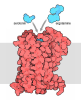
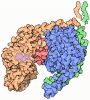
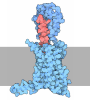
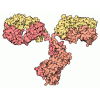
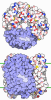
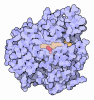
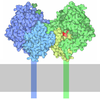
- Assembly
| Deposited unit | 
|
|---|---|
| 1 |
|
-Components
-Guanine nucleotide-binding protein ... , 3 types, 3 molecules ABC
| #1: Protein | Mass: 41879.465 Da / Num. of mol.: 1 Source method: isolated from a genetically manipulated source Source: (gene. exp.) Bos taurus (domestic cattle) / Production host:  Trichoplusia ni (cabbage looper) Trichoplusia ni (cabbage looper) |
|---|---|
| #2: Protein | Mass: 37915.496 Da / Num. of mol.: 1 Source method: isolated from a genetically manipulated source Source: (gene. exp.) Rattus norvegicus (Norway rat) / Gene: Gnb1 / Production host: Trichoplusia ni (cabbage looper) / References: UniProt: P54311 |
| #3: Protein | Mass: 7861.143 Da / Num. of mol.: 1 Source method: isolated from a genetically manipulated source Source: (gene. exp.) Bos taurus (domestic cattle) / Gene: GNG2 / Production host: Trichoplusia ni (cabbage looper) / References: UniProt: P63212 |
-Antibody / Protein / Non-polymers , 3 types, 3 molecules NR
| #4: Antibody | Mass: 14087.715 Da / Num. of mol.: 1 Source method: isolated from a genetically manipulated source Source: (gene. exp.) Lama glama (llama) / Production host:   Escherichia coli (E. coli) Escherichia coli (E. coli) |
|---|---|
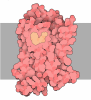
| #5: Protein | Mass: 46304.742 Da / Num. of mol.: 1 Source method: isolated from a genetically manipulated source Source: (gene. exp.) Homo sapiens (human) / Gene: GIPR / Production host: Trichoplusia ni (cabbage looper) / References: UniProt: P48546 |
| #6: Chemical | ChemComp-A1E0Y / Mass: 606.613 Da / Num. of mol.: 1 / Source method: obtained synthetically / Formula: C28H29F3N4O6S |
-Details
| Has ligand of interest | Y |
|---|---|
| Has protein modification | Y |
-Experimental details
-Experiment
| Experiment | Method: ELECTRON MICROSCOPY |
|---|---|
| EM experiment | Aggregation state: PARTICLE / 3D reconstruction method: single particle reconstruction |
- Sample preparation
| Component | Name: Glucose-dependent insulinotropic polypeptide receptor-Gs complex activated by the small molecule agonist SIM1 Type: COMPLEX / Entity ID: #1-#5 / Source: MULTIPLE SOURCES |
|---|---|
| Source (natural) | Organism: Homo sapiens (human) |
| Source (recombinant) | Organism: 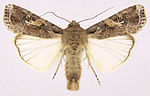 Spodoptera frugiperda (fall armyworm) Spodoptera frugiperda (fall armyworm) |
| Buffer solution | pH: 7.4 |
| Specimen | Embedding applied: NO / Shadowing applied: NO / Staining applied: NO / Vitrification applied: YES |
| Vitrification | Cryogen name: ETHANE |
- Electron microscopy imaging
| Experimental equipment |  Model: Titan Krios / Image courtesy: FEI Company |
|---|---|
| Microscopy | Model: TFS KRIOS |
| Electron gun | Electron source:  FIELD EMISSION GUN / Accelerating voltage: 300 kV / Illumination mode: FLOOD BEAM FIELD EMISSION GUN / Accelerating voltage: 300 kV / Illumination mode: FLOOD BEAM |
| Electron lens | Mode: BRIGHT FIELD / Nominal defocus max: 3000 nm / Nominal defocus min: 1000 nm |
| Image recording | Electron dose: 50 e/Å2 / Film or detector model: GATAN K3 BIOCONTINUUM (6k x 4k) |
- Processing
| EM software |
| ||||||||||||||||||||
|---|---|---|---|---|---|---|---|---|---|---|---|---|---|---|---|---|---|---|---|---|---|
| CTF correction | Type: NONE | ||||||||||||||||||||
| 3D reconstruction | Resolution: 2.74 Å / Resolution method: FSC 0.143 CUT-OFF / Num. of particles: 250121 / Symmetry type: POINT |
