 Movie
Movie Controller


+ Open data

- Basic information
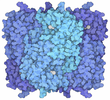
| Entry | Database: PDB / ID: 9xfi | |||||||||
|---|---|---|---|---|---|---|---|---|---|---|
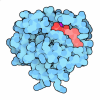
| Title | Cryo-EM structure of the Bavachalcone bound FFAR4-Giq complex | |||||||||
 Components Components |
| |||||||||
 Keywords Keywords | MEMBRANE PROTEIN / Complex / Agonist | |||||||||
| Function / homology |  Function and homology information Function and homology informationnegative regulation of somatostatin secretion / positive regulation of glucagon secretion / ghrelin secretion / regulation of D-glucose transmembrane transport / Free fatty acid receptors / positive regulation of gonadotropin secretion / hormone secretion / phospholipase C-activating tachykinin receptor signaling pathway / Fatty Acids bound to GPR40 (FFAR1) regulate insulin secretion / Acetylcholine regulates insulin secretion ...negative regulation of somatostatin secretion / positive regulation of glucagon secretion / ghrelin secretion / regulation of D-glucose transmembrane transport / Free fatty acid receptors / positive regulation of gonadotropin secretion / hormone secretion / phospholipase C-activating tachykinin receptor signaling pathway / Fatty Acids bound to GPR40 (FFAR1) regulate insulin secretion / Acetylcholine regulates insulin secretion / taste receptor activity / phospholipase C-activating G protein-coupled glutamate receptor signaling pathway / regulation of platelet activation / PLC beta mediated events / phospholipase C-activating serotonin receptor signaling pathway / entrainment of circadian clock / sensory perception of itch / positive regulation of membrane depolarization / phototransduction, visible light / arrestin family protein binding / negative regulation of cytokine production / regulation of canonical Wnt signaling pathway / white fat cell differentiation / negative regulation of interleukin-1 beta production / ciliary membrane / glutamate receptor signaling pathway / positive regulation of osteoblast differentiation / brown fat cell differentiation / positive regulation of brown fat cell differentiation / postsynaptic cytosol / endocytic vesicle / photoreceptor outer segment / hormone-mediated signaling pathway / cellular response to acidic pH / regulation of eating behavior / adenylate cyclase inhibitor activity / T cell migration / positive regulation of protein localization to cell cortex / positive regulation of relaxation of smooth muscle / Adenylate cyclase inhibitory pathway / D2 dopamine receptor binding / adenylate cyclase-inhibiting dopamine receptor signaling pathway / GTPase activator activity / adenylate cyclase-inhibiting serotonin receptor signaling pathway / G protein-coupled serotonin receptor binding / Turbulent (oscillatory, disturbed) flow shear stress activates signaling by PIEZO1 and integrins in endothelial cells / regulation of G protein-coupled receptor signaling pathway / fatty acid binding / cellular response to forskolin / regulation of mitotic spindle organization / mast cell degranulation / chemokine-mediated signaling pathway / establishment of mitotic spindle orientation / neuropeptide signaling pathway / Regulation of insulin secretion / response to prostaglandin E / negative regulation of inflammatory response / positive regulation of cholesterol biosynthetic process / G protein-coupled receptor binding / response to peptide hormone / blood coagulation / G protein-coupled receptor activity / G-protein beta/gamma-subunit complex binding / adenylate cyclase-inhibiting G protein-coupled receptor signaling pathway / adenylate cyclase-modulating G protein-coupled receptor signaling pathway / phospholipase C-activating G protein-coupled receptor signaling pathway / Olfactory Signaling Pathway / Activation of the phototransduction cascade / G protein-coupled acetylcholine receptor signaling pathway / G beta:gamma signalling through PLC beta / Presynaptic function of Kainate receptors / Thromboxane signalling through TP receptor / Activation of G protein gated Potassium channels / Inhibition of voltage gated Ca2+ channels via Gbeta/gamma subunits / G-protein activation / Glucagon signaling in metabolic regulation / G beta:gamma signalling through CDC42 / Prostacyclin signalling through prostacyclin receptor / Synthesis, secretion, and inactivation of Glucagon-like Peptide-1 (GLP-1) / GDP binding / photoreceptor disc membrane / G beta:gamma signalling through BTK / ADP signalling through P2Y purinoceptor 12 / glucose homeostasis / Sensory perception of sweet, bitter, and umami (glutamate) taste / Glucagon-type ligand receptors / cilium / Adrenaline,noradrenaline inhibits insulin secretion / Vasopressin regulates renal water homeostasis via Aquaporins / G alpha (z) signalling events / Glucagon-like Peptide-1 (GLP1) regulates insulin secretion / cellular response to catecholamine stimulus / ADP signalling through P2Y purinoceptor 1 / G beta:gamma signalling through PI3Kgamma / ADORA2B mediated anti-inflammatory cytokines production / adenylate cyclase-activating dopamine receptor signaling pathway / cellular response to prostaglandin E stimulus / Cooperation of PDCL (PhLP1) and TRiC/CCT in G-protein beta folding / positive regulation of cold-induced thermogenesis / GPER1 signaling Similarity search - Function | |||||||||
| Biological species |  Homo sapiens (human) Homo sapiens (human) | |||||||||
| Method | ELECTRON MICROSCOPY / single particle reconstruction / cryo EM / Resolution: 2.99 Å | |||||||||
 Authors Authors | Zhu, S. / Wang, Z. | |||||||||
| Funding support | 1items
| |||||||||
 Citation Citation | Journal: Nat Commun / Year: 2026 Title: Gα activation of free fatty acid receptor 4 suppresses metabolic dysfunction by disrupting Nr1h3-PPARγ axis. Authors: Yulin Kong / Jixia Wang / Zhen Wang / Shuting Yang / Xianlong Ye / Wei Wang / Hui Wang / Wanjun Deng / Yanfang Liu / Fangfang Xu / Tao Hou / Yaopeng Zhao / Binyu Zhang / Xuekui Yu / Yongquan ...Authors: Yulin Kong / Jixia Wang / Zhen Wang / Shuting Yang / Xianlong Ye / Wei Wang / Hui Wang / Wanjun Deng / Yanfang Liu / Fangfang Xu / Tao Hou / Yaopeng Zhao / Binyu Zhang / Xuekui Yu / Yongquan Chen / Xinmiao Liang / Shenglong Zhu /  Abstract: Maintenance of glucose and lipid homeostasis is essential for metabolic health, and its dysregulation, driven by complex gene-environment interactions-underlies various metabolic disorders. Free ...Maintenance of glucose and lipid homeostasis is essential for metabolic health, and its dysregulation, driven by complex gene-environment interactions-underlies various metabolic disorders. Free fatty acid receptor 4 (FFAR4) has been proposed to link dietary signals with genetic metabolic predisposition, yet the precise mechanisms underlying the pathophysiological function of FFAR4 remain elusive and lack of the highly selective FFAR4 agonists. Our study shed light on the pivotal role of FFAR4 in metabolic homeostasis within metabolic organs. Hepatic FFAR4 deficiency in mice exacerbates lipid accumulation and promoted severe steatosis, whereas its overexpression ameliorates diet-induced metabolic dysfunction. Mechanistically, suppression of hepatic FFAR4 promotes lipogenesis by enhancing co-activation of the nuclear receptor Nr1h3 and PPARγ. Furthermore, we identify bavachalcone, a non-carboxylated compound isolated from the traditional Chinese medicine Psoralea corylifolia L., as a functionally effective FFAR4 agonist, which could robustly attenuate metabolic dysfunction. Structural analysis using cryo-electron microscopy reveals the binding mode of bavachalcone within the FFAR4-Gα complex and illuminated the underlying mechanisms. In conclusion, our findings highlight an indispensable role of hepatic FFAR4 in counteracting metabolic dysregulation and identify bavachalcone as a selective and translatable FFAR4 agonist worthy of further clinical evaluation. | |||||||||
| History |
|
- Structure visualization
| Structure viewer | Molecule: MolmilJmol/JSmol |
|---|
- Downloads & links
-Download
| PDBx/mmCIF format | 9xfi.cif.gz | 195.9 KB | Display | PDBx/mmCIF format |
|---|---|---|---|---|
| PDB format | pdb9xfi.ent.gz | Display | PDB format | |
| PDBx/mmJSON format | 9xfi.json.gz | Tree view | PDBx/mmJSON format | |
| Others |  Other downloads Other downloads |
-Validation report
| Arichive directory | https://data.pdbj.org/pub/pdb/validation_reports/xf/9xfiftp://data.pdbj.org/pub/pdb/validation_reports/xf/9xfi | HTTPS FTP |
|---|
-Related structure data
| Related structure data |  66823MC  9xfjC M: map data used to model this data C: citing same article ( |
|---|---|
| Similar structure data |

-Links
 PDBj
PDBj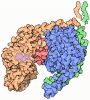
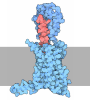

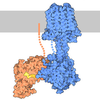
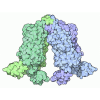

- Assembly
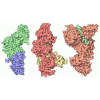
| Deposited unit | 
|
|---|---|
| 1 |
|
-Components
| #1: Protein | Mass: 40533.211 Da / Num. of mol.: 1 Source method: isolated from a genetically manipulated source Source: (gene. exp.) Homo sapiens (human) / Gene: FFAR4, GPR120, GPR129, O3FAR1, PGR4 / Production host:   Spodoptera frugiperda (fall armyworm) / References: UniProt: Q5NUL3 Spodoptera frugiperda (fall armyworm) / References: UniProt: Q5NUL3 |
|---|---|
| #2: Protein | Mass: 39020.664 Da / Num. of mol.: 1 Source method: isolated from a genetically manipulated source Source: (gene. exp.) Homo sapiens (human) / Gene: GNB1 / Production host: Spodoptera frugiperda (fall armyworm) / References: UniProt: P62873 |
| #3: Protein | Mass: 7861.143 Da / Num. of mol.: 1 Source method: isolated from a genetically manipulated source Source: (gene. exp.) Homo sapiens (human) / Gene: GNG2 / Production host: Spodoptera frugiperda (fall armyworm) / References: UniProt: P59768 |
| #4: Protein | Mass: 40555.199 Da / Num. of mol.: 1 Source method: isolated from a genetically manipulated source Details: Gi-Gq chimera / Source: (gene. exp.) Homo sapiens (human) / Gene: GNAI1, GNAQ, GAQ / Production host: Spodoptera frugiperda (fall armyworm)References: UniProt: P63096, UniProt: P50148, Hydrolases; Acting on acid anhydrides; Acting on GTP to facilitate cellular and subcellular movement |
| #5: Chemical | ChemComp-A1EZZ / (~{ Mass: 324.370 Da / Num. of mol.: 1 / Source method: obtained synthetically / Formula: C20H20O4 / Feature type: SUBJECT OF INVESTIGATION |
| Has ligand of interest | Y |
| Has protein modification | Y |
-Experimental details
-Experiment
| Experiment | Method: ELECTRON MICROSCOPY |
|---|---|
| EM experiment | Aggregation state: PARTICLE / 3D reconstruction method: single particle reconstruction |
- Sample preparation
| Component | Name: The Bavachalcone bound FFAR4-Giq complex / Type: COMPLEX / Entity ID: #1-#4 / Source: RECOMBINANT |
|---|---|
| Source (natural) | Organism: Homo sapiens (human) |
| Source (recombinant) | Organism: Spodoptera frugiperda (fall armyworm) |
| Buffer solution | pH: 7.4 |
| Specimen | Embedding applied: NO / Shadowing applied: NO / Staining applied: NO / Vitrification applied: YES |
| Vitrification | Cryogen name: ETHANE |
- Electron microscopy imaging
| Experimental equipment |  Model: Titan Krios / Image courtesy: FEI Company |
|---|---|
| Microscopy | Model: TFS KRIOS |
| Electron gun | Electron source:  FIELD EMISSION GUN / Accelerating voltage: 300 kV / Illumination mode: FLOOD BEAM FIELD EMISSION GUN / Accelerating voltage: 300 kV / Illumination mode: FLOOD BEAM |
| Electron lens | Mode: BRIGHT FIELD / Nominal defocus max: 2000 nm / Nominal defocus min: 1500 nm |
| Image recording | Electron dose: 60 e/Å2 / Film or detector model: GATAN K3 (6k x 4k) |
- Processing
| EM software |
| ||||||||||||||||
|---|---|---|---|---|---|---|---|---|---|---|---|---|---|---|---|---|---|
| CTF correction | Type: PHASE FLIPPING AND AMPLITUDE CORRECTION | ||||||||||||||||
| 3D reconstruction | Resolution: 2.99 Å / Resolution method: FSC 0.143 CUT-OFF / Num. of particles: 186477 / Symmetry type: POINT |
