 Movie
Movie Controller


+ Open data

- Basic information
| Entry | Database: PDB / ID: 9vg1 | ||||||||||||||||||||||||
|---|---|---|---|---|---|---|---|---|---|---|---|---|---|---|---|---|---|---|---|---|---|---|---|---|---|
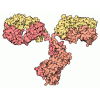
| Title | Structure of CVA6 empty capsid complexed with 3H7 Fab | ||||||||||||||||||||||||
 Components Components |
| ||||||||||||||||||||||||
 Keywords Keywords | VIRUS / coxsackievirus A6 / KRM1 / receptor | ||||||||||||||||||||||||
| Function / homology |  Function and homology information Function and homology informationsymbiont-mediated suppression of host cytoplasmic pattern recognition receptor signaling pathway via inhibition of MDA-5 activity / picornain 2A / symbiont-mediated suppression of host mRNA export from nucleus / symbiont genome entry into host cell via pore formation in plasma membrane / picornain 3C / T=pseudo3 icosahedral viral capsid / host cell cytoplasmic vesicle membrane / ribonucleoside triphosphate phosphatase activity / nucleoside-triphosphate phosphatase / channel activity ...symbiont-mediated suppression of host cytoplasmic pattern recognition receptor signaling pathway via inhibition of MDA-5 activity / picornain 2A / symbiont-mediated suppression of host mRNA export from nucleus / symbiont genome entry into host cell via pore formation in plasma membrane / picornain 3C / T=pseudo3 icosahedral viral capsid / host cell cytoplasmic vesicle membrane / ribonucleoside triphosphate phosphatase activity / nucleoside-triphosphate phosphatase / channel activity / monoatomic ion transmembrane transport / host cell cytoplasm / DNA replication / RNA helicase activity / endocytosis involved in viral entry into host cell / symbiont-mediated activation of host autophagy / RNA-directed RNA polymerase / cysteine-type endopeptidase activity / viral RNA genome replication / RNA-directed RNA polymerase activity / symbiont entry into host cell / virion attachment to host cell / host cell nucleus / structural molecule activity / proteolysis / DNA-templated transcription / RNA binding / zinc ion binding / ATP binding Similarity search - Function | ||||||||||||||||||||||||
| Biological species |   Mus musculus (house mouse) Mus musculus (house mouse) Coxsackievirus A6 Coxsackievirus A6 | ||||||||||||||||||||||||
| Method | ELECTRON MICROSCOPY / single particle reconstruction / cryo EM / Resolution: 3.26 Å | ||||||||||||||||||||||||
 Authors Authors | Ke, X. / Li, X. / Liu, Z. / Liu, K. / Yan, X. / Shu, B. / Zhang, C. | ||||||||||||||||||||||||
| Funding support |  China, 1items China, 1items
| ||||||||||||||||||||||||
 Citation Citation | Journal: Nat Commun / Year: 2025 Title: Molecular mechanisms of receptor recognition and antibody neutralization of coxsackievirus A6. Authors: Xianliang Ke / Xue Li / Zeyu Liu / Kexin Liu / Weichi Liu / Xingyu Yan / Bo Shu / Chao Zhang / Abstract: Coxsackievirus A6 (CVA6), a major cause of hand, foot, and mouth disease, lacks approved vaccines or drugs. KRM1 is its only known receptor, but its precise role remains unclear. This study ...Coxsackievirus A6 (CVA6), a major cause of hand, foot, and mouth disease, lacks approved vaccines or drugs. KRM1 is its only known receptor, but its precise role remains unclear. This study investigates CVA6's entry mechanism and antibody neutralization. Cryo-EM shows CVA6 clinical strain HeB primarily exists as mature virions. KRM1 binding within the canyon triggers conversion to uncoating intermediate, defining KRM1 as an uncoating receptor for CVA6. However, KRM1 knockout reduces CVA6 infectivity without affecting attachment. Conversely, disrupting heparan sulfate proteoglycan (HSPG) impairs both viral attachment and infectivity, and CVA6 virions bind heparin directly. These results support a two-receptor entry model for CVA6: HSPG mediates viral attachment, while KRM1 induces uncoating. Additionally, we develop two CVA6-specific protective antibodies (1F4 and 3H7), targeting a new antigenic site near the three-fold axis of the viral capsid. These antibodies sterically block KRM1 binding and function post-attachment, consistent with KRM1's role. The findings elucidate CVA6 entry and offer a basis for antibody interventions. | ||||||||||||||||||||||||
| History |
|
- Structure visualization
| Structure viewer | Molecule: MolmilJmol/JSmol |
|---|
- Downloads & links
-Download
| PDBx/mmCIF format | 9vg1.cif.gz | 165.2 KB | Display | PDBx/mmCIF format |
|---|---|---|---|---|
| PDB format | pdb9vg1.ent.gz | 125.1 KB | Display | PDB format |
| PDBx/mmJSON format | 9vg1.json.gz | Tree view | PDBx/mmJSON format | |
| Others |  Other downloads Other downloads |
-Validation report
| Arichive directory | https://data.pdbj.org/pub/pdb/validation_reports/vg/9vg1ftp://data.pdbj.org/pub/pdb/validation_reports/vg/9vg1 | HTTPS FTP |
|---|
-Related structure data
| Related structure data |  65043MC  9vfpC  9vfqC  9vfrC  9vfsC  9vftC  9vfuC M: map data used to model this data C: citing same article ( |
|---|---|
| Similar structure data |


-Links
 PDBj
PDBj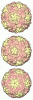
- Assembly
| Deposited unit | 
|
|---|---|
| 1 | x 60
|
-Components
| #1: Antibody | Mass: 11801.076 Da / Num. of mol.: 1 Source method: isolated from a genetically manipulated source Source: (gene. exp.) Mus musculus (house mouse) / Production host: Mus musculus (house mouse) |
|---|---|
| #2: Antibody | Mass: 13671.104 Da / Num. of mol.: 1 Source method: isolated from a genetically manipulated source Source: (gene. exp.) Mus musculus (house mouse) / Production host: Mus musculus (house mouse) |
| #3: Protein | Mass: 33568.379 Da / Num. of mol.: 1 / Source method: isolated from a natural source Details: THE FIRST AMINO-ACID OF VP1 IN THE CORRESPONDING SECTION OF THE GENBANK POLYPROTEIN ENTRY (AAR38844) (ASN) IS NOT THE ACTUAL FIRST RESIDUE AS THE PROTEOLYTIC CLEAVAGE OF THE VIRAL ...Details: THE FIRST AMINO-ACID OF VP1 IN THE CORRESPONDING SECTION OF THE GENBANK POLYPROTEIN ENTRY (AAR38844) (ASN) IS NOT THE ACTUAL FIRST RESIDUE AS THE PROTEOLYTIC CLEAVAGE OF THE VIRAL POLYPROTEIN OCCURS AT AN ALTERNATIVE LOCATION, LEAVING THE FOLLOWING RESIDUE ASP-2 AS THE FIRST RESIDUE (D-1), AND THE ASN AS THE EXTRA C-TERM RESIDUE DESCRIBED FOR VP3 (N-241) AS IT WAS OBSERVED IN THE VIRION. Source: (natural) Coxsackievirus A6 / References: UniProt: A0A222NWY2 |
| #4: Protein | Mass: 26324.760 Da / Num. of mol.: 1 / Source method: isolated from a natural source / Source: (natural) Coxsackievirus A6References: UniProt: A0A4P2SK07, picornain 2A, nucleoside-triphosphate phosphatase, picornain 3C, RNA-directed RNA polymerase |
| #5: Protein | Mass: 28138.604 Da / Num. of mol.: 1 / Source method: isolated from a natural source / Source: (natural) Coxsackievirus A6References: UniProt: A0A7D0TR32, picornain 2A, nucleoside-triphosphate phosphatase, picornain 3C, RNA-directed RNA polymerase |
| Has protein modification | Y |
-Experimental details
-Experiment
| Experiment | Method: ELECTRON MICROSCOPY |
|---|---|
| EM experiment | Aggregation state: PARTICLE / 3D reconstruction method: single particle reconstruction |
- Sample preparation
| Component | Name: purified CVA6 virus complexed with 3H7 Fab / Type: COMPLEX Details: Purified Coxsackievirus A6 (CV-A6) virions were combined with KRM1 proteins at a 1:120 molar ratio (virus:protein) in PBS (pH 7.4). The binding reaction was carried out at room temperature ...Details: Purified Coxsackievirus A6 (CV-A6) virions were combined with KRM1 proteins at a 1:120 molar ratio (virus:protein) in PBS (pH 7.4). The binding reaction was carried out at room temperature for 35 minutes to allow complex formation. Immediately following incubation, samples were rapidly vitrified for cryo-EM analysis by plunge-freezing in liquid ethane. Entity ID: all / Source: RECOMBINANT |
|---|---|
| Source (natural) | Organism:  Homo sapiens (human) Homo sapiens (human) |
| Source (recombinant) | Organism: Homo sapiens (human) |
| Buffer solution | pH: 7.4 |
| Specimen | Conc.: 3.12 mg/ml / Embedding applied: NO / Shadowing applied: NO / Staining applied: NO / Vitrification applied: YES |
| Specimen support | Grid material: COPPER / Grid mesh size: 400 divisions/in. / Grid type: EMS Lacey Carbon |
| Vitrification | Instrument: FEI VITROBOT MARK IV / Cryogen name: ETHANE / Humidity: 100 % / Chamber temperature: 273 K |
- Electron microscopy imaging
| Microscopy | Model: JEOL CRYO ARM 300 |
|---|---|
| Electron gun | Electron source:  FIELD EMISSION GUN / Accelerating voltage: 300 kV / Illumination mode: FLOOD BEAM FIELD EMISSION GUN / Accelerating voltage: 300 kV / Illumination mode: FLOOD BEAM |
| Electron lens | Mode: BRIGHT FIELD / Nominal defocus max: 2500 nm / Nominal defocus min: 500 nm / Cs: 2.7 mm / Alignment procedure: BASIC |
| Specimen holder | Cryogen: NITROGEN / Specimen holder model: JEOL CRYOSPECPORTER |
| Image recording | Average exposure time: 2.7 sec. / Electron dose: 40 e/Å2 / Film or detector model: GATAN K3 BIOQUANTUM (6k x 4k) / Num. of grids imaged: 1 / Num. of real images: 8563 |
- Processing
| EM software |
| |||||||||
|---|---|---|---|---|---|---|---|---|---|---|
| CTF correction | Type: PHASE FLIPPING AND AMPLITUDE CORRECTION | |||||||||
| Particle selection | Num. of particles selected: 202528 | |||||||||
| Symmetry | Point symmetry: I (icosahedral) | |||||||||
| 3D reconstruction | Resolution: 3.26 Å / Resolution method: FSC 0.143 CUT-OFF / Num. of particles: 810 / Algorithm: FOURIER SPACE / Symmetry type: POINT | |||||||||
| Atomic model building | Protocol: AB INITIO MODEL / Space: REAL | |||||||||
| Refinement | Highest resolution: 3.26 Å |
