 Movie
Movie Controller


+ Open data

- Basic information
| Entry | Database: PDB / ID: 9v9h | |||||||||||||||
|---|---|---|---|---|---|---|---|---|---|---|---|---|---|---|---|---|
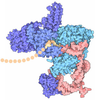
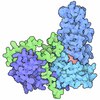
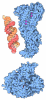
| Title | Cryo-EM structure of the cPRC1-di-nucleosome (tight) complex | |||||||||||||||
 Components Components |
| |||||||||||||||
 Keywords Keywords | GENE REGULATION / nucleosome modification / transcriptional regulation | |||||||||||||||
| Function / homology |  Function and homology information Function and homology informationhistone H2AK119 ubiquitin ligase activity / segment specification / RING-like zinc finger domain binding / ubiquitin-protein transferase activator activity / positive regulation of immature T cell proliferation in thymus / sex chromatin / germ cell development / PcG protein complex / SUMOylation of DNA methylation proteins / SUMOylation of RNA binding proteins ...histone H2AK119 ubiquitin ligase activity / segment specification / RING-like zinc finger domain binding / ubiquitin-protein transferase activator activity / positive regulation of immature T cell proliferation in thymus / sex chromatin / germ cell development / PcG protein complex / SUMOylation of DNA methylation proteins / SUMOylation of RNA binding proteins / positive regulation of ubiquitin-protein transferase activity / negative regulation of gene expression, epigenetic / hemopoiesis / PRC1 complex / Transcriptional Regulation by E2F6 / RUNX1 interacts with co-factors whose precise effect on RUNX1 targets is not known / MLL1 complex / positive regulation of B cell proliferation / Differentiation of naive CD4+ T cells to T helper 2 cells (Th2 cells) / SUMOylation of DNA damage response and repair proteins / negative regulation of megakaryocyte differentiation / protein localization to CENP-A containing chromatin / ubiquitin ligase complex / Chromatin modifying enzymes / Replacement of protamines by nucleosomes in the male pronucleus / heterochromatin / CENP-A containing nucleosome / SUMOylation of transcription cofactors / Packaging Of Telomere Ends / Recognition and association of DNA glycosylase with site containing an affected purine / Cleavage of the damaged purine / positive regulation of fibroblast proliferation / telomere organization / ChAHP complex assembly / Interleukin-7 signaling / Deposition of new CENPA-containing nucleosomes at the centromere / Recognition and association of DNA glycosylase with site containing an affected pyrimidine / Cleavage of the damaged pyrimidine / RNA Polymerase I Promoter Opening / Inhibition of DNA recombination at telomere / Regulation of PTEN gene transcription / Assembly of the ORC complex at the origin of replication / FXIIa activates plasma kallikrein-kinin system / SUMOylation of chromatin organization proteins / Regulation of endogenous retroelements by the Human Silencing Hub (HUSH) complex / Meiotic synapsis / DNA methylation / Condensation of Prophase Chromosomes / Chromatin modifications during the maternal to zygotic transition (MZT) / HCMV Late Events / SIRT1 negatively regulates rRNA expression / NuRD complex assembly / ERCC6 (CSB) and EHMT2 (G9a) positively regulate rRNA expression / Interaction of NuRD complexes with transcription factors / PRC2 methylates histones and DNA / Regulation of endogenous retroelements by KRAB-ZFP proteins / Defective pyroptosis / CHD1 and CHD2 subfamily / HDACs deacetylate histones / CHD6, CHD7, CHD8, CHD9 subfamily / Transcriptional regulation by small RNAs / Regulation of endogenous retroelements by Piwi-interacting RNAs (piRNAs) / RNA Polymerase I Promoter Escape / promoter-specific chromatin binding / Nonhomologous End-Joining (NHEJ) / epigenetic regulation of gene expression / euchromatin / HDMs demethylate histones / Activated PKN1 stimulates transcription of AR (androgen receptor) regulated genes KLK2 and KLK3 / RUNX1 regulates genes involved in megakaryocyte differentiation and platelet function / Negative Regulation of CDH1 Gene Transcription / NoRC negatively regulates rRNA expression / RING-type E3 ubiquitin transferase / PKMTs methylate histone lysines / G2/M DNA damage checkpoint / Formation of the beta-catenin:TCF transactivating complex / B-WICH complex positively regulates rRNA expression / DNA Damage/Telomere Stress Induced Senescence / Meiotic recombination / Pre-NOTCH Transcription and Translation / Activation of anterior HOX genes in hindbrain development during early embryogenesis / regulation of gene expression / Transcriptional regulation of granulopoiesis / nucleosomal DNA binding / RMTs methylate histone arginines / HCMV Early Events / Metalloprotease DUBs / innate immune response in mucosa / structural constituent of chromatin / ubiquitin protein ligase activity / Regulation of PD-L1(CD274) transcription / nucleosome / nucleosome assembly / UCH proteinases / HATs acetylate histones / E3 ubiquitin ligases ubiquitinate target proteins / Recruitment and ATM-mediated phosphorylation of repair and signaling proteins at DNA double strand breaks / Factors involved in megakaryocyte development and platelet production / MLL4 and MLL3 complexes regulate expression of PPARG target genes in adipogenesis and hepatic steatosis / chromatin organization Similarity search - Function | |||||||||||||||
| Biological species |  Homo sapiens (human) Homo sapiens (human) | |||||||||||||||
| Method | ELECTRON MICROSCOPY / single particle reconstruction / cryo EM / Resolution: 4.5 Å | |||||||||||||||
 Authors Authors | Yu, Y. / Cai, D. / Zhang, Y.Z. / Huang, J. | |||||||||||||||
| Funding support | 1items
| |||||||||||||||
 Citation Citation | Journal: To Be Published Title: Structural mechanisms of PRC1-mediated interplay between gene repression and activation Authors: Yu, Y. / Cai, D. / Zhang, Y.Z. / Huang, J. | |||||||||||||||
| History |
|
- Structure visualization
| Structure viewer | Molecule: MolmilJmol/JSmol |
|---|
- Downloads & links
-Download
| PDBx/mmCIF format | 9v9h.cif.gz | 1.1 MB | Display | PDBx/mmCIF format |
|---|---|---|---|---|
| PDB format | pdb9v9h.ent.gz | 910.2 KB | Display | PDB format |
| PDBx/mmJSON format | 9v9h.json.gz | Tree view | PDBx/mmJSON format | |
| Others |  Other downloads Other downloads |
-Validation report
| Arichive directory | https://data.pdbj.org/pub/pdb/validation_reports/v9/9v9hftp://data.pdbj.org/pub/pdb/validation_reports/v9/9v9h | HTTPS FTP |
|---|
-Related structure data
| Related structure data |  64872MC  9v6qC  9v6sC  9v6xC  9v8lC  9v9pC  9v9qC  9v9rC  9v9sC  9v9tC  9v9uC  9v9vC  9v9wC  9v9xC  9v9yC  9v9zC C: citing same article ( M: map data used to model this data |
|---|---|
| Similar structure data |


-Links
 PDBj
PDBj
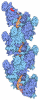
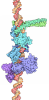
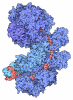
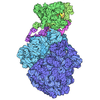
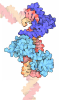
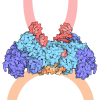
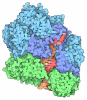
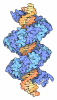
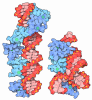
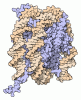

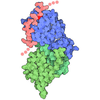
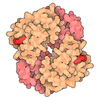
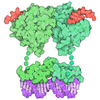
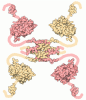
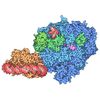
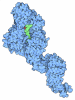
- Assembly
| Deposited unit | 
|
|---|---|
| 1 |
|
-Components
-Protein , 6 types, 20 molecules AEKMBFQRCGLODHNPSUTV
| #1: Protein | Mass: 15437.167 Da / Num. of mol.: 4 / Source method: isolated from a natural source / Source: (natural) Homo sapiens (human) / References: UniProt: P68431#2: Protein | Mass: 11394.426 Da / Num. of mol.: 4 / Source method: isolated from a natural source / Source: (natural) Homo sapiens (human) / References: UniProt: P62805#3: Protein | Mass: 13935.305 Da / Num. of mol.: 4 / Source method: isolated from a natural source / Source: (natural) Homo sapiens (human) / References: UniProt: Q96KK5#4: Protein | Mass: 13937.213 Da / Num. of mol.: 4 / Source method: isolated from a natural source / Source: (natural) Homo sapiens (human) / References: UniProt: P62807#7: Protein | Mass: 37006.062 Da / Num. of mol.: 2 Source method: isolated from a genetically manipulated source Source: (gene. exp.) Homo sapiens (human) / Gene: BMI1, PCGF4, RNF51 / Production host: Homo sapiens (human) / References: UniProt: P35226#8: Protein | Mass: 37706.371 Da / Num. of mol.: 2 Source method: isolated from a genetically manipulated source Source: (gene. exp.) Homo sapiens (human) / Gene: RNF2, BAP1, DING, HIPI3, RING1B / Production host: Homo sapiens (human)References: UniProt: Q99496, RING-type E3 ubiquitin transferase |
|---|
-DNA chain , 2 types, 2 molecules IJ
| #5: DNA chain | Mass: 85179.109 Da / Num. of mol.: 1 / Source method: isolated from a natural source / Source: (natural) Homo sapiens (human) |
|---|---|
| #6: DNA chain | Mass: 85290.156 Da / Num. of mol.: 1 / Source method: isolated from a natural source / Source: (natural) Homo sapiens (human) |
-Non-polymers , 1 types, 8 molecules 
| #9: Chemical | ChemComp-ZN /  Mass: 65.409 Da / Num. of mol.: 8 / Source method: obtained synthetically / Formula: Zn / Feature type: SUBJECT OF INVESTIGATION Mass: 65.409 Da / Num. of mol.: 8 / Source method: obtained synthetically / Formula: Zn / Feature type: SUBJECT OF INVESTIGATION |
|---|
-Details
| Has ligand of interest | Y |
|---|---|
| Has protein modification | N |
-Experimental details
-Experiment
| Experiment | Method: ELECTRON MICROSCOPY |
|---|---|
| EM experiment | Aggregation state: PARTICLE / 3D reconstruction method: single particle reconstruction |
- Sample preparation
| Component | Name: cPRC1-di-nucleosome(tight) complex / Type: COMPLEX / Entity ID: #1-#8 / Source: RECOMBINANT |
|---|---|
| Source (natural) | Organism: Homo sapiens (human) |
| Source (recombinant) | Organism: Homo sapiens (human) |
| Buffer solution | pH: 7.5 |
| Specimen | Embedding applied: NO / Shadowing applied: NO / Staining applied: NO / Vitrification applied: YES |
| Vitrification | Cryogen name: ETHANE |
- Electron microscopy imaging
| Experimental equipment |  Model: Titan Krios / Image courtesy: FEI Company |
|---|---|
| Microscopy | Model: TFS KRIOS |
| Electron gun | Electron source:  FIELD EMISSION GUN / Accelerating voltage: 300 kV / Illumination mode: FLOOD BEAM FIELD EMISSION GUN / Accelerating voltage: 300 kV / Illumination mode: FLOOD BEAM |
| Electron lens | Mode: BRIGHT FIELD / Nominal defocus max: 3000 nm / Nominal defocus min: 800 nm |
| Image recording | Electron dose: 50 e/Å2 / Film or detector model: GATAN K3 (6k x 4k) |
- Processing
| EM software | Name: PHENIX / Version: 1.19.2_4122 / Category: model refinement | ||||||||||||||||||||||||
|---|---|---|---|---|---|---|---|---|---|---|---|---|---|---|---|---|---|---|---|---|---|---|---|---|---|
| CTF correction | Type: PHASE FLIPPING AND AMPLITUDE CORRECTION | ||||||||||||||||||||||||
| 3D reconstruction | Resolution: 4.5 Å / Resolution method: FSC 0.143 CUT-OFF / Num. of particles: 97701 / Symmetry type: POINT | ||||||||||||||||||||||||
| Refinement | Cross valid method: NONE Stereochemistry target values: GeoStd + Monomer Library + CDL v1.2 | ||||||||||||||||||||||||
| Displacement parameters | Biso mean: 61.57 Å2 | ||||||||||||||||||||||||
| Refine LS restraints |
|
