 Movie
Movie Controller


+ Open data

- Basic information
| Entry | Database: PDB / ID: 9u5f | |||||||||
|---|---|---|---|---|---|---|---|---|---|---|
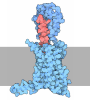
| Title | cryo-EM structure of l-SPD binding to D2R | |||||||||
 Components Components |
| |||||||||
 Keywords Keywords | MEMBRANE PROTEIN / dopamine receptor / D1R / l-SPD / schizophrenia | |||||||||
| Function / homology |  Function and homology information Function and homology informationnegative regulation of dephosphorylation / positive regulation of dopamine uptake involved in synaptic transmission / nervous system process involved in regulation of systemic arterial blood pressure / positive regulation of glial cell-derived neurotrophic factor production / adenohypophysis development / regulation of defecation / negative regulation of dopamine receptor signaling pathway / negative regulation of circadian sleep/wake cycle, sleep / regulation of locomotion involved in locomotory behavior / acid secretion ...negative regulation of dephosphorylation / positive regulation of dopamine uptake involved in synaptic transmission / nervous system process involved in regulation of systemic arterial blood pressure / positive regulation of glial cell-derived neurotrophic factor production / adenohypophysis development / regulation of defecation / negative regulation of dopamine receptor signaling pathway / negative regulation of circadian sleep/wake cycle, sleep / regulation of locomotion involved in locomotory behavior / acid secretion / dopamine neurotransmitter receptor activity, coupled via Gi/Go / neuron-neuron synaptic transmission / response to histamine / peristalsis / positive regulation of behavioral fear response / regulation of synaptic transmission, GABAergic / regulation of potassium ion transport / negative regulation of cellular response to hypoxia / response to inactivity / orbitofrontal cortex development / cerebral cortex GABAergic interneuron migration / dopamine neurotransmitter receptor activity / negative regulation of dopamine secretion / hyaloid vascular plexus regression / branching morphogenesis of a nerve / Dopamine receptors / drinking behavior / dopamine binding / regulation of synapse structural plasticity / regulation of dopamine uptake involved in synaptic transmission / positive regulation of growth hormone secretion / phospholipase C-activating dopamine receptor signaling pathway / striatum development / heterotrimeric G-protein binding / beta-arrestin-dependent dopamine receptor signaling pathway / auditory behavior / adult walking behavior / positive regulation of G protein-coupled receptor signaling pathway / G protein-coupled receptor complex / behavioral response to ethanol / dopaminergic synapse / non-motile cilium / G protein-coupled receptor internalization / positive regulation of neuroblast proliferation / response to iron ion / negative regulation of synaptic transmission, glutamatergic / cellular response to ethanol / arachidonate secretion / ciliary membrane / response to morphine / dopamine metabolic process / positive regulation of cytokinesis / temperature homeostasis / regulation of sodium ion transport / negative regulation of cytosolic calcium ion concentration / Wnt signaling pathway / response to axon injury / associative learning / response to light stimulus / potassium channel regulator activity / positive regulation of receptor internalization / negative regulation of insulin secretion / negative regulation of protein secretion / regulation of dopamine secretion / lateral plasma membrane / G-protein alpha-subunit binding / endocytic vesicle / prepulse inhibition / postsynaptic modulation of chemical synaptic transmission / cellular response to retinoic acid / long-term memory / sperm flagellum / regulation of long-term neuronal synaptic plasticity / negative regulation of blood pressure / release of sequestered calcium ion into cytosol / axonogenesis / behavioral response to cocaine / regulation of heart rate / response to amphetamine / synapse assembly / visual learning / presynaptic modulation of chemical synaptic transmission / negative regulation of innate immune response / adenylate cyclase-inhibiting dopamine receptor signaling pathway / negative regulation of cell migration / ionotropic glutamate receptor binding / locomotory behavior / acrosomal vesicle / axon terminus / excitatory postsynaptic potential / negative regulation of phosphatidylinositol 3-kinase/protein kinase B signal transduction / response to cocaine / positive regulation of long-term synaptic potentiation / response to nicotine / circadian regulation of gene expression / autophagy / electron transport chain / GABA-ergic synapse / response to toxic substance / intracellular calcium ion homeostasis Similarity search - Function | |||||||||
| Biological species |  Homo sapiens (human) Homo sapiens (human)  Escherichia coli (E. coli) Escherichia coli (E. coli) | |||||||||
| Method | ELECTRON MICROSCOPY / single particle reconstruction / cryo EM / Resolution: 2.9 Å | |||||||||
 Authors Authors | Zhang, X.Y. / Liu, H. / Zhuang, Y.W. / Xu, H.E. | |||||||||
| Funding support |  China, 1items China, 1items
| |||||||||
 Citation Citation | Journal: To Be Published Title: cryo-EM structure of l-SPD binding to D2R Authors: Zhang, X.Y. / Liu, H. / Zhuang, Y.W. | |||||||||
| History |
|
- Structure visualization
| Structure viewer | Molecule: MolmilJmol/JSmol |
|---|
- Downloads & links
-Download
| PDBx/mmCIF format | 9u5f.cif.gz | 303.3 KB | Display | PDBx/mmCIF format |
|---|---|---|---|---|
| PDB format | pdb9u5f.ent.gz | Display | PDB format | |
| PDBx/mmJSON format | 9u5f.json.gz | Tree view | PDBx/mmJSON format | |
| Others |  Other downloads Other downloads |
-Validation report
| Arichive directory | https://data.pdbj.org/pub/pdb/validation_reports/u5/9u5fftp://data.pdbj.org/pub/pdb/validation_reports/u5/9u5f | HTTPS FTP |
|---|
-Related structure data
| Related structure data |  63871MC  9u5eC M: map data used to model this data C: citing same article ( |
|---|---|
| Similar structure data |

-Links
 PDBj
PDBj
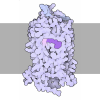
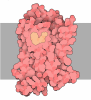
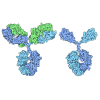
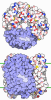
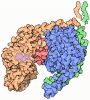
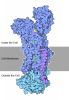
- Assembly
| Deposited unit | 
|
|---|---|
| 1 |
|
-Components
| #1: Protein | Mass: 49144.074 Da / Num. of mol.: 2 Source method: isolated from a genetically manipulated source Source: (gene. exp.) Homo sapiens (human), (gene. exp.) Escherichia coli (E. coli)Gene: DRD2, cybC / Production host:   Spodoptera frugiperda (fall armyworm) / References: UniProt: P14416, UniProt: P0ABE7 Spodoptera frugiperda (fall armyworm) / References: UniProt: P14416, UniProt: P0ABE7#2: Antibody | | Mass: 23884.314 Da / Num. of mol.: 1 Source method: isolated from a genetically manipulated source Source: (gene. exp.) Homo sapiens (human) / Production host: Spodoptera frugiperda (fall armyworm)#3: Antibody | | Mass: 23443.117 Da / Num. of mol.: 1 Source method: isolated from a genetically manipulated source Source: (gene. exp.) Homo sapiens (human) / Production host: Spodoptera frugiperda (fall armyworm)#4: Chemical | ChemComp-CLR / 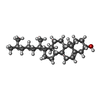 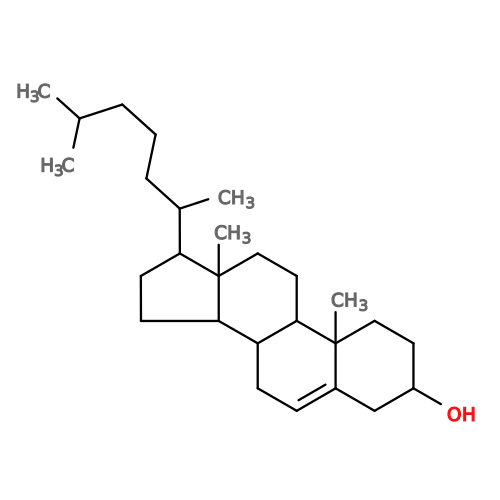 Mass: 386.654 Da / Num. of mol.: 4 / Source method: obtained synthetically / Formula: C27H46O / Feature type: SUBJECT OF INVESTIGATION Mass: 386.654 Da / Num. of mol.: 4 / Source method: obtained synthetically / Formula: C27H46O / Feature type: SUBJECT OF INVESTIGATION#5: Chemical | Mass: 327.374 Da / Num. of mol.: 2 / Source method: obtained synthetically / Formula: C19H21NO4 Has ligand of interest | Y | Has protein modification | Y | |
|---|
-Experimental details
-Experiment
| Experiment | Method: ELECTRON MICROSCOPY |
|---|---|
| EM experiment | Aggregation state: PARTICLE / 3D reconstruction method: single particle reconstruction |
- Sample preparation
| Component | Name: cryo-EM structure of l-SPD bound D1R-Gs complex / Type: COMPLEX / Entity ID: #1-#3 / Source: RECOMBINANT |
|---|---|
| Source (natural) | Organism: Homo sapiens (human) |
| Source (recombinant) | Organism: Spodoptera frugiperda (fall armyworm) |
| Buffer solution | pH: 7.4 |
| Specimen | Embedding applied: NO / Shadowing applied: NO / Staining applied: NO / Vitrification applied: YES |
| Vitrification | Cryogen name: ETHANE |
- Electron microscopy imaging
| Experimental equipment | 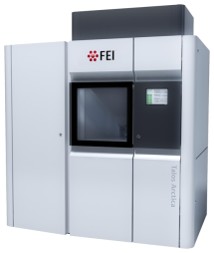 Model: Talos Arctica / Image courtesy: FEI Company |
|---|---|
| Microscopy | Model: FEI TALOS ARCTICA |
| Electron gun | Electron source:  FIELD EMISSION GUN / Accelerating voltage: 300 kV / Illumination mode: FLOOD BEAM FIELD EMISSION GUN / Accelerating voltage: 300 kV / Illumination mode: FLOOD BEAM |
| Electron lens | Mode: DARK FIELD / Nominal defocus max: 2000 nm / Nominal defocus min: 1000 nm |
| Image recording | Electron dose: 50 e/Å2 / Film or detector model: FEI FALCON IV (4k x 4k) |
- Processing
| CTF correction | Type: NONE |
|---|---|
| 3D reconstruction | Resolution: 2.9 Å / Resolution method: FSC 0.143 CUT-OFF / Num. of particles: 176969 / Symmetry type: POINT |
