 ムービー
ムービー コントローラー


+ データを開く

- 基本情報
基本情報
| 登録情報 | データベース: PDB / ID: 9shx | |||||||||||||||||||||
|---|---|---|---|---|---|---|---|---|---|---|---|---|---|---|---|---|---|---|---|---|---|---|
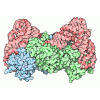
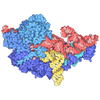
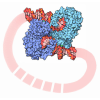
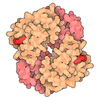
| タイトル | Type I-F_HNH variant Cascade bound to dsDNA, HNH domain in middle position | |||||||||||||||||||||
 要素 要素 |
| |||||||||||||||||||||
 キーワード キーワード | RNA BINDING PROTEIN / CRISPR-Cas Type I-F HNH nuclease | |||||||||||||||||||||
| 機能・相同性 |  機能・相同性情報 機能・相同性情報maintenance of CRISPR repeat elements / endonuclease activity / nucleic acid binding / zinc ion binding 類似検索 - 分子機能 | |||||||||||||||||||||
| 生物種 |  Selenomonas sp. (バクテリア) Selenomonas sp. (バクテリア) | |||||||||||||||||||||
| 手法 | 電子顕微鏡法 / 単粒子再構成法 / クライオ電子顕微鏡法 / 解像度: 2.4 Å | |||||||||||||||||||||
 データ登録者 データ登録者 | Fuglsang, A. / Montoya, G. | |||||||||||||||||||||
| 資金援助 |  デンマーク, 1件 デンマーク, 1件
| |||||||||||||||||||||
 引用 引用 | ジャーナル: Nucleic Acids Res / 年: 2026 タイトル: Conformational dynamics of CRISPR-Cas type I-F-HNH inform nickase engineering in a cascade scaffold. 著者: Anders Fuglsang / Sweta Suman Rout / Eliska Bartl Koutna / Nicholas Sofos / Alejandro Redondo Gallego / Guillermo Montoya / 要旨: The type I-FHNH CRISPR-Cas system is a non-canonical Class 1 effector complex distinguished by the replacement of the Cas3 recruitment domain with a catalytic HNH domain in Cas8, enabling autonomous ...The type I-FHNH CRISPR-Cas system is a non-canonical Class 1 effector complex distinguished by the replacement of the Cas3 recruitment domain with a catalytic HNH domain in Cas8, enabling autonomous DNA cleavage without accessory nucleases. Using cryo-EM, we determined high-resolution structures of the effector complex in three catalytic states-precatalytic, NTS-cleaved, and post-catalytic-revealing a dynamic trajectory of the HNH domain through inward, middle, and outward conformations. Biochemical assays demonstrated that the complex cleaves the nontarget strand (NTS) prior to the target strand (TS), consistent with a sequential cleavage mechanism similar to Cas12 effectors but notably lacking trans-cleavage activity on single-stranded DNA. Structural comparisons confirmed a minimal PAM requirement (5'-CN) and a constrained HNH catalytic site poised for precise strand scission. We engineered a ΔLinker variant of Cas8 that repositions the HNH domain, selectively abolishing TS cleavage and converting the system into a programmable NTS-specific nickase. Importantly, we validated the functionality of both wild-type and mutant complexes in human cells. While the wild-type system induced indels and base substitutions, the ΔLinker variant triggered targeted single-strand nicks without double-stranded breaks. Together, our work establishes type I-FHNH as a compact and precise genome editing platform with in vivo efficacy. #1: ジャーナル: Acta Crystallogr D Struct Biol / 年: 2019 タイトル: Macromolecular structure determination using X-rays, neutrons and electrons: recent developments in Phenix. 著者: Dorothee Liebschner / Pavel V Afonine / Matthew L Baker / Gábor Bunkóczi / Vincent B Chen / Tristan I Croll / Bradley Hintze / Li Wei Hung / Swati Jain / Airlie J McCoy / Nigel W Moriarty / ...著者: Dorothee Liebschner / Pavel V Afonine / Matthew L Baker / Gábor Bunkóczi / Vincent B Chen / Tristan I Croll / Bradley Hintze / Li Wei Hung / Swati Jain / Airlie J McCoy / Nigel W Moriarty / Robert D Oeffner / Billy K Poon / Michael G Prisant / Randy J Read / Jane S Richardson / David C Richardson / Massimo D Sammito / Oleg V Sobolev / Duncan H Stockwell / Thomas C Terwilliger / Alexandre G Urzhumtsev / Lizbeth L Videau / Christopher J Williams / Paul D Adams /    要旨: Diffraction (X-ray, neutron and electron) and electron cryo-microscopy are powerful methods to determine three-dimensional macromolecular structures, which are required to understand biological ...Diffraction (X-ray, neutron and electron) and electron cryo-microscopy are powerful methods to determine three-dimensional macromolecular structures, which are required to understand biological processes and to develop new therapeutics against diseases. The overall structure-solution workflow is similar for these techniques, but nuances exist because the properties of the reduced experimental data are different. Software tools for structure determination should therefore be tailored for each method. Phenix is a comprehensive software package for macromolecular structure determination that handles data from any of these techniques. Tasks performed with Phenix include data-quality assessment, map improvement, model building, the validation/rebuilding/refinement cycle and deposition. Each tool caters to the type of experimental data. The design of Phenix emphasizes the automation of procedures, where possible, to minimize repetitive and time-consuming manual tasks, while default parameters are chosen to encourage best practice. A graphical user interface provides access to many command-line features of Phenix and streamlines the transition between programs, project tracking and re-running of previous tasks. | |||||||||||||||||||||
| 履歴 |
|
- 構造の表示
構造の表示
| 構造ビューア | 分子: MolmilJmol/JSmol |
|---|
- ダウンロードとリンク
-ダウンロード
| PDBx/mmCIF形式 | 9shx.cif.gz | 1.3 MB | 表示 | PDBx/mmCIF形式 |
|---|---|---|---|---|
| PDB形式 | pdb9shx.ent.gz | 表示 | PDB形式 | |
| PDBx/mmJSON形式 | 9shx.json.gz | ツリー表示 | PDBx/mmJSON形式 | |
| その他 |  その他のダウンロード その他のダウンロード |
-検証レポート
| アーカイブディレクトリ | https://data.pdbj.org/pub/pdb/validation_reports/sh/9shxftp://data.pdbj.org/pub/pdb/validation_reports/sh/9shx | HTTPS FTP |
|---|
-関連構造データ
| 関連構造データ |  54919MC  9sitC  9siuC  9sjcC  9sjdC  9sjlC  9sjmC  9sjnC  9sjoC M: このデータのモデリングに利用したマップデータ C: 同じ文献を引用 ( |
|---|---|
| 類似構造データ |


-リンク
 PDBj
PDBj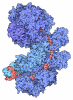
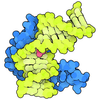
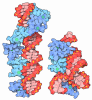
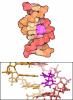
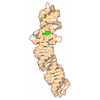
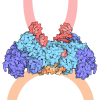
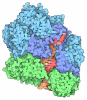
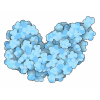
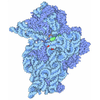
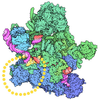
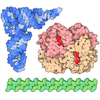
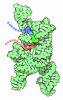
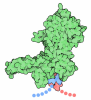
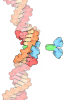
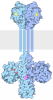

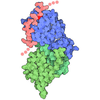
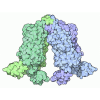
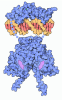
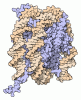
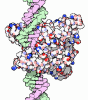
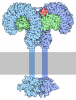
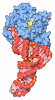
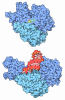
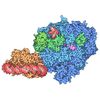
- 集合体
集合体
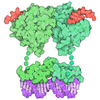
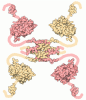
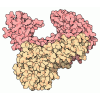
| 登録構造単位 | 
|
|---|---|
| 1 |
|
-要素
-タンパク質 , 4種, 9分子 DEFCGHBAI
| #1: タンパク質 | 分子量: 38700.172 Da / 分子数: 6 / 由来タイプ: 組換発現 / 由来: (組換発現) Selenomonas sp. (バクテリア) / 発現宿主:  Escherichia coli BL21(DE3) (大腸菌) / 参照: UniProt: A0AAX7FM28 Escherichia coli BL21(DE3) (大腸菌) / 参照: UniProt: A0AAX7FM28#2: タンパク質 | | 分子量: 28703.135 Da / 分子数: 1 / 由来タイプ: 組換発現 / 由来: (組換発現) Selenomonas sp. (バクテリア) / 発現宿主: Escherichia coli BL21(DE3) (大腸菌) / 参照: UniProt: A0AAX7FM22#3: タンパク質 | | 分子量: 43706.289 Da / 分子数: 1 / 由来タイプ: 組換発現 / 由来: (組換発現) Selenomonas sp. (バクテリア) / 発現宿主: Escherichia coli BL21(DE3) (大腸菌) / 参照: UniProt: A0AAX7FM29#4: タンパク質 | | 分子量: 20735.873 Da / 分子数: 1 / 由来タイプ: 組換発現 / 由来: (組換発現) Selenomonas sp. (バクテリア) / 発現宿主: Escherichia coli BL21(DE3) (大腸菌) / 参照: UniProt: A0AAX7FM27 |
|---|
-DNA鎖 , 2種, 2分子 LK
| #5: DNA鎖 | 分子量: 14233.219 Da / 分子数: 1 / 由来タイプ: 合成 / 由来: (合成) Selenomonas sp. (バクテリア) |
|---|---|
| #6: DNA鎖 | 分子量: 14062.044 Da / 分子数: 1 / 由来タイプ: 合成 / 由来: (合成) Selenomonas sp. (バクテリア) |
-RNA鎖 , 1種, 1分子 J
| #7: RNA鎖 | 分子量: 19502.576 Da / 分子数: 1 / 由来タイプ: 組換発現 / 由来: (組換発現) Selenomonas sp. (バクテリア) / 発現宿主: Escherichia coli BL21(DE3) (大腸菌) |
|---|
-非ポリマー , 2種, 2分子 

| #8: 化合物 | ChemComp-MG /  分子量: 24.305 Da / 分子数: 1 / 由来タイプ: 合成 / 式: Mg / タイプ: SUBJECT OF INVESTIGATION 分子量: 24.305 Da / 分子数: 1 / 由来タイプ: 合成 / 式: Mg / タイプ: SUBJECT OF INVESTIGATION |
|---|---|
| #9: 水 | ChemComp-HOH / 分子量: 18.015 Da / 分子数: 1 / 由来タイプ: 天然 / 式: H2O |
-詳細
| 研究の焦点であるリガンドがあるか | Y |
|---|---|
| Has protein modification | N |
-実験情報
-実験
| 実験 | 手法: 電子顕微鏡法 |
|---|---|
| EM実験 | 試料の集合状態: PARTICLE / 3次元再構成法: 単粒子再構成法 |
- 試料調製
試料調製
| 構成要素 | 名称: Type I-F_HNH effector complex bound to dsDNA / タイプ: COMPLEX / Entity ID: #3, #1 / 由来: RECOMBINANT |
|---|---|
| 分子量 | 値: 0.35 MDa / 実験値: NO |
| 由来(天然) | 生物種: Selenomonas sp. (バクテリア) |
| 由来(組換発現) | 生物種: Escherichia coli BL21(DE3) (大腸菌) |
| 緩衝液 | pH: 7.5 |
| 試料 | 包埋: NO / シャドウイング: NO / 染色: NO / 凍結: YES |
| 急速凍結 | 凍結剤: ETHANE / 湿度: 100 % / 凍結前の試料温度: 277 K |
- 電子顕微鏡撮影
| 実験機器 |  モデル: Titan Krios / 画像提供: FEI Company |
|---|---|
| 顕微鏡 | モデル: TFS KRIOS |
| 電子銃 | 電子線源:  FIELD EMISSION GUN / 加速電圧: 300 kV / 照射モード: FLOOD BEAM FIELD EMISSION GUN / 加速電圧: 300 kV / 照射モード: FLOOD BEAM |
| 電子レンズ | モード: BRIGHT FIELD / 最大 デフォーカス(公称値): 1800 nm / 最小 デフォーカス(公称値): 600 nm |
| 撮影 | 電子線照射量: 50 e/Å2 フィルム・検出器のモデル: FEI FALCON IV (4k x 4k) |
- 解析
解析
| EMソフトウェア |
| ||||||||||||||||||||||||
|---|---|---|---|---|---|---|---|---|---|---|---|---|---|---|---|---|---|---|---|---|---|---|---|---|---|
| CTF補正 | タイプ: PHASE FLIPPING AND AMPLITUDE CORRECTION | ||||||||||||||||||||||||
| 3次元再構成 | 解像度: 2.4 Å / 解像度の算出法: FSC 0.143 CUT-OFF / 粒子像の数: 174646 / 対称性のタイプ: POINT | ||||||||||||||||||||||||
| 精密化 | 交差検証法: NONE 立体化学のターゲット値: GeoStd + Monomer Library + CDL v1.2 | ||||||||||||||||||||||||
| 原子変位パラメータ | Biso mean: 51.98 Å2 | ||||||||||||||||||||||||
| 拘束条件 |
|
