Journal: Commun Biol / Year: 2026 Title: Molecular mechanism of complement interference by Streptococcus pyogenes nuclease A. Authors: Isabella A Bennig / Joel Ströbaek / Rafael Mamede / Anton Sellerberg / Ariane Neumann / Ana Friães / Mario Ramirez / Michael Hall / Mattias Collin / Lars Malmström / Simon Ekström / Inga- ...Authors: Isabella A Bennig / Joel Ströbaek / Rafael Mamede / Anton Sellerberg / Ariane Neumann / Ana Friães / Mario Ramirez / Michael Hall / Mattias Collin / Lars Malmström / Simon Ekström / Inga-Maria Frick / Lars Björck / Lotta J Happonen / Abstract: Bacteria deploy virulence factors to subvert host immunity; yet the molecular details of these interactions often remain limited. Here, we reveal the structure and host interactome of the ...Bacteria deploy virulence factors to subvert host immunity; yet the molecular details of these interactions often remain limited. Here, we reveal the structure and host interactome of the Streptococcus pyogenes nuclease A (SpnA). We characterize the structure and dynamics of SpnA using hydrogen-deuterium exchange mass spectrometry and single-particle electron cryo microscopy, yielding the first structural insights to SpnA. This allowed us to identify an additional oligonucleotide-binding domain, whose flexible structure may play an important function in nucleolytic activity. Affinity-pulldown mass spectrometry identified the complement system membrane attack complex (MAC) C5b67 components as key interactors. Cross-linking mass spectrometry combined with integrative modeling identified the binding interfaces between SpnA and C5b67. These interfaces are conserved among genetically diverse S. pyogenes strains. Interaction between SpnA and C5b67 is suggested to prevent the assembly of a functional MAC. Our findings uncover a novel function of SpnA in complement inhibition, and identifies new potential targets to prevent and treat S. pyogenes infections.
History
Deposition
Aug 19, 2025
Deposition site: PDBE / Processing site: PDBE
Revision 1.0
Sep 2, 2026
Provider: repository / Type: Initial release
Revision 1.0
Sep 2, 2026
Data content type: EM metadata / Data content type: EM metadata / Provider: repository / Type: Initial release
Data content type: EM metadata / Data content type: EM metadata / EM metadata / Group: Database references / Experimental summary / Data content type: EM metadata / EM metadata / Category: citation / em_admin / Data content type: EM metadata / EM metadata / EM metadata Item: _citation.pdbx_database_id_DOI / _citation.title / _em_admin.last_update
Data content type: EM metadata / Data content type: EM metadata / EM metadata / Group: Database references / Experimental summary / Data content type: EM metadata / EM metadata / EM metadata / Category: citation / citation_author / em_admin Data content type: EM metadata / EM metadata ...EM metadata / EM metadata / EM metadata / EM metadata / EM metadata / EM metadata / EM metadata / EM metadata / EM metadata Item: _citation.country / _citation.journal_abbrev ..._citation.country / _citation.journal_abbrev / _citation.journal_id_CSD / _citation.journal_id_ISSN / _citation.journal_volume / _citation.pdbx_database_id_PubMed / _citation.title / _citation.year / _em_admin.last_update
In the structure databanks used in Yorodumi, some data are registered as the other names, "COVID-19 virus" and "2019-nCoV". Here are the details of the virus and the list of structure data.
Jan 31, 2019. EMDB accession codes are about to change! (news from PDBe EMDB page)
EMDB accession codes are about to change! (news from PDBe EMDB page)
The allocation of 4 digits for EMDB accession codes will soon come to an end. Whilst these codes will remain in use, new EMDB accession codes will include an additional digit and will expand incrementally as the available range of codes is exhausted. The current 4-digit format prefixed with “EMD-” (i.e. EMD-XXXX) will advance to a 5-digit format (i.e. EMD-XXXXX), and so on. It is currently estimated that the 4-digit codes will be depleted around Spring 2019, at which point the 5-digit format will come into force.
The EM Navigator/Yorodumi systems omit the EMD- prefix.
Related info.:Q: What is EMD? / ID/Accession-code notation in Yorodumi/EM Navigator
Yorodumi is a browser for structure data from EMDB, PDB, SASBDB, etc.
This page is also the successor to EM Navigator detail page, and also detail information page/front-end page for Omokage search.
The word "yorodu" (or yorozu) is an old Japanese word meaning "ten thousand". "mi" (miru) is to see.
Related info.:EMDB / PDB / SASBDB / Comparison of 3 databanks / Yorodumi Search / Aug 31, 2016. New EM Navigator & Yorodumi / Yorodumi Papers / Jmol/JSmol / Function and homology information / Changes in new EM Navigator and Yorodumi
 Movie
 Controller


 Open data

 Basic information
 Components
 Keywords
 Function and homology information
 Streptococcus pyogenes (bacteria)
 Authors
 Sweden, 1items
 Citation

 Structure visualization
 Downloads & links
 Other downloads


 PDBj
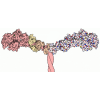
 Assembly

 Escherichia coli (E. coli) / References: UniProt: Q9A0J7
 Sample preparation
 Electron microscopy imaging
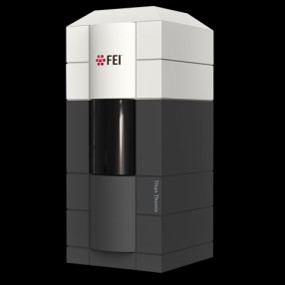
 FIELD EMISSION GUN / Accelerating voltage: 300 kV / Illumination mode: OTHER
 Processing