 Movie
Movie Controller

[English] 日本語
 Yorodumi
- PDB-9s3e: Universal Photosystem II Intermediate with Light-Dependent Water-... -
+ Open data

- Basic information
| Entry | Database: PDB / ID: 9s3e | ||||||||||||||||||||||||
|---|---|---|---|---|---|---|---|---|---|---|---|---|---|---|---|---|---|---|---|---|---|---|---|---|---|
| Title | Universal Photosystem II Intermediate with Light-Dependent Water-Ferrocyanide Oxydo-reductase activity from Pisum sativum | ||||||||||||||||||||||||
 Components Components |
| ||||||||||||||||||||||||
 Keywords Keywords | PHOTOSYNTHESIS / Higher plants / PSII / Pisum sativum / membrane protein / Cryo-EM / assembly intermediate / water-ferrocyanide oxido-reductase. | ||||||||||||||||||||||||
| Function / homology |  Function and homology information Function and homology informationphotoinhibition / photosystem II oxygen evolving complex / photosystem II assembly / oxygen evolving activity / protein phosphatase regulator activity / photosystem II stabilization / photosystem II reaction center / photosystem II / photosynthetic electron transport chain / photosystem II ...photoinhibition / photosystem II oxygen evolving complex / photosystem II assembly / oxygen evolving activity / protein phosphatase regulator activity / photosystem II stabilization / photosystem II reaction center / photosystem II / photosynthetic electron transport chain / photosystem II / extrinsic component of membrane / chlorophyll binding / poly(U) RNA binding / photosynthetic electron transport in photosystem II / photosynthesis, light reaction / phosphate ion binding / chloroplast thylakoid membrane / photosynthesis / electron transfer activity / protein stabilization / iron ion binding / heme binding / calcium ion binding Similarity search - Function | ||||||||||||||||||||||||
| Biological species |  Pisum sativum (garden pea) Pisum sativum (garden pea) | ||||||||||||||||||||||||
| Method | ELECTRON MICROSCOPY / single particle reconstruction / cryo EM / Resolution: 2.1 Å | ||||||||||||||||||||||||
 Authors Authors | Nelson, N. / Klaiman, D. / Fadeeva, M. | ||||||||||||||||||||||||
| Funding support |  Israel, 1items Israel, 1items
| ||||||||||||||||||||||||
 Citation Citation | Journal: To Be Published Title: Universal Photosystem II Intermediate with Light-Dependent Water-Ferrocyanide Oxydo-reductase activity from Pisum sativum Authors: Nelson, N. / Klaiman, D. / Fadeeva, M. | ||||||||||||||||||||||||
| History |
|
- Structure visualization
| Structure viewer | Molecule: MolmilJmol/JSmol |
|---|
- Downloads & links
-Download
| PDBx/mmCIF format | 9s3e.cif.gz | 645.2 KB | Display | PDBx/mmCIF format |
|---|---|---|---|---|
| PDB format | pdb9s3e.ent.gz | 528.5 KB | Display | PDB format |
| PDBx/mmJSON format | 9s3e.json.gz | Tree view | PDBx/mmJSON format | |
| Others |  Other downloads Other downloads |
-Validation report
| Arichive directory | https://data.pdbj.org/pub/pdb/validation_reports/s3/9s3eftp://data.pdbj.org/pub/pdb/validation_reports/s3/9s3e | HTTPS FTP |
|---|
-Related structure data
| Related structure data |  54531MC M: map data used to model this data C: citing same article ( |
|---|---|
| Similar structure data |
-Links
 PDBj
PDBj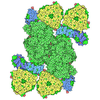
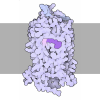
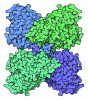
- Assembly
| Deposited unit | 
|
|---|---|
| 1 |
|
-Components
-Photosystem II ... , 12 types, 12 molecules ABCDHIJKLMTU
| #1: Protein | Mass: 36972.074 Da / Num. of mol.: 1 / Source method: isolated from a natural source / Source: (natural) Pisum sativum (garden pea) / References: UniProt: P06585, photosystem II |
|---|---|
| #2: Protein | Mass: 53157.574 Da / Num. of mol.: 1 / Source method: isolated from a natural source / Source: (natural) Pisum sativum (garden pea) / References: UniProt: D5MAL6 |
| #3: Protein | Mass: 49174.273 Da / Num. of mol.: 1 / Source method: isolated from a natural source / Source: (natural) Pisum sativum (garden pea) / References: UniProt: P06004 |
| #4: Protein | Mass: 38106.496 Da / Num. of mol.: 1 / Source method: isolated from a natural source / Source: (natural) Pisum sativum (garden pea) / References: UniProt: P06006, photosystem II |
| #7: Protein | Mass: 6455.607 Da / Num. of mol.: 1 / Source method: isolated from a natural source / Source: (natural) Pisum sativum (garden pea) / References: UniProt: Q9XQR3 |
| #8: Protein/peptide | Mass: 3769.497 Da / Num. of mol.: 1 / Source method: isolated from a natural source / Source: (natural) Pisum sativum (garden pea) / References: UniProt: A0A2S1CE74 |
| #9: Protein/peptide | Mass: 3598.264 Da / Num. of mol.: 1 / Source method: isolated from a natural source / Source: (natural) Pisum sativum (garden pea) / References: UniProt: P13555 |
| #10: Protein/peptide | Mass: 4287.155 Da / Num. of mol.: 1 / Source method: isolated from a natural source / Source: (natural) Pisum sativum (garden pea) / References: UniProt: D5MAJ8 |
| #11: Protein/peptide | Mass: 4137.672 Da / Num. of mol.: 1 / Source method: isolated from a natural source / Source: (natural) Pisum sativum (garden pea) / References: UniProt: P60147 |
| #12: Protein/peptide | Mass: 3066.779 Da / Num. of mol.: 1 / Source method: isolated from a natural source / Source: (natural) Pisum sativum (garden pea) / References: UniProt: P69529 |
| #16: Protein/peptide | Mass: 3462.189 Da / Num. of mol.: 1 / Source method: isolated from a natural source / Source: (natural) Pisum sativum (garden pea) / References: UniProt: Q8HS25 |
| #19: Protein/peptide | Mass: 3080.648 Da / Num. of mol.: 1 / Source method: isolated from a natural source / Source: (natural) Pisum sativum (garden pea) / References: UniProt: A0A9D4VSA9 |
-Cytochrome b559 subunit ... , 2 types, 2 molecules EF
| #5: Protein | Mass: 8624.707 Da / Num. of mol.: 1 / Source method: isolated from a natural source / Source: (natural) Pisum sativum (garden pea) / References: UniProt: P13554 |
|---|---|
| #6: Protein/peptide | Mass: 3396.035 Da / Num. of mol.: 1 / Source method: isolated from a natural source / Source: (natural) Pisum sativum (garden pea) / References: UniProt: P62096 |
-Oxygen-evolving enhancer protein ... , 3 types, 3 molecules OPQ
| #13: Protein | Mass: 26554.646 Da / Num. of mol.: 1 / Source method: isolated from a natural source / Source: (natural) Pisum sativum (garden pea) / References: UniProt: P14226 |
|---|---|
| #14: Protein | Mass: 20287.494 Da / Num. of mol.: 1 / Source method: isolated from a natural source / Source: (natural) Pisum sativum (garden pea) / References: UniProt: P16059 |
| #15: Protein | Mass: 16398.898 Da / Num. of mol.: 1 / Source method: isolated from a natural source / Source: (natural) Pisum sativum (garden pea) / References: UniProt: Q7Y1T5 |
-Protein/peptide , 2 types, 2 molecules WX
| #17: Protein/peptide | Mass: 5198.879 Da / Num. of mol.: 1 / Source method: isolated from a natural source / Source: (natural) Pisum sativum (garden pea) / References: UniProt: A0A9D4W3H0 |
|---|---|
| #18: Protein/peptide | Mass: 3544.123 Da / Num. of mol.: 1 / Source method: isolated from a natural source / Source: (natural) Pisum sativum (garden pea) / References: UniProt: A0A9D4X981 |
-Sugars , 1 types, 4 molecules 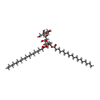
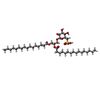
| #31: Sugar | ChemComp-DGD /  Type: saccharide / Mass: 949.299 Da / Num. of mol.: 4 / Source method: obtained synthetically / Formula: C51H96O15 Type: saccharide / Mass: 949.299 Da / Num. of mol.: 4 / Source method: obtained synthetically / Formula: C51H96O15 |
|---|
-Non-polymers , 13 types, 844 molecules 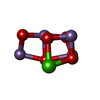



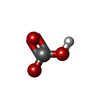
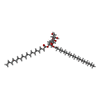
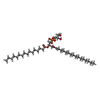
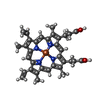

| #20: Chemical | ChemComp-OEX / 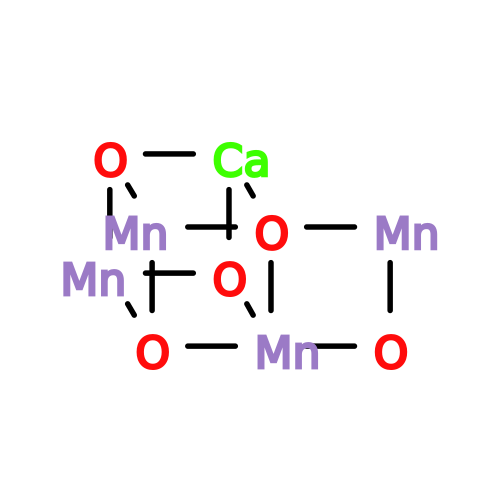 Mass: 339.827 Da / Num. of mol.: 1 / Source method: obtained synthetically / Formula: CaMn4O5 Mass: 339.827 Da / Num. of mol.: 1 / Source method: obtained synthetically / Formula: CaMn4O5 | ||||||||||||||||||||
|---|---|---|---|---|---|---|---|---|---|---|---|---|---|---|---|---|---|---|---|---|---|
| #21: Chemical | ChemComp-FE2 /  Mass: 55.845 Da / Num. of mol.: 1 / Source method: obtained synthetically / Formula: Fe Mass: 55.845 Da / Num. of mol.: 1 / Source method: obtained synthetically / Formula: Fe | ||||||||||||||||||||
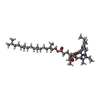
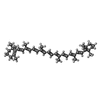
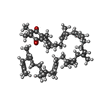
| #22: Chemical |  Mass: 35.453 Da / Num. of mol.: 2 / Source method: obtained synthetically / Formula: Cl Mass: 35.453 Da / Num. of mol.: 2 / Source method: obtained synthetically / Formula: Cl#23: Chemical | ChemComp-CLA / 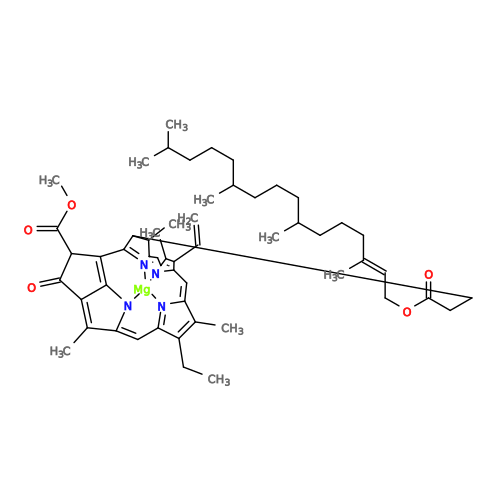 Mass: 893.489 Da / Num. of mol.: 35 / Source method: obtained synthetically / Formula: C55H72MgN4O5 Mass: 893.489 Da / Num. of mol.: 35 / Source method: obtained synthetically / Formula: C55H72MgN4O5#24: Chemical | 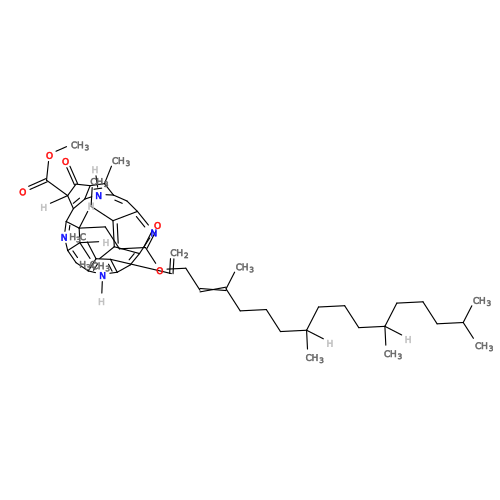 Mass: 871.200 Da / Num. of mol.: 2 / Source method: obtained synthetically / Formula: C55H74N4O5 Mass: 871.200 Da / Num. of mol.: 2 / Source method: obtained synthetically / Formula: C55H74N4O5#25: Chemical | ChemComp-BCR / 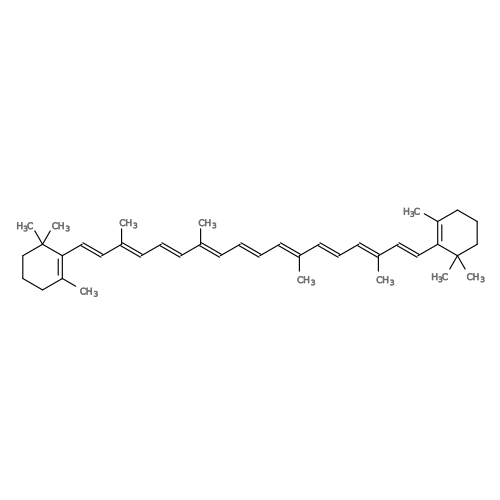 Mass: 536.873 Da / Num. of mol.: 8 / Source method: obtained synthetically / Formula: C40H56 Mass: 536.873 Da / Num. of mol.: 8 / Source method: obtained synthetically / Formula: C40H56#26: Chemical | ChemComp-SQD / | 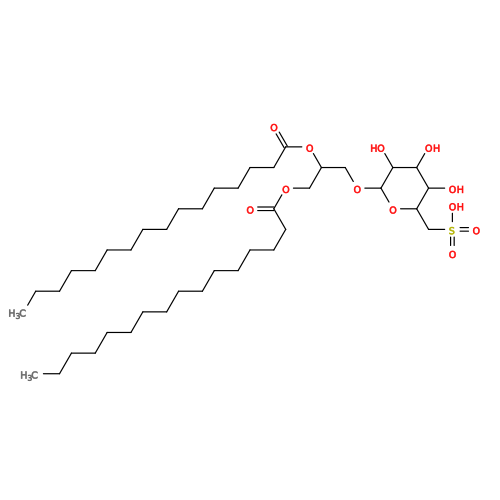 Mass: 795.116 Da / Num. of mol.: 1 / Source method: obtained synthetically / Formula: C41H78O12S Mass: 795.116 Da / Num. of mol.: 1 / Source method: obtained synthetically / Formula: C41H78O12S#27: Chemical | 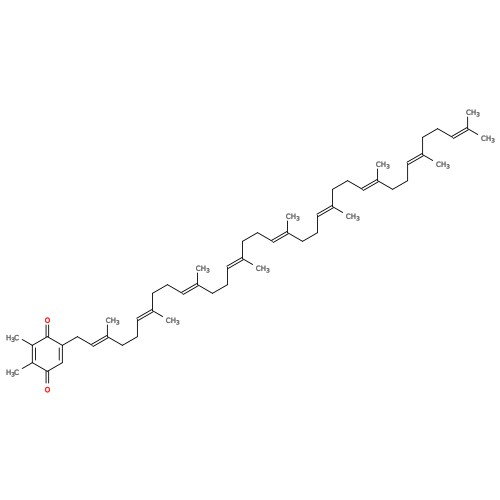 Mass: 749.201 Da / Num. of mol.: 2 / Source method: obtained synthetically / Formula: C53H80O2 Mass: 749.201 Da / Num. of mol.: 2 / Source method: obtained synthetically / Formula: C53H80O2#28: Chemical | ChemComp-BCT / | 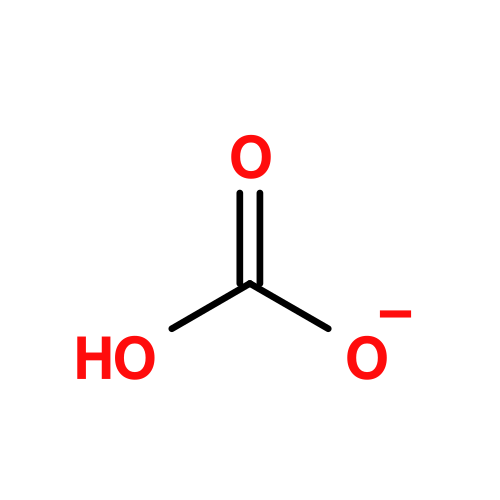 Mass: 61.017 Da / Num. of mol.: 1 / Source method: obtained synthetically / Formula: CHO3 / Comment: pH buffer*YM Mass: 61.017 Da / Num. of mol.: 1 / Source method: obtained synthetically / Formula: CHO3 / Comment: pH buffer*YM#29: Chemical | ChemComp-LMG / 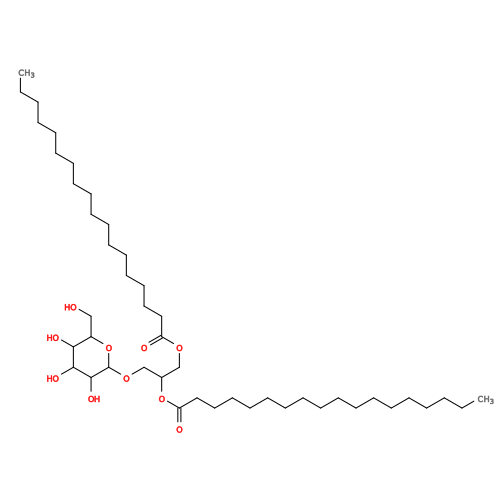 Mass: 787.158 Da / Num. of mol.: 6 / Source method: obtained synthetically / Formula: C45H86O10 Mass: 787.158 Da / Num. of mol.: 6 / Source method: obtained synthetically / Formula: C45H86O10#30: Chemical | ChemComp-LHG / 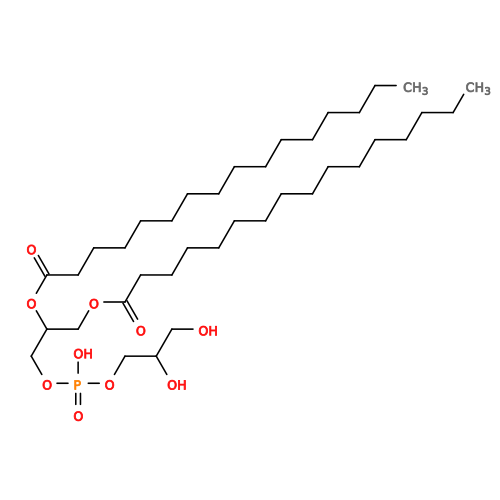 Mass: 722.970 Da / Num. of mol.: 6 / Source method: obtained synthetically / Formula: C38H75O10P / Comment: phospholipid*YM Mass: 722.970 Da / Num. of mol.: 6 / Source method: obtained synthetically / Formula: C38H75O10P / Comment: phospholipid*YM#32: Chemical | ChemComp-HEM / | 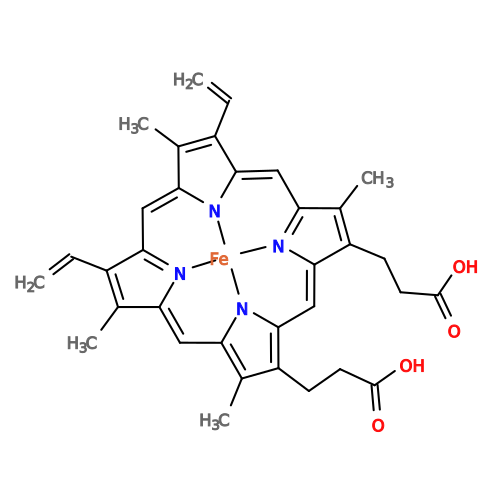 Mass: 616.487 Da / Num. of mol.: 1 / Source method: obtained synthetically / Formula: C34H32FeN4O4 Mass: 616.487 Da / Num. of mol.: 1 / Source method: obtained synthetically / Formula: C34H32FeN4O4#33: Water | ChemComp-HOH / | Mass: 18.015 Da / Num. of mol.: 778 / Source method: isolated from a natural source / Formula: H2O |
-Details
| Has ligand of interest | N |
|---|---|
| Has protein modification | Y |
-Experimental details
-Experiment
| Experiment | Method: ELECTRON MICROSCOPY |
|---|---|
| EM experiment | Aggregation state: PARTICLE / 3D reconstruction method: single particle reconstruction |
- Sample preparation
| Component | Name: Photosystem II Intermediate / Type: COMPLEX / Entity ID: #1-#19 / Source: NATURAL |
|---|---|
| Molecular weight | Value: 0.35 MDa / Experimental value: YES |
| Source (natural) | Organism: Pisum sativum (garden pea) |
| Buffer solution | pH: 6.5 |
| Specimen | Conc.: 2 mg/ml / Embedding applied: NO / Shadowing applied: NO / Staining applied: NO / Vitrification applied: YES / Details: Chlorophyll concentration |
| Specimen support | Grid material: COPPER / Grid mesh size: 200 divisions/in. / Grid type: Quantifoil R1.2/1.3 |
| Vitrification | Instrument: LEICA EM GP / Cryogen name: ETHANE / Humidity: 90 % / Chamber temperature: 288 K |
- Electron microscopy imaging
| Experimental equipment |  Model: Titan Krios / Image courtesy: FEI Company |
|---|---|
| Microscopy | Model: TFS KRIOS |
| Electron gun | Electron source:  FIELD EMISSION GUN / Accelerating voltage: 300 kV / Illumination mode: FLOOD BEAM FIELD EMISSION GUN / Accelerating voltage: 300 kV / Illumination mode: FLOOD BEAM |
| Electron lens | Mode: BRIGHT FIELD / Nominal magnification: 165000 X / Nominal defocus max: 2000 nm / Nominal defocus min: 700 nm / Cs: 2.7 mm / C2 aperture diameter: 50 µm |
| Specimen holder | Cryogen: NITROGEN / Specimen holder model: FEI TITAN KRIOS AUTOGRID HOLDER |
| Image recording | Average exposure time: 2.2 sec. / Electron dose: 50 e/Å2 / Film or detector model: FEI FALCON IV (4k x 4k) / Num. of grids imaged: 1 / Num. of real images: 24215 |
- Processing
| EM software |
| ||||||||||||||||||||||||||||||||
|---|---|---|---|---|---|---|---|---|---|---|---|---|---|---|---|---|---|---|---|---|---|---|---|---|---|---|---|---|---|---|---|---|---|
| CTF correction | Type: PHASE FLIPPING AND AMPLITUDE CORRECTION | ||||||||||||||||||||||||||||||||
| Particle selection | Num. of particles selected: 7825226 | ||||||||||||||||||||||||||||||||
| Symmetry | Point symmetry: C1 (asymmetric) | ||||||||||||||||||||||||||||||||
| 3D reconstruction | Resolution: 2.1 Å / Resolution method: FSC 0.143 CUT-OFF / Num. of particles: 323534 / Algorithm: FOURIER SPACE / Num. of class averages: 1 / Symmetry type: POINT | ||||||||||||||||||||||||||||||||
| Refinement | Highest resolution: 2.1 Å Stereochemistry target values: REAL-SPACE (WEIGHTED MAP SUM AT ATOM CENTERS) | ||||||||||||||||||||||||||||||||
| Refine LS restraints |
|
